New Documentary Movies on Kanopy - Page 246
All Services
Free Services
 Netflix
 Amazon Prime Video
 Apple iTunes
 Apple TV Plus
 Disney Plus
 Google Play Movies
 Paramount Plus
 Hulu
Hulu
 HBO Max
 YouTube
 fuboTV
 Peacock
 Peacock Premium
 Amazon Video
 The Roku Channel
 AMC+
AMC on Demand
AMC+
AMC on Demand
 Kocowa
 Hoopla
 The CW
 Vudu
Vudu
 Starz
Starz
 Showtime
 PBS
PBS
 Pantaflix
 FXNow
FXNow
 Tubi TV
 Kanopy
 Comedy Central
 Crunchyroll
 Microsoft Store
 Redbox
 Sun Nxt
 ABC
ABC
 DIRECTV
 Crackle
 Fandor
 Plex
Plex
Netflix
Amazon Prime Video
Apple iTunes
Apple TV Plus
Disney Plus
Google Play Movies
Paramount Plus
Hulu
HBO Max
YouTube
fuboTV
Peacock
Peacock Premium
Amazon Video
The Roku Channel
AMC+
AMC on Demand
Kocowa
Hoopla
The CW
Vudu
Starz
Showtime
PBS
Pantaflix
FXNow
Tubi TV
Kanopy
Comedy Central
Crunchyroll
Microsoft Store
Redbox
Sun Nxt
ABC
DIRECTV
Crackle
Fandor
Plex

Freedom's Fury
2006
Freedom's Fury
2006
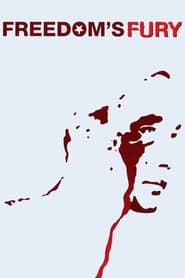
star 6.5A documentary on the 1956 Olympic semifinal water polo match between Hungary and Russia. Held in Australia, the match occurred as Russian forces were in Budapest, stomping out a popular revolt.Ballerina
2006
Ballerina
2006
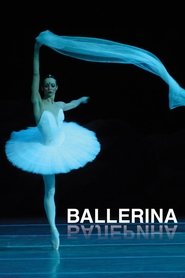
star 8.1Ballerina is a 2006 documentary film that follows the training sessions, rehearsals, and everyday lives of five Russian ballerinas at different stages in their career.The Gateway Arch: A Reflection of America
2006
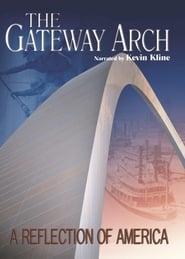
The Gateway Arch: A Reflection of America chronicles for the first time the complete story of this great American symbol… from Thomas Jefferson, Lewis & Clark, and St. Louis’ role in westward expansion; to the eventual construction of the largest stainless steel structure in history.Turner at Tate
2006
Turner at Tate
2006
The artist J.M.W. Turner is widely recognised as England’s greatest painter. Tate has the world’s finest and most extensive collection of his work. Turner at Tate explores Turner’s art through many of his best-known canvases and exquisite sketches and watercolours, all newly and exceptionally filmed in HDTV from the original artworks. Incorporating the landscapes and places that inspired the works, the film provides an overview of Turner’s life and - in an accessible and engrossing way - of critical approaches to his art. The film’s focus is Turner and England, and his work is considered against the radical social and political changes of the early nineteenth century. Turner at Tate is a film about ideas and history and landscape, a film about colour and light. Contributors include Tate curators Ian Warrell and David Blayney Brown, and art historians Sam Smiles and Barry Venning. Also featured on the DVD are ten additional short films, each of which considers in detail a major work.theEYE: Vong Phaophanit
2006
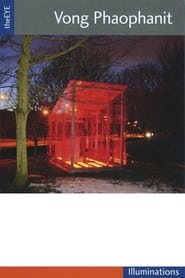
Vong Phaophanit showed his strikingly seductive Neon Rice Field when he was nominated for the Turner Prize in 1993. Like much of his rich and complex work since then, this installation exhibits a strong interest in language and light, in the painterly qualities of ephemeral materials and in ideas of cultural displacement. He was born in Laos, educated in France and has worked mostly in Britain since the early 1990s. Much of his work now is commissioned for architectural and environmental settings, including Outhouse in Liverpool. Created like many of his large-scale sculptures with fellow artist Claire Oboussier, this is a transparent glass house (with opaque windows) which serves as a flexible social space for the people who live in the surrounding tower blocks.Deliver Us from Evil
2006
Deliver Us from Evil
2006
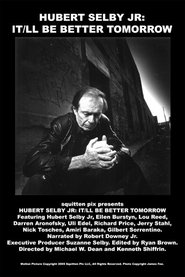
star 7.1Documentary filmmaker Amy Berg investigates the life of 30-year pedophile Father Oliver O'Grady and exposes the corruption inside the Catholic Church that allowed him to abuse countless children. Victims' stories and a disturbing interview with O'Grady offer a view into the troubled mind of the spiritual leader who moved from parish to parish gaining trust ... all the while betraying so many.Hubert Selby Jr: It/ll Be Better Tomorrow
2006
star 6.4An exploration into the life and art of the renowned author of "Last Exit To Brooklyn" and "Requiem For A Dream." Hubert Selby Jr., a self-described "scream looking for a mouth," against all odds, reached international acclaim with his controversial novels. His is a classic story of the great American novelist, overcoming tuberculosis, drug addiction and financial ruin, Selby eventually triumphed in his life and penned seven of the most remarkable and distinctly American books ever written.Billy Wilder Speaks
2006
Billy Wilder Speaks
2006
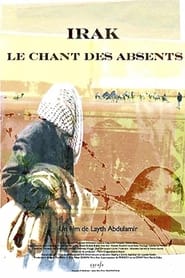
star 6.9In 1988, German filmmaker Volker Schlöndorff sat down with legendary director Billy Wilder (1906-2002) at his office in Beverly Hills, California, and turned on his camera for a series of filmed interviews. (A recut of the 1992 TV miniseries Billy, How Did You Do It?)Iraq: The Song of the Missing Men
2006
From the deep south to the extreme north, a trip through Iraq where the amazing diversity of Iraqi society is unveiled. Haunting chants are interwoven with the voices of the people, lending a poetic resonance to the issue.The Fall of '55
2006
The Fall of '55
2006
star 5.2In late 1955 and early 1956, the citizens of Boise, Idaho believed there was a menace in their midst. On Halloween, investigators arrested three men on charges of having sex with teenage boys. The investigators claimed the arrests were just the tip of the iceberg-they said hundreds of boys were being abused as part of a child sex ring. There was no such ring, but the result was a widespread investigation which some people consider a witch hunt. By the time the investigation ended, 16 men were charged. Countless other lives were also touched.In some cases, men implicated fled the area. At least one actually left the country. The investigation attracted attention in newspapers across the nation, including Time Magazine. The "Morals Drive" left scars which remain to this day.theEYE: Lisa Milroy
2006
theEYE: Lisa Milroy
2006
Lisa Milroy’s paintings are pleasurable and provocative, clear but complex, immediate and yet richly subtle. In 2001 many of her major works were brought together for an important exhibition at Tate Liverpool; this film, the first about her work, was made alongside that show. Her earliest works are depictions of everyday objects: shoes in serried ranks, collections of lightbulbs and household hardware. Later canvases explore the process of depicting images of people, blank facades of buildings, clichés of photographic landscapes. More recent work is looser and less apparently realist.theEYE: Howard Hodgkin
2006
Howard Hodgkin was one of the world’s leading painters, whose art is admired both by critics and by a wide public. Beginning with a remembered experience, Hodgkin works on his seductive and complex paintings for long periods, characteristically producing richly coloured, sweeping compositions, which continue into the picture-frame itself. These paintings uniquely straddle representation and abstraction, at the same time as they demonstrate both an awareness of history and an understanding of art’s potential today. Most recently, his interest in working in different scales, evident particularly in significantly larger paintings such as Americana and After Vuillard, demonstrates his concern to engage the viewer in new and challenging ways.The Celts
2006
The Celts
2006
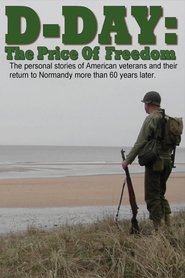
A fascinating journey through the history of the Celtic culture, following the trail back to pre-Roman times when the Celts were regarded as the masters of Europe. The appeal of being a Celt has rarely diminished over the centuries. Their leaders were men and women of legend - King Arthur of the Britons, the Warrior Queen Boudicca, and Vercingetorix the Gaul. However few people understand who the Celts actually were or what their true legacy is. This powerful series cuts through the romanticism and clichéd images to give a true picture of Celtic culture. Presenter Richard Rudgley follows the trail back to pre-Roman times, looking into every aspect of Celtic life to show how they adapted to change.D-Day: The Price Of Freedom
2006
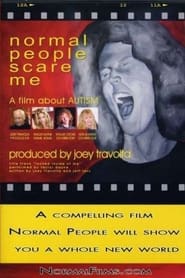
star 6D-Day, June 6, 1944, was a turning point in the history of the world and thousands of young Americans played an important role that day. Travel with several of these men as they return to the beaches of Normandy to tell their stories of survival.Normal People Scare Me
2006
A filmmaker with high-functioning autism documents others who have the disorder.Black Sun
2006
Black Sun
2006
star 7Blurred images illustrate the narration of New York City-based artist Hugues de Montalembert, who was blinded in a vicious mugging some thirty years ago.Abused
2006
Abused
2006
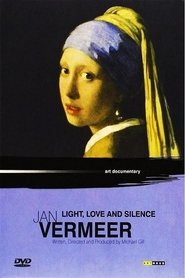
The emotionally charged story of Susan Greenberg who, at 19, killed her abusive boyfriend. After 19 years in prison, she seeks to have her sentence overturned based on a California state law that allows women convicted of murder to ask a judge for release based on evidence of "Battered Woman Syndrome."Jan Vermeer: Light Love and Silence
2006
Not much is known about Jan Vermeer. He only produced around 35 works of art, yet they made him immortal. He was born in Delft and never left the town; he married there, worked as an art-dealer and died in debt. Michael Gill delves into the master's world and talks about the camera obscura and Vermeer's interest in science and cartography. Together with experts, he explores Vermeer's secrets of perspective, space, allegory and symbolic relationships in his works.10 Questions for the Dalai Lama
2006
star 7.1How do you reconcile a commitment to non-violence when faced with violence? Why do the poor often seem happier than the rich? Must a society lose its traditions in order to move into the future? These are some of the questions posed to His Holiness the Dalai Lama by filmmaker and explorer Rick Ray. Ray examines some of the fundamental questions of our time by weaving together observations from his own journeys throughout India and the Middle East, and the wisdom of an extraordinary spiritual leader. This is his story, as told and filmed by Rick Ray during a private visit to his monastery in Dharamsala, India over the course of several months. Also included is rare historical footage as well as footage supplied by individuals who at great personal risk, filmed with hidden cameras within Tibet.A World Without Water
2006
Every day 3900 children die as a result of insufficient or unclean water supplies. 'A World Without Water' tells of the personal tragedies behind the mounting privatization of water supplies.