New Documentary Movies on Kanopy - Page 243
All Services
Free Services
 Netflix
 Amazon Prime Video
 Apple iTunes
 Apple TV Plus
 Disney Plus
 Google Play Movies
 Paramount Plus
 Hulu
Hulu
 HBO Max
 YouTube
 fuboTV
 Peacock
 Peacock Premium
 Amazon Video
 The Roku Channel
 AMC+
AMC on Demand
AMC+
AMC on Demand
 Kocowa
 Hoopla
 The CW
 Vudu
Vudu
 Starz
Starz
 Showtime
 PBS
PBS
 Pantaflix
 FXNow
FXNow
 Tubi TV
 Kanopy
 Comedy Central
 Crunchyroll
 Microsoft Store
 Redbox
 Sun Nxt
 ABC
ABC
 DIRECTV
 Crackle
 Fandor
 Plex
Plex
Netflix
Amazon Prime Video
Apple iTunes
Apple TV Plus
Disney Plus
Google Play Movies
Paramount Plus
Hulu
HBO Max
YouTube
fuboTV
Peacock
Peacock Premium
Amazon Video
The Roku Channel
AMC+
AMC on Demand
Kocowa
Hoopla
The CW
Vudu
Starz
Showtime
PBS
Pantaflix
FXNow
Tubi TV
Kanopy
Comedy Central
Crunchyroll
Microsoft Store
Redbox
Sun Nxt
ABC
DIRECTV
Crackle
Fandor
Plex

Vineyards of Italy: Wines of Northern Italy
2007
star 10Discover northern Italy's rich wine country with this in-depth tour. Viewers will visit wineries and vineyards throughout the region to explore the history, culture, methods and popular labels found in each. The journey begins in Trentino, home to Spumante, followed by Friuli, Piedmont, Lombardy and Emilia Romagna. The program also includes a stop in Veneto, one of the country's most vital winemaking areas.theEYE: Sandra Blow
2007
theEYE: Sandra Blow
2007
Three spectacular canvases by Sandra Blow were one of the highlights of the 2006 Royal Academy Summer Exhibition. Sadly, this was her last show, as she died in August that year. This film was made in her studio in St. Ives as she was preparing to submit her works, and it captures her remarkable character and her fascinating reflections on a lifetime creating beautiful, rigorous, distinctive and joyous paintings. Sandra Blow spent a formative year as a student in Italy in the late 1940s, and she returned to London to begin a distinguished career dedicated to developing her vigorous abstract art. In addition to paint, she worked with a diverse range of materials, including sacking, plaster and coloured paper collages, and while her work often referred to landscape and to architecture, it was always exploring ideas of pure form and colour, balance and chance, light and movement. theEYE is an excellent introduction to contemporary artists and their work(un)veiled
2007
(un)veiled
2007
(UN)VEILED introduces the audience to ten Muslim women from various backgrounds who now live in Dubai, United Arab Emirates.Brooklyn Matters
2007
Brooklyn Matters
2007
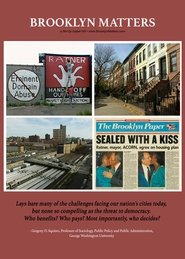
BROOKLYN MATTERS is a riveting look at how big real estate, politics, community voices, and the desperate need for jobs and affordable housing clash in one of the largest development proposals in the history of New York City. The film is important for anyone concerned with who has a voice and who has a vote in shaping the future of our cities.Banished
2007
Banished
2007
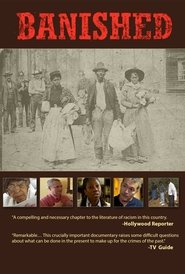
star 7.5A look at three U.S. cities, which were part of many communities that violently forced African American families to flee in post-reconstruction America.Heavy Water: A Film for Chernobyl
2007
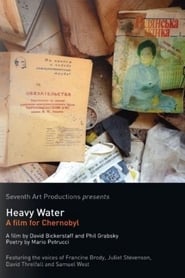
star 6On April 26th, 1986, reactor four at Chernobyl nuclear power station explodes, sending an enormous radioactive cloud over Northern Ukraine and neighbouring Belarus. The danger is kept a secret from the rest of the world and the nearby population who go about their business as usual. May Day celebrations begin, children play and the residents of Pripyat marvel at the spectacular fire raging at the reactor. After three days, an area the size of England becomes contaminated with radioactive dust, creating a 'zone' of poisoned land. Based on Mario Petrucci's award-winning book-length poem (split over two books), 'Heavy Water: a film for Chernobyl', and the shorter version 'Half Life: a Journey to Chernobyl", tells the story of the people who dealt with the disaster at ground-level: the fire-fighters, soldiers, 'liquidators', and their families.Glorious Exit
2007
Glorious Exit
2007
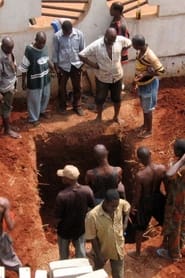
Jarreth Merz, an actor of Swiss and Nigerian origins living in Los Angeles, ends up facing his roots when he is been told that his father is dead. Following the Nigerian tradition, in fact, the eldest son has to take care of the funeral of his father. But who is this unknown father? Why does Jarreth feel a moral obligation towards a family he hardly knows and who has never really been interested in him? Jarreth begins a journey to discover his father through the tales of the people who knew him and a country that doesn’t belong to him even if it is part of his life. Confronting himself with traditions that challenge his beliefs, from Los Angeles to Nigeria Jarreth will face this decisive chapter of his life and the changes that will follow.They Turned Our Desert Into Fire
2007
Reporting the devastation, forced displacement, and genocide in Darfur should be a story with daily coverage. Mere mention of the word "Darfur" should set off a passionate exchange, or at least the question, "What can be done?". Unfortunately, the people of Darfur struggle with a problem common to so many victimized by geo-political realities: how to overcome the willful indifference of powerful government and media interests who find their story unimportant or merely inconvenient. With images and first-hand accounts, filmmaker Mark Brecke shares his experience of the Darfur crisis with Amtrak train passengers journeying eastward on a three day trip to Washington D.C. Their reactions, interwoven with hard facts and expert opinion, raise the central question in They Turned Our Desert Into Fire - Why does the public not understand the severity of this crisis and how can the world continue to do nothing?Vija Celmins: 4 Decades
2007
Best known for her drawings of the ocean and the galaxies of the night sky, Vija Celmins has solidified herself as one of the most important artists of the postwar generation. Stepping back from painting in order to explore her photorealistic drawing style, Celmins creates spectacularly precise renderings of the natural world. In her forty year retrospective at the Hammer Museum in Los Angeles, Celmins recalls her beginnings in abstraction, her choices of subject matter after freeing herself of the New York School influence, and her later immersion in what must be termed her great master drawings.Hans Haacke: 4 Decades
2007
Hans Haacke is a key figure in contemporary art whose work intersects with conceptual, pop, minimal and land art. The artist is particularly known for his research into the hidden economies and politics of the art world and the repressed histories of places and peoples. Haacke's strong political, cultural and social concerns are reflected in his installations, texts and sculptures.Jarlmadangah: Our Dream
2007
Situated south of Derby in the West Kimberleys, Jarlmadangah is a unique community often hailed as 'a model community' for its many social and cultural achievements. At the centre of the story are two brothers, John and Harry Watson, Elders in the Nyikina and Mangala nations. The community was first formed in 1987 when John and Harry Watson set out to establish Jarlmadangah as a focus for strong family ties, traditional language, law and culture, with the main aim of passing these onto the next generations of young people in the two nations.Ngat is Dead: Studying Mortuary Traditions
2007
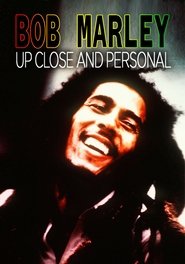
What do anthropologists mean when they claim to study the cultural traditions of others by participating in them? This film follows the Dutch anthropologist Ton Otto, who has been adopted by a family on Baluan Island in Papua New Guinea. Due to the death of his adoptive father, he has to take part in mortuary ceremonies, whose form and content are passionately contested by different groups of relatives. Through prolonged negotiations, Ton learns how Baluan people perform and transform their traditions and not least what role he plays himself. The film is part of long-term field research, in which filmmaking has become integrated in the ongoing dialogue and exchange between the islanders and the anthropologist.Bob Marley: Up Close and Personal
2007
star 7Get to know the inspiring creative journey of the influential King of Reggae, as told by some of the closest people in his inner circle.Standing Silent Nation
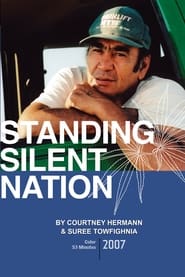
2007
When the Oglala Sioux Tribe passed an ordinance separating industrial hemp from its illegal cousin, marijuana, Alex White Plume and his family glimpsed a brighter future. Having researched hemp as a sustainable crop that would grow in the inhospitable soil of the South Dakota Badlands, the White Plumes envisioned a new economy that would shrink the 85% unemployment rate on the Pine Ridge Reservation. They never dreamed they would find themselves swept up in a struggle over tribal sovereignty, economic rights, and common sense.The Art of Francis Bacon
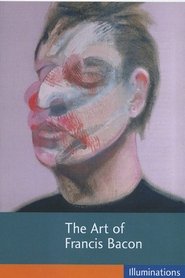
2007
This film explores many of his key canvases which have been newly filmed in HDTV. The works are complemented solely with Bacon’s own words, recorded by Derek Jacobi. The artist’s biography is outlined, but the focus is on his ideas: his thoughts about his work, his reflections about how and why he paints. The result is a rigorous and revealing portrait of one of the few artists who has truly changed the way we see and understand ourselves.My Nose
2007
My Nose
2007
This personal documentary reveals the complexities of a single woman living in a beauty-obsessed world with her original yet imperfect nose. It's a tale that anyone who has ever obsessed over their own "imperfection" will easily relate to MY NOSE explores filmmaker Gayle Kirschenbaum's mother's preoccupation with her nose, the intricacies of the mother/daughter relationship, and asks what drives people into the plastic surgeon's office. Will she live happily ever after with the nose I was born with? Will she end up having a nose job? And how will her decision affect their relationship? Official Selection at dozens of festivals including the Miami Jewish Film Festival and the UK Jewish Film Festival.Dinosaur Eggs and Babies
2007
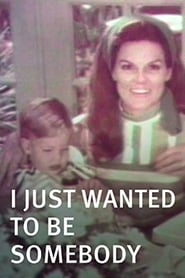
Recent discoveries of dinosaur eggs, nests, and even embryos, are providing new evidence to unlock the mysteries of dinosaur reproductive behavior. This educational program explores the mysteries of dinosaur reproduction with animation and interviews with renowned dinosaur experts including Robert Bakker, Philip Currie, Mark Norell, and others. Were dinosaurs social animals? Did they care for their young? What was life like for baby dinosaurs? These are some of the intriguing questions addressed in this informative program.I Just Wanted to Be Somebody
2007
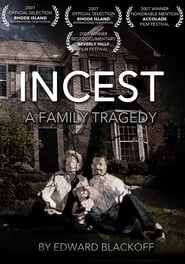
star 4.5Newsreels, commercials, and home movies are used to study the life and influence of Anita Bryant.Incest: A Family Tragedy
2007
An intense documentary investigating the dark and hidden world of sexual molestation of children by trusted family members or friends.Funeral Chants from the Georgian Caucasus
2007
A short film set in the mountainous province of Svaneti, documents the performance of polyphonic men’s funerary laments common to the region.