New Documentary Movies on The Roku Channel - Page 141
All Services
Free Services
 Netflix
 Amazon Prime Video
 Apple iTunes
 Apple TV Plus
 Disney Plus
 Google Play Movies
 Paramount Plus
 Hulu
Hulu
 HBO Max
 YouTube
 fuboTV
 Peacock
 Peacock Premium
 Amazon Video
 The Roku Channel
 AMC+
AMC on Demand
AMC+
AMC on Demand
 Kocowa
 Hoopla
 The CW
 Vudu
Vudu
 Starz
Starz
 Showtime
 PBS
PBS
 Pantaflix
 FXNow
FXNow
 Tubi TV
 Kanopy
 Comedy Central
 Crunchyroll
 Microsoft Store
 Redbox
 Sun Nxt
 ABC
ABC
 DIRECTV
 Crackle
 Fandor
 Plex
Plex
Netflix
Amazon Prime Video
Apple iTunes
Apple TV Plus
Disney Plus
Google Play Movies
Paramount Plus
Hulu
HBO Max
YouTube
fuboTV
Peacock
Peacock Premium
Amazon Video
The Roku Channel
AMC+
AMC on Demand
Kocowa
Hoopla
The CW
Vudu
Starz
Showtime
PBS
Pantaflix
FXNow
Tubi TV
Kanopy
Comedy Central
Crunchyroll
Microsoft Store
Redbox
Sun Nxt
ABC
DIRECTV
Crackle
Fandor
Plex

A Queen Is Crowned
1953
A Queen Is Crowned
1953
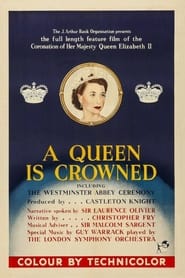
star 7.1A lavish documentary film of Queen Elizabeth II's Coronation in 1953.Kon-Tiki
1950
Kon-Tiki
1950
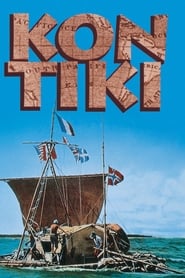
star 7.4"Kon-Tiki" was the name of a wooden raft used by six Scandinavian scientists, led by Thor Heyerdahl, to make a 101-day journey from South America to the Polynesian Islands. The purpose of the expedition was to prove Heyerdal's theory that the Polynesian Islands were populated from the east- specifically Peru- rather than from the west (Asia) as had been the theory for hundreds of years. Heyerdahl made a study of the winds and tides in the Pacific, and by simulating conditions as closely as possible to those he theorized the Peruvians encountered, set out on the voyage.Over-Dependency
1949
Over-Dependency
1949
The case history of a man whose life is crippled by behaviour patterns carried over from a too-dependent childhood. Through therapy he comes to understand the causes of his illness and fear.The Quiet One
1948
The Quiet One
1948
star 4.8A documentary account of the rehabilitation at the Wiltwyck School of an emotionally disturbed black boy who is unwanted, misunderstood, and inwardly tortured.Thunderbolt
1947
Thunderbolt
1947
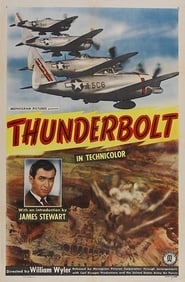
star 6.1Documentary about the U.S. Air Force's P-47 Thunderbolt bomber's role in the Italian Campaign during WW2.Bronco Busters
1946
Bronco Busters
1946
A short, classic documentary that takes us to Calgary's famous stampede of the 1940’s. In the rolling foothills of Alberta, the colts and horses run free with wild grace and speed, until it’s round-up time. Some are destined for the Calgary Stampede, the most exciting time for cowboys and ranchers who compete in the dusty ring to win at roping, bronco-busting, bulldogging a steer, and chuck-wagon racing, risking life and limb.Submarine Warfare
1946
Submarine Warfare
1946
star 6In this documentary we get a glimpse into the world of submarines and have access to rare archive footage. From the first attempts during the American Civil War to WW2 and the nuclear subs of today, the history of the submarine has been fraught with difficulties.The Story of Submarine Warfare in the Pacific
1945
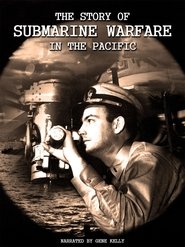
The U.S. Pacific submarine fleet was all that was available in the early days of America's involvement in World War 2 and it took the fight to the Japanese with great success.Back to Jobs
1945
Back to Jobs
1945
It's the end of WWII. Many Canadian military men are returning back to Canada to resume a working life as a civilian. Seven percent will work in the resource sector, which includes not only extraction of natural resources such as minerals and wood, but also food resources such as agriculture and fishing. Eighteen percent will go into some form of schooling - half in an academic or professional field, with the other half in a technical or trades related field - before they re-enter the workforce. Sixty-eight percent will work in urban areas, including in industrial employment. Twenty-five thousand are returning in the ranks of the physically disabled, who require additional support to reintegrate into working civilian life.War Comes to America
1945
War Comes to America
1945
star 7The seventh and final film of Frank Capra's Why We Fight World War II propaganda film series. This entry attempts to describe the factors leading up to America's entry into the Second World War.Attack! The Battle for New Britain
1944
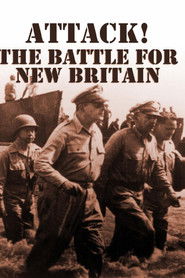
star 6Actual footage by the United States Signal Corps of the landing and attack on Arawe Beach, Cape Glouster, New Britain island in 1943 in the South Pacific theatre of World War Two, and the handicaps of the wild jungle in addition to the Japanese snipers and pill-box emplacements.The Memphis Belle
1944
The Memphis Belle
1944
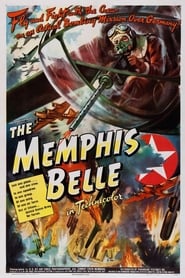
star 6.6This WW2 documentary centers on the crew of the American B-17 Flying Fortress Memphis Belle as it prepares to execute a strategic bombing raid on Nazi submarine pens in Wilhelmshaven, Germany.Битва за Севастополь
1944
Битва за Севастополь
1944
Home to the Land
1944
Home to the Land
1944
This documentary from 1945 explains The Veteran's Land Act, which provided for low-cost loans to veterans who wished to purchase properties and re-establish themselves in Canada after the war. The loans were for properties ranging from town lots to full-scale farms. The Act also provided aid in purchasing farm machinery, fishing boats, building materials and livestock. Produced by the NFB for the Canadian Department of Veterans Affairs.Submarine Warfare
1944
Submarine Warfare
1944
In the late 1800's the father of submarines, Mr John Holland, hit upon the idea of powering a submarine with an internal combustion engine and an electric motor. For over a hundred years, since the first semi-successful attempts during the American Civil War, submarine warfare had been fraught with difficulties and failure. In 1901, the Holland I was launched as the first Royal Navy submarine and submarines have been an integral part of the Navy ever since.The World at War
1942
The World at War
1942
star 6.8Documentary examining the events which led up to the Second World War.Ukrainian Winter Holidays
1942
Ukrainian communities of the Canadian prairies still follow the Julian calendar and celebrate Christmas on the seventh of January. Traditional foods are prepared for the holy Christmas Eve supper, eaten when the first star of the evening appears. Then traditional carols and light-hearted dances in gay costume continue the festivities. In striking contrast, on Christmas Day the Ukrainians gather at the Greek Orthodox church to worship in a solemn service with ancient ritual.Target for Tonight
1941
Target for Tonight
1941
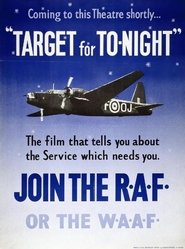
star 5.6This is the authentic story of a bombing raid on Germany... how it is planned and how it is executed. Every person seen in the picture is a member of the Royal Air Force from Commander-in-Chief to aircraft hand, re-enacting his own daily life on the job. They are the men and women who actually direct, plan and execute the raids.Churchill's Island
1941
Churchill's Island
1941
star 6.4The people of Britain resist the German air force and navy with help from North America. Preserved by the Academy Film Archive in partnership with Library and Archives Canada in 2005.Jungle Cavalcade
1941
Jungle Cavalcade
1941
Compilation of footage from three Frank Buck films about his adventures capturing animals for the world's zoos: "Bring 'Em Back Alive" (1933); "Wild Cargo" (1934); and "Fang And Claw" (1935).