New Documentary Movies on The Roku Channel - Page 139
All Services
Free Services
 Netflix
 Amazon Prime Video
 Apple iTunes
 Apple TV Plus
 Disney Plus
 Google Play Movies
 Paramount Plus
 Hulu
Hulu
 HBO Max
 YouTube
 fuboTV
 Peacock
 Peacock Premium
 Amazon Video
 The Roku Channel
 AMC+
AMC on Demand
AMC+
AMC on Demand
 Kocowa
 Hoopla
 The CW
 Vudu
Vudu
 Starz
Starz
 Showtime
 PBS
PBS
 Pantaflix
 FXNow
FXNow
 Tubi TV
 Kanopy
 Comedy Central
 Crunchyroll
 Microsoft Store
 Redbox
 Sun Nxt
 ABC
ABC
 DIRECTV
 Crackle
 Fandor
 Plex
Plex
Netflix
Amazon Prime Video
Apple iTunes
Apple TV Plus
Disney Plus
Google Play Movies
Paramount Plus
Hulu
HBO Max
YouTube
fuboTV
Peacock
Peacock Premium
Amazon Video
The Roku Channel
AMC+
AMC on Demand
Kocowa
Hoopla
The CW
Vudu
Starz
Showtime
PBS
Pantaflix
FXNow
Tubi TV
Kanopy
Comedy Central
Crunchyroll
Microsoft Store
Redbox
Sun Nxt
ABC
DIRECTV
Crackle
Fandor
Plex

Pretend You're Wearing a Barrel
1978
Lynn Ryan, 35, is a tough-minded single mother of five. After help from employment counsellors and a course in welding, she got off welfare for a good job as an apprentice engineer in a Vancouver shipyard.Reggae in a Babylon
1978
Reggae in a Babylon
1978
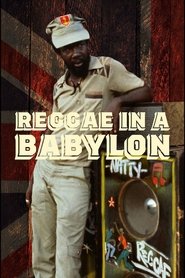
star 7The young, gifted and black generation of the '70s who started the British Reggae movement is captured in this unique documentary. Groove to the smooth sounds and see rare footage.Home for Christmas
1978
Home for Christmas
1978
star 7"Here is the quintessential Hancox 'personal documentary,' a film in which both the production and role of traditional documentary and autobiographical filmmaking are thrown into question. Using his camera to record a visit out east by train to spend Christmas with the family, Hancox .... used his familiarization with the annual ritual as a form of a script... Although we see the journey through the subjective judgment of Hancox’s eyes, it is his intent to transfer the material from original event to camera, to editing, and finally to the audience, so that the personal content of the film... becomes universal.” Michael Wade, Ontario Film Studies, Cinema Parallel “It is the honesty of portrayal which is staggering, for instead of an idyllic image which many filmmakers present of themselves, Hancox presents (and thus, sees) himself without cinematic make-up... with ‘wild sync’ sound (reminiscent of an early film), and with the use of only available natural light.” Richard StanfordPunk in London
1977
Punk in London
1977
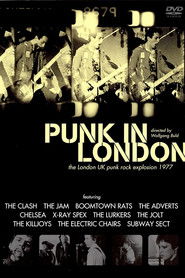
star 6.6A visual record of London punk life in the late '70s, filled with never-before-seen live concert footage and commentary from the Clash, the Jam, X-Ray Spex and the Electric Chairs.The Force Beyond
1977
The Force Beyond
1977
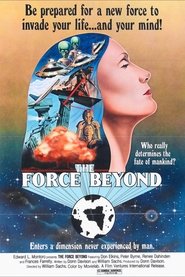
star 4.3Speculative "documentary" about alien visitations on Earth, UFO sightings and how aliens are responsible for pretty much every conspiracy theory, paranormal encounter and cryptozoological sighting in history. (Also Jesus. No, really.)La Soufrière: Waiting for an Inevitable Catastrophe
1977
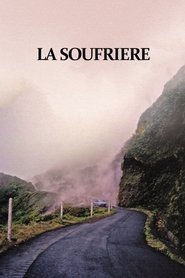
star 7.3Werner Herzog takes a film crew to the island of Guadeloupe when he hears that the volcano on the island is going to erupt. Everyone has left, except for one old man who refuses to leave.Heavy Horse Pull
1977
Heavy Horse Pull
1977
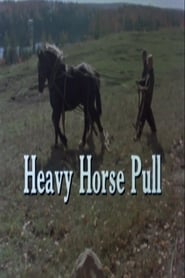
This short documentary offers a humorous look at horse-pulling contests in Ontario and the people who prepare for them. We travel from the farm to the contest, where excitement runs high and the quips do not lack in local colour. Which of these magnificent creatures will be able to pull the heaviest load and win the prize?How Much Wood Would a Woodchuck Chuck
1976
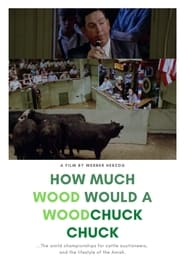
star 6.3A documentary short examining the language and performance of auctioneering, filmed at the World Livestock Auctioneer Championship in Pennsylvania.The Mysterious Monsters
1976
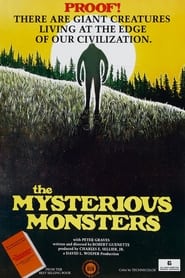
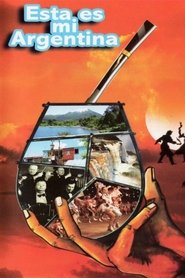
star 5.8One of the many notorious 70's "unknown" documentaries, The Mysterious Monsters covers topics such as Bigfoot and the Loch Ness Monster. Pictures, sounds, and videos of these two monsters are examined by Peter Graves, the host. Psychics, hypnotism, and the history of Bigfoot in many ancient cultures is also scrutinized.Esta es mi Argentina
1974
Esta es mi Argentina
1974
A geographical-musical walk through Argentina. Beautiful landscapes and the popular festivals of each region.The Paradox of Norval Morrisseau
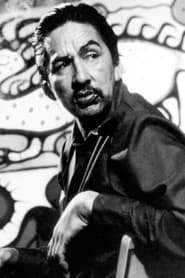
1974
In this revealing study of Norval Morrisseau, filmed as he works among the lakes and woodlands of his ancestors, we see a remarkable Indigenous artist who emerged from a life of obscurity in the North American bush to become one of Canada's most renowned painters. Morrisseau the man is much like his paintings: vital and passionate, torn between his Ojibway heritage and the influences of the white man's world.Thunderbirds in China
1974
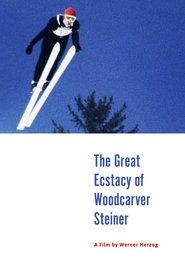
In this documentary, the members of the University of British Columbia's Thunderbirds hockey team travel to China to demonstrate their skills to the new teams in the East. While hockey there still has a long way to go, this film leaves no doubt that the Chinese players are up to the challenge. A film propelled by discoveries, it goes a long way to providing insight into the differences between East and West.The Great Ecstasy of Woodcarver Steiner
1974
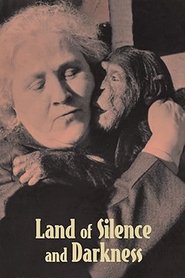
star 7.2A study of the psychology of a champion ski-flyer, whose full-time occupation is carpentry.Land of Silence and Darkness
1973
star 7.4Through examining Fini Straubinger, an old woman who has been deaf and blind since her teens, and her work on behalf of other deaf-blind people, this film shows how the deaf-blind struggle to understand and accept a world from which they are almost wholly isolated.The Innocent Door
1973
The Innocent Door
1973
A short documentary about urban planning and the harmonisation of old and new building elements in Jerusalem of the 1970's, led by the architect Moshe Safdie.Marjoe
1972
Marjoe
1972
star 7.7Part documentary, part expose, this film follows one-time child evangelist Marjoe Gortner on the "church tent" Revivalist circuit, commenting on the showmanship of Evangelism and "the religion business", prior to the start of "televangelism". Preserved by the Academy Film Archive in 2005.Fata Morgana
1972
Fata Morgana
1972
star 6.6Shot under extreme conditions and inspired by Mayan creation theory, the film contemplates the illusion of reality and the possibility of capturing for the camera something which is not there. It is about the mirages of nature—and the nature of mirage.The Second Arctic Winter Games
1972
The Games included many sports seen in Olympic competition, plus others--for example, pirautaqturniq, the Inuit skill of hitting an object with a ten meter-long sled dog whip. This film captures the all-out participation in the week-long events hosted by Whitehorse, capital of the Yukon, with competitors from all over the Arctic including Alaska, and with observers from the Soviet Union.When I Go - That's It!
1972
Ex-fisherman Billy Crane in Brampton, Ontario, at an industrial job with regular hours. Here he tells why he left Fogo Island and says he has no regrets. (See also Billy Crane Moves Away.)The Other Side of the Ledger: An Indian View of the Hudson's Bay Company
1972
The Hudson's Bay Company's 300th anniversary celebration was no occasion for joy among the people whose lives were tied to the trading stores. This film, narrated by George Manuel, president of the National Indian Brotherhood, presents the view of spokesmen for Canadian Indian and Métis groups. There is a sharp contrast between the official celebrations, with Queen Elizabeth II among the guests, and what Indians have to say about their lot in the Company's operations.