Popular Documentary Movies on Kanopy - Page 307
All Services
Free Services
 Netflix
 Amazon Prime Video
 Apple iTunes
 Apple TV Plus
 Disney Plus
 Google Play Movies
 Paramount Plus
 Hulu
Hulu
 HBO Max
 YouTube
 fuboTV
 Peacock
 Peacock Premium
 Amazon Video
 The Roku Channel
 AMC+
AMC on Demand
AMC+
AMC on Demand
 Kocowa
 Hoopla
 The CW
 Vudu
Vudu
 Starz
Starz
 Showtime
 PBS
PBS
 Pantaflix
 FXNow
FXNow
 Tubi TV
 Kanopy
 Comedy Central
 Crunchyroll
 Microsoft Store
 Redbox
 Sun Nxt
 ABC
ABC
 DIRECTV
 Crackle
 Fandor
 Plex
Plex
Netflix
Amazon Prime Video
Apple iTunes
Apple TV Plus
Disney Plus
Google Play Movies
Paramount Plus
Hulu
HBO Max
YouTube
fuboTV
Peacock
Peacock Premium
Amazon Video
The Roku Channel
AMC+
AMC on Demand
Kocowa
Hoopla
The CW
Vudu
Starz
Showtime
PBS
Pantaflix
FXNow
Tubi TV
Kanopy
Comedy Central
Crunchyroll
Microsoft Store
Redbox
Sun Nxt
ABC
DIRECTV
Crackle
Fandor
Plex

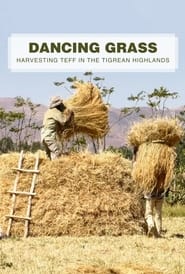
Dancing Grass: Harvesting Teff in the Tigrean Highlands
2018
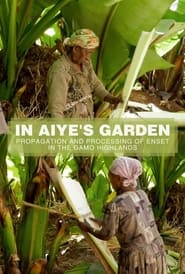
Dancing Grass captures the communal harvesting of teff among Tigreans of Northern Ethiopia. Teff, an ancient indigenous grain, is central to the livelihood of smallholder farmers and may be called the 'cereal core' of Ethiopian national food identity. A local elder provides the commentary for the sequence of events that unfold in the homestead, fields and neighbourhood of the author's eldest brother and family: the cutting of the 'dancing grass'; the drying and stacking; the threshing and winnowing; then the sale of teff in the local market; off with a donkey to the mill; cooking enjera for family and guests; coffee drinking and blessing; and finally the Mesqel fire, an Orthodox Christian celebration at the end of the rainy season.In Aiye's Garden: Propagation And Processing of Enset in the Gamo Highlands
2019
Enset, which is related to the banana plant, is very drought resistant and a good source of carbohydrates (in the stem and underground bulb). Enset has been farmed from time immemorial in the Gamo Highlands of southern Ethiopia, where women are the main cultivators. The film focuses on Aiye, the filmmaker's grandmother, who shares her knowledge about the enset plant, and shows how it is possible to produce good organic food by using simple farming tools and natural fertilizers. We see how she and a young kinswoman cultivate (using animal dung and organic waste to fertilize the plants), propagate (generating suckers from the corm), harvest (digging up the plant) and process (scraping and fermentating) the enset, and finally produce a variety of nutritious dishes.Inagina: The Last House of Iron
1997
Swiss archaeologist Eric Huysecom and cameraman Bernard Augustoni work with 13 master smelters to recreate the building of a traditional furnace for smelting iron in Mali. There has not been any traditional iron smelting in Africa since the 1960's, in part due to the importing of cheaper substitutes. The building of the furnaces and the work involved in the actual production is deeply entwined with ritual, symbolism and gender. This film describes in great detail every aspect of the event, from the selection of the site of the reconstruction - which is the oldest remaining furnace site in the region, last active in 1961 - to the final result.The Living Forest
2004
The Living Forest
2004
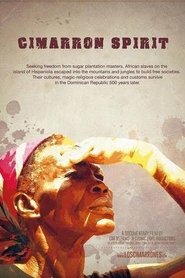
Living Forest explains the food forest system in use in an area near the river Amônia; a consortium in which everyone participates to provide better food for the entire community. Using forest management, the Ashaninka Indians turn degraded land into a place for communal cultivation. Banana trees are grown for food and also as fertilizer for other crops, including plants that are used for building materials. The video also shows how the Ashaninka are able to attract more wild game with the fruit that they grow, as well as keeping honeybees and turtles for food. By conducting studies of plants and animals they are continually finding ways to improve their system. Through communal, sustainable cultivation of the forest, these Indians protect their land and plan to feed themselves well into the future.Cimarrón Spirit: Afro-Dominican Maroon Culture
2015
In the Dominican Republic, as early as 1512, African slaves escaped from Spanish plantations and lived with the island’s Taíno Indians or on their own in mountainous jungles in the remote frontier land of Hispaniola. These people who were known as “cimarrones,” meaning “maroons,” created their own independent communities that have survived for centuries and until recently remained isolated from mainstream Dominican society. These resilient and resourceful “outlaws” have long developed their own celebrations, many of which mock a society that enslaved and branded them. Cimarrón Spirit explores carnival traditions such as the ritualistic fire burning of the masks and costumes of “Judas,” “Cocorícamo,” and “Tifúas,” as figures important to the cimarrón culture of Elias Piña.Kinja Iakaha, A Day in the Village
2003
In A Day in the Village, Waimiri and Atroari filmmakers document the day-to-day life of their relatives in the Cacau village, located in the Amazon region. We watch as women prepare the midday meal and do laundry in the river. Men hunt for alligators, paca and tapir in the forest as well as make handcrafts during a rainstorm. Children play and help with chores such as fruit-gathering and fishing, with adults showing them the right way to do things. Through intimate, interwoven images, the video gives us a vivid sense of the daily pattern in this village.The Healing of Bali
2003
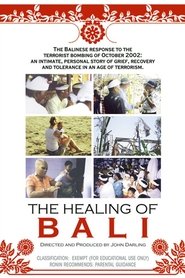
The Healing of Bali
2003
For Australian documentary filmmaker John Darling, the tragic events of 12 October 2002 compelled him to re-establish his links with Bali that spanned some 30 years. John had lived, researched and made films in Bali for 17 years from the 1970s to the 1990s, and THE HEALING OF BALI is his observation of the Balinese response to the bombings and the aftermath. His film presents an intimate insight into traditional and modern Balinese methods of grieving and healing. Among those who tell their own stories in the film are Haji Bambang, one of the heroes of the night of the bombings. Many people died in Haji's arms on the night as he worked tirelessly with a group of friends to save the victims or respectfully cover the dead with white cloth.Mystic Vision, Sacred Art
1996
This documentary provides an excellent introduction to the art of thangka, sacred Tibetan Buddhist painting, in the Kathmandu Valley of Nepal. Carefully filmed, it takes you through every step of the painting process of thangkas. It offers insight into the symbolic and religious meaning of thangkas and their importance for Tibetan Buddhist life.Ngaben: Emotion And Restraint In A Balinese Heart
2012
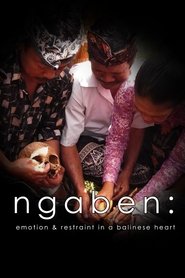
Ngaben: Emotion and Restraint in a Balinese Heart takes an impressionistic look at the ngaben from the perspective of a mourning son, Nyoman Asub, and reveals the intimacy, sadness, and tenderness at the core of this funerary ritual and the feeling and force that underlie an exquisite cultural tradition. Amidst ample cultural and interpretive understandings of the cremation ceremony, the film purposefully provides a personalistic, impressionistic, and poetic glimpse of the process and the complex emotions involved.Weaving the Future
1997
Weaving the Future
1997
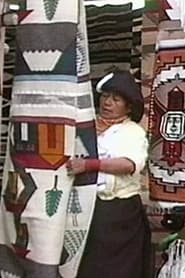
Weaving the Future is a video portrait of a unique indigenous community living in the Andean highlands of northern Ecuador. The story of the Otavalo Indians is not a stereotypical tale of "isolated people struggling to survive." Just the opposite. The people of Otavalo have successfully adapted their traditions of weaving and crafts to the international marketplace. Selling their textiles in the U.S., Europe and even in Japan, the Otavalos are by any measure the most prosperous Native people in South America. Theirs is a fascinating story of economic success and social change.Unity Through Culture
2011
Soanin Kilangit is determined to unite the people and attract international tourism through the revival of culture on Baluan Island in the South Pacific. He organizes the largest cultural festival ever held on the island, but some traditional leaders argue that Baluan never had culture and that culture comes from the white man and is now destroying their old tradition. Others, however, take the festival as a welcome opportunity to revolt against '70 years of cultural oppression' by Christianity. A struggle to define the past, present and future of Baluan culture erupts to the sound of thundering log drum rhythms.The Joy of Youth
2002
The Joy of Youth
2002
Among the Senufo people of northern Côte d'Ivoire, the balafon (xylophone with calabash resonators) is an emblematic musical instrument. The music of the balafon is a source of joy while the young men are doing collective work in the fields, at age-group ceremonies, for the poro initiatory society, for the catholic mass and during young people's dance evenings. Musicians and non-musicians, young and old, talk about the different occasions for which this instrument is an indispensable presence marking the rhythms of life for this agricultural people. Traditional balafon music is far from dying out, and its extraordinary vitality and importance are evident in the activities of the younger generations.Pony Boys
2022
Pony Boys
2022
Summer 1967. Two little boys, 9 and 11, drive a pony cart from Needham, Mass. to Montreal on their own—325 miles—to visit the Expo ’67—the World’s Fair.In Pursuit of the Siberian Shaman
2006
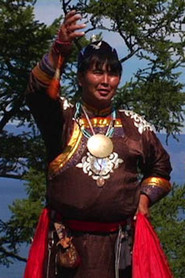
Long suppressed by missionaries and then by Soviet anti-religious campaigns, Siberian shamanism has experienced an unprecedented revival following the collapse of the Soviet Union, and the number of shamans continues to rise. But who are these new shamans? Are they tricksters, magicians, businessmen, or cultural activists? This film takes a behind-the-scenes look at a Buryat shaman living on an island in the Lake Baikal as he moves between intimate shamanic rituals performed for local clientele and shows performed at various resorts for Western tourists in search of "primitive" cultures.Releasing the Spirits: A Village Cremation in Bali
1991
Cremation rites are the most elaborate rites of passage performed by Balinese householders. Poor families may wait years before accumulating enough resources to cremate their dead, who are buried in the meantime. In 1978 many more cremations than usual were carried out because of the great purification cermony, Eka Dasa Rudra, held at Bali's main temple, Besakih, in 1979. Religious officials recommended that all Balinese cleanse the island by cremating their dead, as part of the preparations for the great Besakih ceremony. Villagers of limited means pooled their resources to perform group cremations which greatly reduced the cost for each family. This film is about a group of villagers in Central Bali who cooperated to carry out a group cremation.Dani Houses
1974
Dani Houses
1974
The film observes both round and square house construction techniques of the Grand Valley Dani. It shows how the ground is cleared, walls are made from boards, poles lashed together, and roofs being thatched. Though it follows the house-building process from beginning to end, one is left asking the question: What happened after the houses were built?Dani Sweet Potatoes
1974
Dani Sweet Potatoes
1974
A study of the sophisticated process of sweet potato horticulture developed by the Dani. The film follows the Dani sweet potato cycle from clearing off the old brush and weeds from a fallow field to planting, harvesting, cooking, and eating. At that time the Dani had the simplest of tools - long pointed wooden poles used as digging sticks that are hardened in the fire and soaked in water - and they still used their stone-bladed adzes. (By now, most Dani use steel shovels, axes, and bush knives and make stone adzes only for the tourist trade.)Benjamin and His Brother
2002
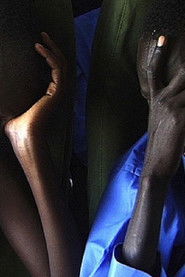
Years of war and ethnic conflict in the Sudan have created a generation of young men, known as the "Lost Boys," who have spent more years in refugee camps than in their home communities. This intimate film recounts the story of Benjamin and William Deng, brothers joined in the struggle of a seemingly never-ending exile, who are then separated when one is accepted into a United States resettlement program while the other remains in a Kenyan refugee camp. It is not only a film about the two brother's dreams and reality, it is also a film about war and suffering in their beloved South Sudan, lost childhood and innocence, the trials of life as a refugee in foreign lands and the existing realities of survival. Real life in the so called "Land of dreams" – America, is not an easy adjustment.The Akha Way
1999
The Akha Way
1999
For over a thousand years, the Akha people have inhabited the hills of Asia — mainly Southern China, Burma and Northern Thailand. The Akha Way or Akhazaunh, is the code by which they live. This documentary describes their origins and their culture. It contains extraordinary footage of a shaman healing ceremony; a funeral, with the ritual sacrifice of a water buffalo; the reading of a pig's liver after a new house is built, and more. Today the Akha Way is fast disappearing. Forced migration, Christianity, money and drugs are eroding the cultural heritage of the Akha tribe.Freedom Hill
2022
Freedom Hill
2022
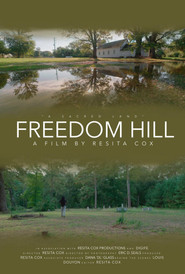
Princeville, NC is the first town incorporated by freed, formerly enslaved Africans in America. This historical significance sits on a precipice: It is gradually being washed away.