Popular Documentary Movies on Kanopy - Page 309
All Services
Free Services
 Netflix
 Amazon Prime Video
 Apple iTunes
 Apple TV Plus
 Disney Plus
 Google Play Movies
 Paramount Plus
 Hulu
Hulu
 HBO Max
 YouTube
 fuboTV
 Peacock
 Peacock Premium
 Amazon Video
 The Roku Channel
 AMC+
AMC on Demand
AMC+
AMC on Demand
 Kocowa
 Hoopla
 The CW
 Vudu
Vudu
 Starz
Starz
 Showtime
 PBS
PBS
 Pantaflix
 FXNow
FXNow
 Tubi TV
 Kanopy
 Comedy Central
 Crunchyroll
 Microsoft Store
 Redbox
 Sun Nxt
 ABC
ABC
 DIRECTV
 Crackle
 Fandor
 Plex
Plex
Netflix
Amazon Prime Video
Apple iTunes
Apple TV Plus
Disney Plus
Google Play Movies
Paramount Plus
Hulu
HBO Max
YouTube
fuboTV
Peacock
Peacock Premium
Amazon Video
The Roku Channel
AMC+
AMC on Demand
Kocowa
Hoopla
The CW
Vudu
Starz
Showtime
PBS
Pantaflix
FXNow
Tubi TV
Kanopy
Comedy Central
Crunchyroll
Microsoft Store
Redbox
Sun Nxt
ABC
DIRECTV
Crackle
Fandor
Plex

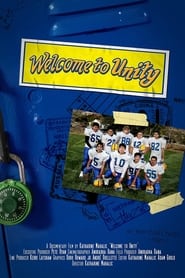
Welcome To Unity
2018
Welcome To Unity
2018
In a sleepy mountain town nestled in rural America, seven foreign exchange students set out to tackle the 'American Dream'.The Charge of the Anzacs
2014
In 1917 Australian Light Horse soldiers claimed one of the greatest ever cavalry charged victories in history. Some 95 years later, 40 Australians retraced their footsteps in living detail – from the foothills of the pyramids to the treacherous expanse of ANZAC Cove. Incorporating archival footage from the Australian War Memorial, interviews with historians, experts and authors, The Charge of The ANZACS is a detailed documentary account of Australia and New Zealand’s equine involvement in WWI. Following the Australian Light Horse Association’s attempt to re-enact the monumental journey, they commemorate the anniversary of the charge of Beersheba and explore the extraordinary lives of many fallen heroes.Mr. Civil Rights: Thurgood Marshall and the NAACP
2014
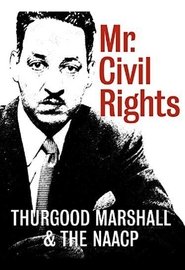
Civil rights attorney Thurgood Marshall's triumph in the 1954 Brown v. Board of Education Supreme Court decision to desegregate America's public schools completed the final leg of a journey of over 20 years laying the groundwork to end legal segregation. He won more Supreme Court cases than any lawyer in American history, making the work of civil rights pioneers like the Rev. Martin Luther King, Jr. and Rosa Parks possible.Urban Roots
2011
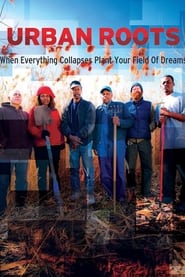
Urban Roots
2011
star 6URBAN ROOTS is a documentary that tells the story of the spontaneous emergence of urban farming in the city of Detroit. Detroit, once an industrial powerhouse of a lost American era, is a city devastated by the loss of half its population due to the collapse of manufacturing. By the looks of it, the city has died. But now, against all odds, in the empty lots, in the old factory yards, and in-between the sad, sagging blocks of company housing, seeds of change are taking root.Beyond Elections: Redefining Democracy in the Americas
2008
From the communal councils of Venezuela to constitutional assemblies, grassroots movements and cooperatives, filmmakers Silvia Leindecker and Michael Fox explore the many incarnations of democracy across the Americas. The documentary examines democracy in nations such as Brazil, Colombia and Canada, and features interviews with journalists, cooperative and community members, elected representatives, academics and activists.Made in India
2010
Made in India
2010
star 6This eye-opening doc explores the phenomena of "outsourcing" surrogate mothers to India. Weaving together personal stories within a growing international industry, the film reveals the clash of reproductive technology and choice from a global perspective.Silent Wings: The American Glider Pilots of World War II
2007
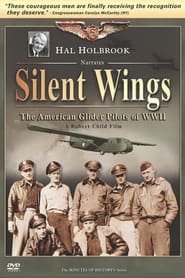
From the early race to build gliders to the D-Day invasion at Normandy and Nazi Germany's final surrender, "Silent Wings - The American Glider Pilots of WWII" narrated by Hal Holbrook, reveals the critical role gliders played in World War II offensives. Through rare archival footage and photographs, the film places the audience right at the center of the action in the dangerous world of the American glider pilot. During WWII, 6000 young Americans volunteered to fly large unarmed cargo gliders into battle. For these glider pilots every mission was do-or-die. It was their task to repeatedly risk their lives landing the men and tools of war deep within enemy-held territory, often in complete darkness. Thousands of lives were saved and battles won because of their efforts. In fact, one pilot interviewed said - the 'G' in their emblem didn't stand for glider; it stood for 'guts.' Features include: - Virtual walk-through tour of the Silent Wings Museum in Lubbock, TexasThe Worm Hunters
2011
The Worm Hunters
2011
star 5An epic adventure into an underground science and an unstoppable passion. Earthworm scientists concoct a plan to find and name their ultimate discovery...the world's first Super Worm. Nothing will stop them as they travel to all corners of the world with spades, GPS worm locators and secret worm outing fluids to unearth their prize.The Mosque in Morgantown
2009
star 7One woman's campaign against extremism in her West Virginia mosque throws the community into turmoil, raising questions that cut to the heart of American Islam.Electric Edwardians - The Films Of Mitchell And Kenyon
2005
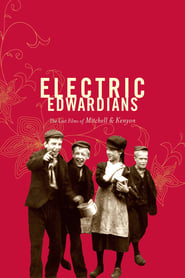
Archive footage, recently discovered, shot by the Edwardian documentary film-makers Sagar Mitchell and James Kenyon. Selected from a total of 28 hours of material, this compilation is grouped into five sections: 'Youth and Education'; 'The Anglo-Boer War'; 'Workers'; 'High Days and Holidays' and 'People and Places'. It includes footage of ordinary people going about their everyday business, from the factory gates to football matches, and is set to a specially commisioned score by the Shieffield-based duo In the Nursery.One Track Heart: The Story of Krishna Das
2013
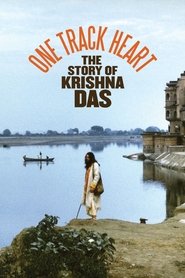
star 7.5Krishna Das is on a journey to India to discover legendary spiritual teacher Neem Karoli Baba, through drug addiction and depression, to his eventual emergence as a world-famous Kirtan singer.Guns, Bombs & War: A Love Story
2021
Could we find Love beyond Hate, could we find Peace beyond War? Can we heal, in Oneness, our Humanity and the World?Moon Shadow: Eclipse Chasers
2009
Eclipse chasers gather on the tropical island of Amami for the total eclipse in 2009.Aspire to the Sky: The Wilshire Grand Story
2017
The tallest building on the west coast was recently completed in one of the most seismically active zones in the world, Aspire to the Sky: The Wilshire Grand Story.In the Footsteps of Van Gogh
1999
Based upon Van Gogh's correspondence with his brother Theo, combined with the images of the canvases he painted in the last two years of his life, this video brings to life his time in Arles, the period he spent in the asylum at Saint-Remy de Province, and his last weeks in Auvers-sur-Oise.theEYE: Vong Phaophanit
2006
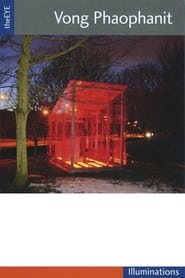
Vong Phaophanit showed his strikingly seductive Neon Rice Field when he was nominated for the Turner Prize in 1993. Like much of his rich and complex work since then, this installation exhibits a strong interest in language and light, in the painterly qualities of ephemeral materials and in ideas of cultural displacement. He was born in Laos, educated in France and has worked mostly in Britain since the early 1990s. Much of his work now is commissioned for architectural and environmental settings, including Outhouse in Liverpool. Created like many of his large-scale sculptures with fellow artist Claire Oboussier, this is a transparent glass house (with opaque windows) which serves as a flexible social space for the people who live in the surrounding tower blocks.theEYE: Liliane Lijn
2005
theEYE: Liliane Lijn
2005
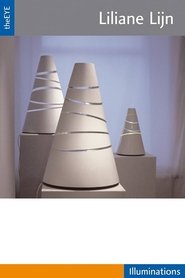
Science and Surrealism, ancient myths, Buddhism and feminism are among the frameworks of ideas important to Liliane Lijn’s art. In Paris at the end of the 1950s, in Greece and New York, and in England since 1966, she has worked with light, energy and movement, with archetypal shapes and unconventional materials to produce an art that is clear, complex and strikingly beautiful. Many of Liliane Lijn’s key drawings and sculptures are featured in this profile, which was filmed alongside an important reassessment of her work at the Mead Gallery. The Poem Machines and Koans of the 1960s and 1970s are considered as well as the ambitious “goddess” figures of more recent years.theEYE: Joe Tilson
2006
theEYE: Joe Tilson
2006
Since the 1960s, when he was associated with British Pop Art, Joe Tilson has enjoyed international acclaim for the individuality and originality of his paintings, constructions, prints and multiples. All of his playful, engaging work is informed with ideas from literature, philosophy, ethnography and alchemy. Tilson’s early work focussed on mass-market consumerism and politics. But he was soon disenchanted with mechanical methods of production and his art in the 1970s and 1980s employed hand-worked wood and metal in intriguing ways. Shot in and around the artist’s studio in Cortona, Italy, this film was produced alongside Joe Tilson’s first British retrospective at London’s Royal Academy of Arts.theEYE: Gereon Krebber
2006
Gereon Krebber’s proposal for a monumental and expensive aluminium object called Tin won the 2003 Jerwood Sculpture Prize. Shot over more than a year, this film follows the creation, casting and placing of the final sculpture. Sitting in the elegant country house garden at Ragley Hall, Tin suggests a kitchen container or a hamburger and yet is at the same time defiantly abstract. Krebber is a young sculptor from Germany who studied at the Royal College of Art and now works in London. The surprising range of his work, and the processes which create it, are revealed here as he talks engagingly about how to create “seriously flippant” objects. His art, made with diverse materials including balloons and Cling Film as well as traditional media, has a unique deadpan humour. Its effect, the artist hopes, is to make you ”smile and shiver at the same time”.theEYE: Ian Hamilton Finlay
2005
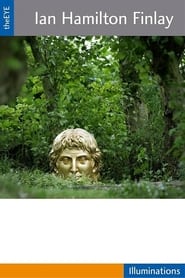
From previously barren moorland in the Pentland Hills near Edinburgh, Ian Hamilton Finlay has created a unique garden as an encompassing work of art. Little Sparta is a magical combination of culture and horticulture, poetry and planting, philosophy and myth. Ian Hamilton Finlay began his work at Little Sparta in the mid-1960s. With friends and collaborators, around a group of old farm buildings he has fashioned landscapes, streams, bridges, glades, lanes, bowers and more. Everywhere there are inscriptions and sculptures reflecting the artist’s preoccupations: the Enlightenment and the French Revolution, pre-Socratic philosophy, garden history, World War Two, the sea and fishing fleets, time and mortality.