Popular Documentary Movies on Kanopy - Page 310
All Services
Free Services
 Netflix
 Amazon Prime Video
 Apple iTunes
 Apple TV Plus
 Disney Plus
 Google Play Movies
 Paramount Plus
 Hulu
Hulu
 HBO Max
 YouTube
 fuboTV
 Peacock
 Peacock Premium
 Amazon Video
 The Roku Channel
 AMC+
AMC on Demand
AMC+
AMC on Demand
 Kocowa
 Hoopla
 The CW
 Vudu
Vudu
 Starz
Starz
 Showtime
 PBS
PBS
 Pantaflix
 FXNow
FXNow
 Tubi TV
 Kanopy
 Comedy Central
 Crunchyroll
 Microsoft Store
 Redbox
 Sun Nxt
 ABC
ABC
 DIRECTV
 Crackle
 Fandor
 Plex
Plex
Netflix
Amazon Prime Video
Apple iTunes
Apple TV Plus
Disney Plus
Google Play Movies
Paramount Plus
Hulu
HBO Max
YouTube
fuboTV
Peacock
Peacock Premium
Amazon Video
The Roku Channel
AMC+
AMC on Demand
Kocowa
Hoopla
The CW
Vudu
Starz
Showtime
PBS
Pantaflix
FXNow
Tubi TV
Kanopy
Comedy Central
Crunchyroll
Microsoft Store
Redbox
Sun Nxt
ABC
DIRECTV
Crackle
Fandor
Plex

theEYE: Dalziel + Scullion
2006
Artists Dalziel + Scullion have worked together since 1993, based in the remote north east of Scotland. Using photography, video, sculpture, sound and installation, they have created a collection of work that is recognised for its distinctive vision and sensitivity to its context and the environment. They are well known for their site-specific works, which include important public commissions, such as Horn, the giant stainless steel sculpture sited on the M8 motorway, which intermittently broadcasts poetry, music and voices at passing cars. They reflect on how these works illustrate the contradiction between the strange hybrid of wilderness and the high-tech, man-made industrial installations found in the remote landscapes of Scotland. The point at which nature and culture intersect is a continuing theme throughout their work, despite a more recent shift in geographical focus.theEYE: Conrad Shawcross
2008
Regularly using subjects which lie on the border of science and philosophy, Conrad Shawcross‘s structural and often mechanical sculptures question empirical, ontological and philosophical systems ubiquitous within our lives. While at first appearing rational and functional, his complex mechanised systems in the end deny all rational function and so the viewer is forced down philosophical and metaphysical avenues to deduce a ‘rasion d’etre’. From early works such as The Nervous System, 2002 – a monumental spinning machine that endlessly weaves a length of coloured rope into the form of a double helix, the shape of DNA – to his recent giant spiral work Continuum, 2004, the artist has attempted to visualize, among other things, the incomprehensible of human concerns, time.theEYE: Anthony Caro
2005
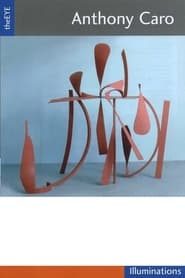
theEYE: Anthony Caro
2005
In the early 1960s Anthony Caro led a revolution in sculpture in Britain. His abstract steel constructions, often painted in bold colours, forged a new and internationally influential sculptural language. In the years since his fertile and diverse practice has consistently challenged and extended what sculpture is, and what it might be. At the age of 80, Anthony Caro remains intensely active, working each day in his studio and overseeing every detail of an extensive retrospective at Tate. Preparations for the show are featured in this profile, along with many of his major works, filmed in Britain, Germany and the United States.theEYE: Hamish Fulton
2006
Hamish Fulton describes himself as a “walking artist”. For more than thirty years he has undertaken demanding walks in many parts of the world, and drawn on his experiences to create distinctive artworks using text, graphics and photographs. He aims to “leave no trace” in the landscape, and he acknowledges that his art cannot represent the experience of a walk. “What I’m interested in,” he explains, “is presenting a sort of skeleton of something, and then the viewer fills in what’s missing, maybe from your own experience.” Although they exhibit a striking consistency in their concerns, Hamish Fulton’s artworks can exist as large-scale wall paintings and as modest publications, as graphics to compete with advertising hoardings and as online animations. They are informed both by spiritual ideas and by political questions prompted by our uses of the environment and by specific issues such as land rights.theEYE: Gillian Ayres
2008
Gillian Ayres studied at Camberwell School of Art from 1946-50, before running the AIA Gallery with painter Henry Mundy whom she married. As a young artist in the 1950’s, Ayres was closely involved with leading British abstract artists including Roger Hilton. Ayres was quick to respond to European tachism and American abstract expressionism, creating a body of work that placed her in the forefront of her generation. In the sixties she was the only woman artist to be represented in the important ‘Situation’ exhibitions, showing large paintings combining oil and paint that aimed for the sublime using very radial drip and pour techniques of action painting.theEYE: Ian Davenport
2006
Ian Davenport’s 48 metre-long painting Poured Lines transforms the tunnel beneath a railway bridge in Southwark, close to Tate Modern. The painting’s numerous vitreous enamel panels were created in a German factory where they were baked at fearsomely high temperatures. This film follows the artist as he creates this remarkable public artwork.Necessity: Climate Justice & The Thin Green Line
2022
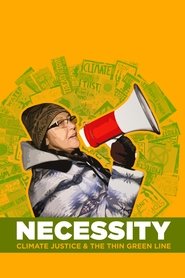
Set along the rivers of Oregon and the Columbia Gorge. We meet Lauren Regan, a criminal defense attorney using this same strategy to defend her clients, including social worker and Umatilla tribal elder, Cathy Sampson-Kruse, arrested for blocking a megaload carrying toxic materials.Finding Our Way Together
1989
Shows how people with AIDS and their caregivers can work together to meet the challenges of the AIDS epidemic.The War After
2015
The War After
2015
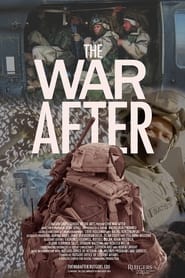
A powerful, 70-minute documentary featuring nine U.S. veterans transitioning from active duty to the unexpected challenges of civilian lifeCody High: A Life Remodeled Project
2014
Cody High: A Life Remodeled Project focuses on the efforts of the impoverished Cody Rouge community pulling together to provide safe pathways for children by removing blight and abandoned homes in Detroit. In 2014, with the partnership of Life-Remodeled, a Detroit-focused non-profit organization, the Cody-Rouge Community rose up alongside over 10,000 volunteers in order to remodel three schools, tear down three burned-out houses, remodel 25 homes of students and their families, board up 254 vacant houses, and remove blight/create beauty on 303 blocks. Cody High: A Life Remodeled project skillfully portrays the powerful stories of community members directly involved, and how their lives are being shaped as beacons of hope within the great City of Detroit.At Highest Risk
2006
At Highest Risk
2006
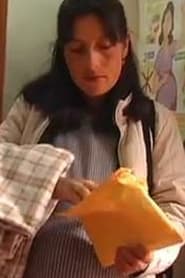
Just as the rivers of the Andes mountains twist and coil in a curious maze, so does the grave situation of Peruvian women's health care. Through the compelling story of one Andean woman, Judyth Aguero Vega, we see the horrors and triumphs of Peru's volatile health care situation. Inside a small adobe kitchen, Elsa Romero-Murrado, a midwife in the rural town of Capacmarca, takes us through rarely seen birthing ceremonies. Down the dirt path, her neighbor Judyth, 27, shares her fears of birth as she bestrides the lines of modern and traditional medicine. Their town sits seven hours from the nearest hospital. Cerlia Mendoza, president of the Mother's Club, testifies to a list of 200 women who were bribed by doctors to undergo sterilization.The Second Day
2011
The Second Day
2011
On September 11, 2001, 4 year-old Brook Peters was attending his second day of kindergarten a few blocks from the World Trade Center in New York City when two planes struck the Twin Towers. Completed when he was 14, The Second Day provides a unique and hopeful perspective on 9/11 through the eyes of young people and educators who lived through it.The Women Weavers of Assam
2019
The Women Weavers of Assam focuses on the craft, labour and the everyday lives of a group of women weavers in India’s northeastern state of Assam. The weavers belong to a non-profit collective called Tezpur District Mahila Samiti (TDMS), which was founded a century ago by women activists and Gandhian freedom fighters of Assam. The TDMS weavers preserve traditional motifs and methods of Assamese weaving, which have been declining since the introduction of mechanized cloth production in India. Montages of weaving blend with the weavers' accounts of their personal experiences, generating an evocative representation of the environment and the rhythms of TDMS, and the cultural significance of hand-weaving as a craft and industry in Assam.Pictures from a Hiroshima Schoolyard
2012
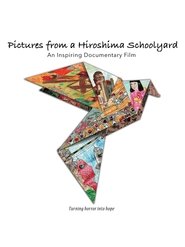
Survivors of Hiroshima discuss their lives amid the rubble after they are reunited with pictures they drew as children in 1947.Ghurbal
2005
Ghurbal
2005
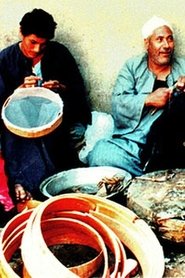
This film examines the Egyptian rural craft of making a sieve called ghurbal (from the Arabic ghurbal meaning “to winnow” which is used to both “winnow” babies on their seventh day of life and to winnow grains for making ceremonial dishes, particularly kouskousi. Embedded in this material culture artifact are layered meanings of creative regeneration of the cosmic and human worlds. We visually follow the material process from tree log cutting to making the tara (ghurbal frame), to ghurbal crafting, through the voice and image of two key persons: Na’ima, the craftswoman and owner of the frame shop, and Hoksha, the rural ghurbal craftsman. The ethnographer/filmmaker engages them to speak and we are drawn into their lives by their stories as we view self-confident mastery of their craft. While Hoksha relates how he has kept this child from his father, we see his son next to him making a modern flour sieve, having never learned the family tradition.This is [Not] Who We Are
2022
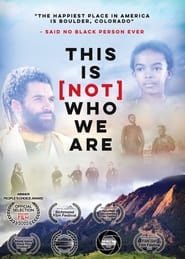
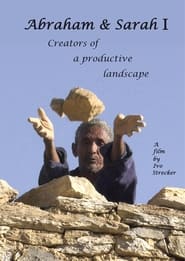
Explores the gap between Boulder, Colorado’s progressive self-image and the lived experiences of its small but resilient Black community by featuring Zayd Atkinson, a university student performing his work study job cleaning up the grounds of his dorm when he was threatened by a police officer and, soon, by eight officers with guns drawn. He lived to tell the story many Black men don't survive to tell. While it has a unique history, Boulder is emblematic of liberal, white, university-based communities that profess an inclusive ethic but live a segregated reality. The film explores the interconnected issues of land use, affordability, racial and class-based segregation, educational equity, and policing.Abraham and Sarah. Creators of a Productive Landscape
2017
In the highlands of Tigray - northern Ethiopia - on the edge of the escarpment that descends steeply to the Danakil dessert, Hagos Mashisho and Desta Gidey have toiled and struggled for years to turn the rugged slopes of the East African Rift Valley into fertile ground. They have grown crops here not only to feed themselves and their family, but also to share with others, in particular the pilgrims who regularly pass by on their way to the monastery of Gundagundo. Touched by the kindness of their hosts, the pilgrims have given them the biblical names "Abraham" and "Sarah". The film explores the work ethos and grace of these Tigrean farmers: the cheerful mood with which they do what needs to be done; the devotedness to the tasks at hand; the coordinated movements of humans and animals as they work when ploughing, sowing, harvesting, threshing; - and finally those moments of invocation when the dependence on nature and the transcendent are acknowledged.Journey West: Buwarrala Aryah
2019
Growing concern among young Aboriginal community leaders, particularly those in the Borroloola Men's Group, drew them to the idea of re-enacting a walk that hadn't occurred for almost thirty years. The Buwarrala-Journey is a traditional walk for the Garrwa, Yanyuwa, Mara and Gurdanji peoples of the Gulf of Carpentaria in northern Australia. Practiced for generations as part of the initiation of young boys, the walk was re-enacted in 1988 and documented in the film, Buwarrala Agarriya - Journey East. Gadrian Jarwijalmar Hoosan was twelve years old then and was one of four boys or Daru – boys who were prepared for their initiation ceremony. As an adult he had become a mentor to younger men, and directed a new film to record the new re-enactment of the walk in late 2017. The walk involved over one hundred community members - children, their families, teachers and volunteers, who covered a distance of seventy kilometres in seven days.The Living Forest
2004
The Living Forest
2004
Living Forest explains the food forest system in use in an area near the river Amônia; a consortium in which everyone participates to provide better food for the entire community. Using forest management, the Ashaninka Indians turn degraded land into a place for communal cultivation. Banana trees are grown for food and also as fertilizer for other crops, including plants that are used for building materials. The video also shows how the Ashaninka are able to attract more wild game with the fruit that they grow, as well as keeping honeybees and turtles for food. By conducting studies of plants and animals they are continually finding ways to improve their system. Through communal, sustainable cultivation of the forest, these Indians protect their land and plan to feed themselves well into the future.