Popular History Movies on Kanopy - Page 43
All Services
Free Services
 Netflix
 Amazon Prime Video
 Apple iTunes
 Apple TV Plus
 Disney Plus
 Google Play Movies
 Paramount Plus
 Hulu
Hulu
 HBO Max
 YouTube
 fuboTV
 Peacock
 Peacock Premium
 Amazon Video
 The Roku Channel
 AMC+
AMC on Demand
AMC+
AMC on Demand
 Kocowa
 Hoopla
 The CW
 Vudu
Vudu
 Starz
Starz
 Showtime
 PBS
PBS
 Pantaflix
 FXNow
FXNow
 Tubi TV
 Kanopy
 Comedy Central
 Crunchyroll
 Microsoft Store
 Redbox
 Sun Nxt
 ABC
ABC
 DIRECTV
 Crackle
 Fandor
 Plex
Plex
Netflix
Amazon Prime Video
Apple iTunes
Apple TV Plus
Disney Plus
Google Play Movies
Paramount Plus
Hulu
HBO Max
YouTube
fuboTV
Peacock
Peacock Premium
Amazon Video
The Roku Channel
AMC+
AMC on Demand
Kocowa
Hoopla
The CW
Vudu
Starz
Showtime
PBS
Pantaflix
FXNow
Tubi TV
Kanopy
Comedy Central
Crunchyroll
Microsoft Store
Redbox
Sun Nxt
ABC
DIRECTV
Crackle
Fandor
Plex

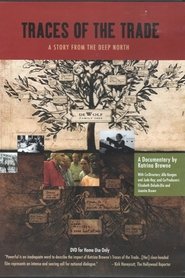
Traces of the Trade: A Story from the Deep North
2008
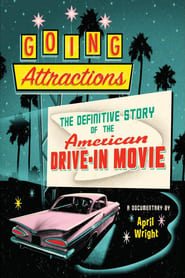
A descendant of the largest slave-trading family in U.S. history, filmmaker Katrina Browne explores the contemporary legacy of slavery by traveling with fellow descendents from Rhode Island to Ghana and Cuba, retracing the Triangle Trade route. Along the way, Browne and her companions meet with similarly interested travelers and discover the considerable importance slavery once had for Northern commerce.Going Attractions: The Definitive Story of the American Drive-in Movie
2013
star 7.7Once a vibrant part of American culture, drive-ins reached their peak in the late 1950s with almost 5,000 dotting the nation. Although drive-ins are experiencing a resurgence, today less than 400 remain. In a nation that loves cars and movies, why haven't they survived? April Wright's lovingly made documentary, filled with archival images of hundreds of open and closed drive-in theaters, interviews with theater owners, operators and cinema luminaries attempts to answer that question.House of Life: A Jewish Cemetary in Prague
2008
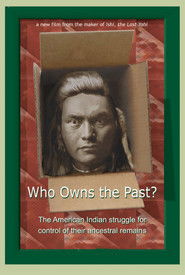
star 7A deep dive documentary into the history of the Old Jewish Cemetery of Prague.Who Owns the Past?
2000
Who Owns the Past?
2000
This documentary, narrated by Academy Award winner Linda Hunt and directed by Jed Riffe, tells the story of how the discovery of a 9,000-year-old skeleton on the banks of the Columbia River near Kennewick, Washington, reignited the conflict between anthropologists and Native peoples over the control of human remains found on ancestral Indigenous lands.Home from School: The Children of Carlisle
2021
star 5“Kill the Indian to save the man” was the catchphrase of The Carlisle Indian Industrial School, a boarding school opened in Pennsylvania in 1879. It became a grim epitaph for numerous native children who died there. In 2017, a delegation from the Wind River Indian Reservation in Wyoming attempts to retrieve the remains of three Northern Arapaho children buried far from home in the school cemetery, on a journey to recast the troubled legacy of Indian boarding schools, and heal historic wounds. This documentary film is produced by The Content Lab LLC, with support from The Wyoming Cultural Trust Fund, The Wyoming Humanities Council, and Wyoming PBS.Mawson: Life and Death in Antarctica
2008
star 4The Douglas Mawson Antarctic Expedition of 1912 is considered one of the most amazing feats of endurance of all time. Although his two companions perished, Douglas Mawson survived, but how? In a bold historical experiment, scientist and adventurer Tim Jarvis is retracing the gruelling experience, with the same meagre rations, primitive clothing and equipment to uncover what happened to Mawson physically — and mentally — as a man hanging on the precipice of life and death.American Socialist: The Life and Times of Eugene Victor Debs
2018
star 7The historic story of Eugene Victor Debs, an American Socialist leader and union organizer during the Progressive era, 1900 to 192, who ran for US President on the Socialist Party ticket (SPA) five times, even once while he was in prison for speaking out against the US involvement in World War 1.The Twisted Tale Of Bloody Mary
2008
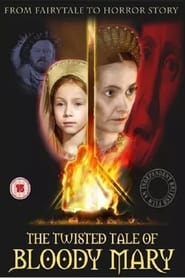
She was loved, she was a princess, heir to the throne - but the childhood fairytale turned to lifelong nightmare for Mary Tudor, Henry VIII's first child. When Henry divorced her mother and married Anne Boleyn, Mary became an outcast and a threat to the Protestant succession. By a twist of fate, on the death of her brother, she became queen at last in 1553, but her attempts to make England Catholic again were a disaster for her and the country. History has called her "Bloody Mary" for the burning of the Protestants, but how fair is this? This film paints another picture, of a woman true to her beliefs, pushed towards a terrible psychological disintegration.Nero's Golden House
2001
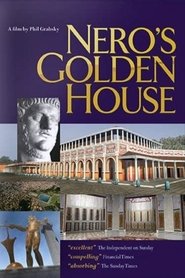
Nero's Golden House
2001
Your Day Is My Night
2014
Your Day Is My Night
2014
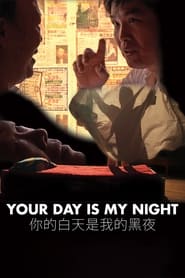
star 5.5Immigrant residents of a “shift-bed” apartment in the heart of New York City’s Chinatown share their stories of personal and political upheaval. As the bed transforms into a stage, the film reveals the collective history of the Chinese in the United States through conversations, autobiographical monologues, and theatrical movement pieces. Shot in the kitchens, bedrooms, wedding halls, cafés, and mahjong parlors of Chinatown, this provocative hybrid documentary addresses issues of privacy, intimacy, and urban life.Children of Labor: A Finnish-American History
1977
How Finnish immigrants came into contact — and conflict — with industrial America. Three generations of Finnish-Americans recount how they coped with harsh realities by creating their own institutions: churches, temperance halls, socialist halls, and cooperatives.Nagasaki Journey
1995
Nagasaki Journey
1995
Rashomon-like look at the atomic bombing of Nagasaki on August 10, 1945. Features color footage of the bomb's aftermath shown in public for the first time in over fifty years. The film features extremely rare footage of the atomic bombing, both black-and-white and color.The Sons of Tennessee Williams
2010
star 4.8Mardi Gras, drag balls and politics – where else could these elements come together but in New Orleans? Interweaving archival footage and contemporary interviews, The Sons of Tennessee Williams charts the evolution of the gay Mardi Gras krewe scene over the decades, illuminating the ways in which its emergence was a seminal factor in the cause of gay liberation in the South.Till Eulenspiegel
1975
Till Eulenspiegel
1975
star 5.4In medieval Germany, poor and witty Till Eulenspiegel fools and cheats citizens, churchmen, and landlords. Although in most cases he uses his wit for personal well-being, he often helps the poor and weak. Eventually, he gains an influential but also dangerous position as royal fool at the court of the emperor.God Knows Where I Am
2016
God Knows Where I Am
2016
star 6.4Well-educated, New Hampshire mother, Linda Bishop, was determined to stay free of the mental health system after her early release from a 3 year commitment to New Hampshire State Hospital. Instead, she became a prisoner of her own mind, a fate which she documents in one of the most evocative and chilling accounts of mental illness and of our systemic failure to protect those suffering from it.The Real Inglorious Bastards
2012
star 7.8The truth is way stranger than fiction,” muses one interviewee in this unbelievable true account of an incredible war time saga. As the Second World War was coming to a close, the US Office of Strategic Services trained and parachuted two Jewish refugees and a German deserter deep into Nazi occupied Austria. Through vivid first-person accounts, re-enactments, archival footage and learned commentary, the film reveals how their efforts disrupted a vital supply route between Germany and the Italian front to bring about the surrender of Innsbruck to Allied Forces. Their unbelievable adventure has a finale that beats any Hollywood movie hands down — but a story so powerful that it became the basis for Quentin Tarantino’s mega hit.One Woman, One Vote
1995
One Woman, One Vote
1995
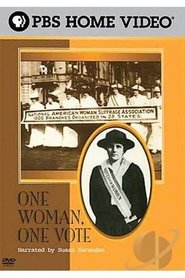
Oscar-winning actress Susan Sarandon narrates this educational installment of the popular "American Experience" series as it examines the 72-year struggle for a woman's right to vote. Segments focus on influential figures in the women's suffrage movement, including Elizabeth Cady Stanton and Alice Paul; the country's widespread fear of social revolution; and the U.S. Senate's passage of the 19th Amendment by a single vote.The Fourth Partition
2013
The Fourth Partition
2013
star 5Over 4,000,000 Poles immigrated to the United States between 1870 and 1920 in search of a better life form their partitioned country. In Chicago, they worked in some of the most dangerous factories and mills in the United States, and fought to free their homeland. Their story is known as the Fourth Partition.Target for Tonight
1941
Target for Tonight
1941
star 5.6This is the authentic story of a bombing raid on Germany... how it is planned and how it is executed. Every person seen in the picture is a member of the Royal Air Force from Commander-in-Chief to aircraft hand, re-enacting his own daily life on the job. They are the men and women who actually direct, plan and execute the raids.The Mothers of Plaza de Mayo
1985
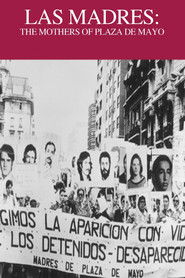
star 6.11985 Argentine documentary film directed by Susana Blaustein Muñoz and Lourdes Portillo about the Mothers of the Plaza de Mayo.