Popular History Movies on Kanopy - Page 46
All Services
Free Services
 Netflix
 Amazon Prime Video
 Apple iTunes
 Apple TV Plus
 Disney Plus
 Google Play Movies
 Paramount Plus
 Hulu
Hulu
 HBO Max
 YouTube
 fuboTV
 Peacock
 Peacock Premium
 Amazon Video
 The Roku Channel
 AMC+
AMC on Demand
AMC+
AMC on Demand
 Kocowa
 Hoopla
 The CW
 Vudu
Vudu
 Starz
Starz
 Showtime
 PBS
PBS
 Pantaflix
 FXNow
FXNow
 Tubi TV
 Kanopy
 Comedy Central
 Crunchyroll
 Microsoft Store
 Redbox
 Sun Nxt
 ABC
ABC
 DIRECTV
 Crackle
 Fandor
 Plex
Plex
Netflix
Amazon Prime Video
Apple iTunes
Apple TV Plus
Disney Plus
Google Play Movies
Paramount Plus
Hulu
HBO Max
YouTube
fuboTV
Peacock
Peacock Premium
Amazon Video
The Roku Channel
AMC+
AMC on Demand
Kocowa
Hoopla
The CW
Vudu
Starz
Showtime
PBS
Pantaflix
FXNow
Tubi TV
Kanopy
Comedy Central
Crunchyroll
Microsoft Store
Redbox
Sun Nxt
ABC
DIRECTV
Crackle
Fandor
Plex

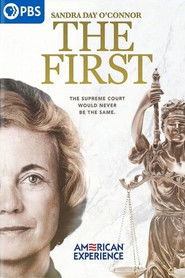
Sandra Day O'Connor: The First
2021
When Ronald Reagan nominated Sandra Day O’Connor as the Supreme Court’s first female justice in 1981, the announcement dominated the news. Time Magazine’s cover proclaimed “Justice At Last,” and she received unanimous Senate approval. Born in 1930 in El Paso, Texas, O’Connor grew up on a cattle ranch in Arizona in an era when women were expected to become homemakers. After graduating near the top of her class at Stanford Law School, she could not convince a single law firm to interview her, so she turned to volunteer work and public service. A Republican, she served two terms in the Arizona state senate, then became a judge on the state court of appeals. During her 25 years on the Supreme Court, O’Connor was the critical swing vote on cases involving some of the 20th century’s most controversial issues. Forty years after her confirmation, this biography recounts the life of a pioneering woman who both reflected and shaped an era.Piaget’s Developmental Theory: an Overview
1989
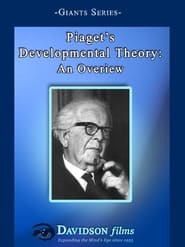
The work of Jean Piaget has become the foundation of current developmental psychology and the basis for changes in educational practice. David Elkind, author of The Hurried Child and Miseducation, and a student of Jean Piaget, explores the roots of Piaget’s work and outlines important vocabulary and concepts that structure much of the study of child development. Using both archival film of Dr. Piaget and newly shot sequences of Dr. Elkind conducting interviews with children of varying ages, this film presents an overview of Piaget’s developmental theory, its scope and content.Part One: China in Revolution 1911–1949
1989
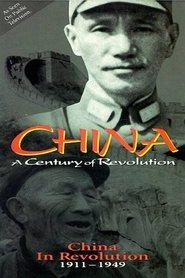
star 8The first film, China in Revolution, describes the epic upheaval that began in China with the fall of the last emperor in 1911. Over the next four decades, the Chinese people were caught up in struggles with warlords, foreign invasion and a bitter rivalry between the Chinese Communist Party and the Nationalist Party. The film highlights the two figures who came to shape events, Chang Kai-shek and Mao Zedong. First they worked as allies to unite the country and then they fought a bloody civil war that was won by the Communists in 1949.The Law in These Parts
2011
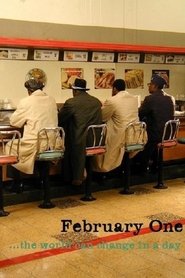
star 6.8Can justice truly be served in the occupied territories given the current system of law administered by Israel for Palestinians? This documentary explores the history of Israel's military legal system in the Occupied Palestinian Territories of the West Bank and Gaza Strip.February One: The Story of the Greensboro Four
2003
On February 1, 1960, four college students changed American history. Ezell Blair, Jr., David Richmond, Franklin McCain and Joseph McNeil began a sit-in at a white only lunch counter in Greensboro. This act of bravery is noted as one of the vital moments in the American Civil Rights Movement. Offering a portrait of how four young men whose courage at led other non-violent protests through the '60s.The Building of a Nation
1938
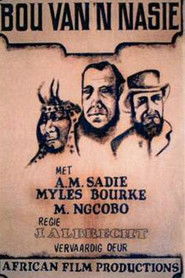
The epic (and very costly) retelling of the history of South Africa from 1652 to 1910, made to coincide with the 100th anniversary of the Great Trek (1838)Black Feminist
2019
Black Feminist
2019
Black Feminist is a feature length documentary film surrounding the double edged sword of racial and gender oppression that black women face in America. This documentary is told through interviews from scholars, lecturers, writers, business owners, veterans, comedians and authors. In addition to information interviews, this documentary is narrated by an animated character LaToya Johnson, played by Nadirah Lugg.The Red Orchestra
2003
The Red Orchestra
2003
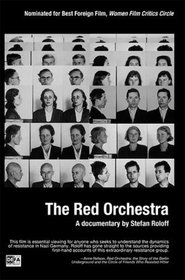
The Red Orchestra was a Berlin-based resistance group that fought against the Third Reich within Germany. The Gestapo labeled them Communists and traitors, and so did the Allies. Only recently have historians recognized them as one of the most important resistance groups. This movie, made by the son of one of the survivors, tells their story for the first time to an American audience.Seeing Red: Stories of American Communists
1983
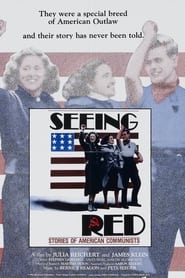
star 6.3A unique documentary that looks at the political activities of the American Communist Party in the early to mid-twentieth century.The Jesus Strand: A Search for DNA
2017
star 5Geneticist George Busby and biblical scholar pastor Joe Basile travel the globe extracting and analyzing samples from the most famous religious relics from history in search of the DNA of the most famous figure in history; Jesus Christ.Death and the King's Horseman
2023
star 10In British-occupied Nigeria, a Yoruba king, the Alafin, has died, and it is the duty of his horseman, Elesin, to accompany him into the afterlife. While lustily enjoying the pleasures of this world, Elesin proudly anticipates his transition to the next – but the sacred ritual is interrupted, resulting in unforeseen tragedy. Inspired by a real-life incident, this masterpiece from Nobel Prize winner Soyinka celebrates a community striving to uphold its culture in the face of colonial power.World War II: The Fall of France
2001
Hitler attacks west invading Belgium and Holland, Operation Dynamo and the attempt to evacuate the British expeditionary force at Dunkirk culminating in the fall of France.Following the Ninth: In the Footsteps of Beethoven's Final Symphony
2012
star 8.8Part road trip, part adventure story, FOLLOWING THE NINTH is an inspirational film about Beethoven's Choral Symphony, its majestic power to liberate us, to shield us against suffering, to provide hope and resilience during dark times. Filmed on five continents and in 12 countries, FOLLOWING THE NINTH is the story of four lives that have been transformed and repaired by the music, expressed most vividly in the prophecy of the Ode to Joy: “Alle Menschen werden Brüder”(All Men Will Be Brothers).Surname Viêt Given Name Nam
1989
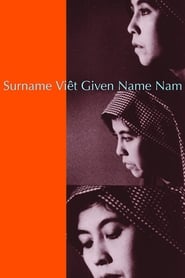
star 5.2The film evolves around questions of identity, popular memory and culture. While focusing on aspects of Vietnamese reality as seen through the lives and history of women resistance in Vietnam and in the U.S, it raises questions on the politics of interviewing and documenting.The Busing Battleground
2023
The Busing Battleground pulls back the curtain on the volatile effort to end school segregation, detailing the decades-long struggle for educational equity that preceded the crisis. It illustrates how civil rights battles had to be fought across the North as well as the South and reckons with the class dimensions of the desegregation saga, exploring how the neighborhoods most impacted by the court’s order were the poorest in the city.Be My Voice
2021
Be My Voice
2021
star 7.8Journalist and activist Masih Alinejad has 4.5 million followers on Instagram after urging Iranian women to rebel against the forced hijab on social media. Her call to action has grown into one of the largest acts of civil disobedience in today’s Iran. Something that has made the regime desperately tighten its grip to regain control over the people.Into the Fire: American Women in the Spanish Civil War
2002
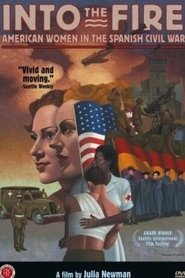
In 1936, a right-wing military coup tried to overthrow the new, legally elected, democratic government of Spain. Hitler and Mussolini quickly joined the fight on the side of the fascist military. In response, and against the wishes of the U.S. government, about 80 American women joined over 2700 of their countrymen to volunteer for the Republican side in the Spanish Civil War. This film is composed of interviews with and excerpts from the letters, journals, and published writings of some of these women, as well as of supporters and sympathizers including Martha Gellhorn, Eleanor Roosevelt, Virginia Cowles, Josephine Herbst, and Dorothy Parker.Che: Rise and Fall
2009
Che: Rise and Fall
2009
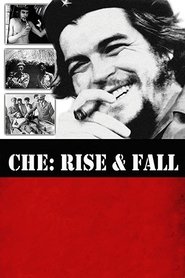
Che: Rise and Fall, was entirely shot in Cuba at the time the remains of the legendary warrior were being airlifted from Bolivia to his final resting place in Santa Clara. The documentary brings out, for the first time, the voice of his brothers in arms in Sierra Maestra, Congo and Bolivia. But above all, that of Alberto Granados with whom the young CHE Guevara rode on a motorcycle out of Argentina on a trip that will end, tragically, sixteen years later in the jungles of Bolivia.Dial H-I-S-T-O-R-Y
1997
Dial H-I-S-T-O-R-Y
1997
star 6.9An acclaimed hijacking documentary that eerily foreshadowed 9/11. We meet the romantic skyjackers who fought their revolutions and won airtime on the passenger planes of the 1960s and '70s. By the 1990s, such characters were apparently no more, replaced on our TV screens by stories of anonymous bombs in suitcases. Director Johan Grimonprez investigates the politics behind this change, at the same time unwrapping our own complicity in the urge for ultimate disaster.Shootout at Wadala
2013
Shootout at Wadala
2013
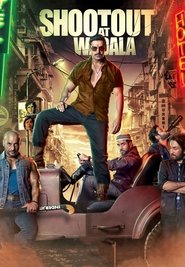
star 5.4The first-ever registered encounter by the Mumbai Police, which took place on November 1, 1982.