Popular History Movies on Kanopy - Page 47
All Services
Free Services
 Netflix
 Amazon Prime Video
 Apple iTunes
 Apple TV Plus
 Disney Plus
 Google Play Movies
 Paramount Plus
 Hulu
Hulu
 HBO Max
 YouTube
 fuboTV
 Peacock
 Peacock Premium
 Amazon Video
 The Roku Channel
 AMC+
AMC on Demand
AMC+
AMC on Demand
 Kocowa
 Hoopla
 The CW
 Vudu
Vudu
 Starz
Starz
 Showtime
 PBS
PBS
 Pantaflix
 FXNow
FXNow
 Tubi TV
 Kanopy
 Comedy Central
 Crunchyroll
 Microsoft Store
 Redbox
 Sun Nxt
 ABC
ABC
 DIRECTV
 Crackle
 Fandor
 Plex
Plex
Netflix
Amazon Prime Video
Apple iTunes
Apple TV Plus
Disney Plus
Google Play Movies
Paramount Plus
Hulu
HBO Max
YouTube
fuboTV
Peacock
Peacock Premium
Amazon Video
The Roku Channel
AMC+
AMC on Demand
Kocowa
Hoopla
The CW
Vudu
Starz
Showtime
PBS
Pantaflix
FXNow
Tubi TV
Kanopy
Comedy Central
Crunchyroll
Microsoft Store
Redbox
Sun Nxt
ABC
DIRECTV
Crackle
Fandor
Plex

Streit's: Matzo and the American Dream
2015
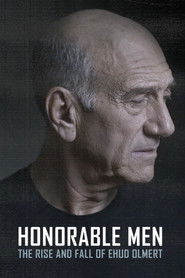
On New York's rapidly gentrifying Lower East Side sits the Streit's Matzo factory. When its doors opened in 1925, it sat at the heart of the nation's largest Jewish immigrant community.Honorable Men: The Rise and Fall of Ehud Olmert
2020
star 6How former Israeli Prime Minister Ehud Olmert unexpectedly rose to power and how he dramatically fell from grace: from the most powerful position in the country to prison.Treasure Fleet: The Epic Voyage of Zheng He
2005
star 9Between 1405 and 1433, Admiral Zheng He of China led seven epic voyages to more than 30 countries, including Sri Lanka, India, Indonesia, Malaysia, Vietnam, Kenya and Tanzania. The admiral and his crew gathered knowledge and wealth from Indochina to Africa for China's Ming empire. These voyages were the biggest naval expeditions mounted at the time. Zheng He was bigger than life and could have changed the course of history. But after the seven voyages, he and his Treasure Fleet were forgotten by China, and the world, for six hundred years. National Geographic photographer Michael Yamashita sets sail to discover why. To celebrate the 600th anniversary of Zheng He's maiden exploration voyage, Michael Yamashita traveled over 10,000 miles from Yunnan in China to Africa's Swahili coast taking over 40,000 pictures for the feature story on this great explorer, published in the July 2005 edition of National Geographic.The American Revolution
2016
Everyone knows the story of Paul Revere and his famous midnight ride to warn colonial forces of the British approach. But history books don't tell of the man who sent Revere on his mission: Joseph Warren, America's least remembered founding father. Uncover the forgotten history of Warren and stories of other unsung heroes in our fight for independence in The American Revolution.Africa, I Will Fleece You
1992
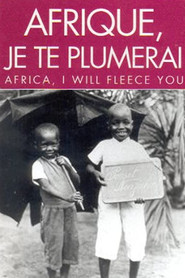
star 5.8This documentary of repressive political realities in Cameroon begins with the 1990 publication of an open letter to President Biya calling for a national conference - and the immediate arrest of the letter's author and publisher. The narration then examines the nation's colonial history, beginning with the first German missionary in 1901, the establishment of schools, French occupation following World War I, the paucity of books written by and published by Cameroonians, and the repression of the CPU, a leftist organization of the 1950s and 1960s. Cameroon and its people are the lark, its feathers plucked first by colonialism and then by native strongmen: 'Alouette, je te plumerai.'In the Beginning
2007
In the Beginning
2007
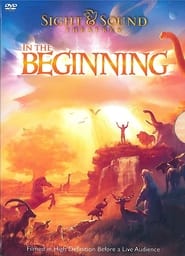
Sight & Sound's epic musical brought Creation to life! God's creation of the heavens and the earth along with all the extraordinary animals played a part in this beautiful production. Audiences were able to witness the fall of Adam and Eve, and their glorious restoration. The story promises to be an experience beyond your imagination!Camille Claudel 1915
2013
Camille Claudel 1915
2013
star 6Winter, 1915. Confined by her family to an asylum in the South of France - where she will never sculpt again - the chronicle of Camille Claudel's reclusive life, as she waits for a visit from her brother, Paul Claudel.Hi, Neighbor
2011
Hi, Neighbor
2011
This experimental short film is about a little girl who lost her home to urban renewal, and asks her wealthy neighbor, "why?" The film is a prequel to Andrade-Watkins' documentary trilogy about the Cape Verdean community in Fox Point. "Hi, Neighbor" had its world premiere at the 2011 Cape Verdean International Film Festival and was awarded Jury Selection (first prize), in the 2012 Black Maria Film Festival.November's Children: Revolution in Prague
1991
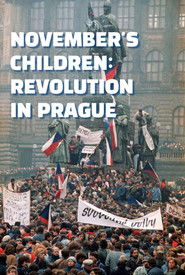
star 3A first-hand account of the tumultuous events of 1989 when a student-led revolution succeeded in overthrowing Czechoslovakia's repressive Communist regime. The film, which includes rare government and underground footage, follows the lives of three Czechoslovak students whose leadership helped ignite the 'Velvet Revoution' and eventually establish a democratic government. Directed by Oscar-winner Allan Miller, it features interviews with students, activists and the country's new president, Vaclav Havel.World War II: The War in the Desert
2001
In the summer of 1942, Rommel's Afrika Korps swept across the Western Desert, sending the Allied forces into full retreat. Driven back deep into Egypt, Montgomery's 8th Army dug in along the El Alamein Line, prepared for battle. This factual film portrays the events leading up to and during, one of the greatest battles in the Second World War, the Battle of El Alamein.Welcome to Kutsher's: The Last Catskills Resort
2012
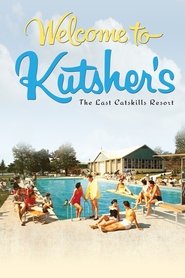
star 5.3Kutsher's Country Club is the last surviving Jewish resort in the Catskills. One of the legendary Borscht Belt hotels during its heyday, Kutsher's has been family-owned and operated for over 100 years. Exploring the full Dirty Dancing-era Catskills experience-- and how it changed American pop culture in the comedy, sports and vacation industries-- this documentary captures a last glimpse of a lost world as it disappears before our eyes.Histories Of The Holocaust: Dachau - Liberation And Retribution
2011
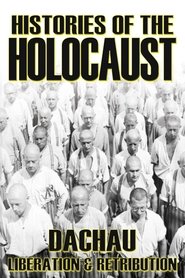
The inhuman brutality and bloodshed that was endemic at Dachau - Nazi Germany's first concentration camp - did not come to an end with its 1945 liberation, for this dread place proved capable of triggering a spate of vengeful retaliation not only by its half-crazed prisoners, but their rescuers. Chapels of various faiths, memorials and sculptures now mark the camp's sites of execution and torture.Lili
2020
Lili
2020
A young mother flees her country in the midst of a revolution, revealing to her daughter a history of abandonment that crosses three continents and four generations.Nazi Law: Legally Blind
2016
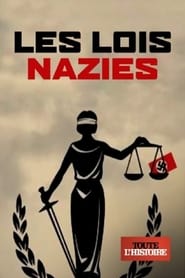
Sobering look at how Hitler and the Nazi party manipulated laws to further their hate-filled agenda. People who were considered physically or racially inferior or disloyal to the state were deprived of their rights and often their lives under these Nazi laws. When Germany was ultimately defeated, Nazi leaders were charged with crimes against humanity in the Nuremberg Trials, in an attempt by the world community to restore the rule of law.Lumiere's First Picture Shows
2013
star 6.5An overview of the works of French film pioneers Louis and Auguste Lumière from 1895 to 1897.The Secret History of The White House
2019
Piecing together information from secret sources and a two-hundred-year evolution of the White House, investigative journalists and government insiders weigh in on the mystery of an unusual white box and a top-secret construction project dubbed the "Big Dig" that took place outside of the West Wing from 2007-2012. Using little known images, previously classified material and detailed graphics, the search for truth reveals not only what secrets might lay below the White House, but how their existence could affect democracy as we know it.The Death of Pinochet
2011
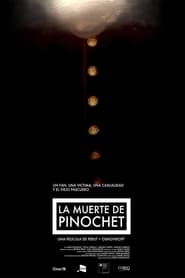
star 4.8On December 10th, 2006, General Pinochet dies unexpectedly at Santiago's Military Hospital. His decease triggers a 24 hours revival of political divisions that marked with violence and death Chilean recent history. With high quality original footage and testimonies of four characters that deeply experienced a journey of strong contrasts and surrealistic nuances, the film narrates in an innovative, exciting way the ending of a key chapter in Chilean history.Speeches That Changed The World
2016
Words and delivery can combine to galvanize an audience, creating ‘I remember where I was when...’ moments. JFK at the Brandenburg Gate or Martin Luther King at the Lincoln Memorial provide unforgettable examples that still stir today. This collection of classic speech excerpts contains not only inspiring orations to democratic freedom and the noblest aspects of human endeavor, but also some of the darkest and most despicable speeches delivered in modern times.9/11: Inside the Pentagon
2016
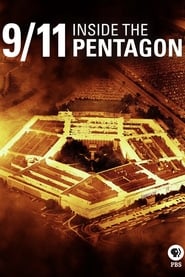
star 7.8The Sept. 11, 2001, attack on the Pentagon is recalled via the first-person accounts of Pentagon personnel, first responders, aviation experts and journalists. Included: Department of Defense footage from inside the Pentagon.