Popular History Movies on Kanopy - Page 44
All Services
Free Services
 Netflix
 Amazon Prime Video
 Apple iTunes
 Apple TV Plus
 Disney Plus
 Google Play Movies
 Paramount Plus
 Hulu
Hulu
 HBO Max
 YouTube
 fuboTV
 Peacock
 Peacock Premium
 Amazon Video
 The Roku Channel
 AMC+
AMC on Demand
AMC+
AMC on Demand
 Kocowa
 Hoopla
 The CW
 Vudu
Vudu
 Starz
Starz
 Showtime
 PBS
PBS
 Pantaflix
 FXNow
FXNow
 Tubi TV
 Kanopy
 Comedy Central
 Crunchyroll
 Microsoft Store
 Redbox
 Sun Nxt
 ABC
ABC
 DIRECTV
 Crackle
 Fandor
 Plex
Plex
Netflix
Amazon Prime Video
Apple iTunes
Apple TV Plus
Disney Plus
Google Play Movies
Paramount Plus
Hulu
HBO Max
YouTube
fuboTV
Peacock
Peacock Premium
Amazon Video
The Roku Channel
AMC+
AMC on Demand
Kocowa
Hoopla
The CW
Vudu
Starz
Showtime
PBS
Pantaflix
FXNow
Tubi TV
Kanopy
Comedy Central
Crunchyroll
Microsoft Store
Redbox
Sun Nxt
ABC
DIRECTV
Crackle
Fandor
Plex

The Boat Is Full
1981
The Boat Is Full
1981
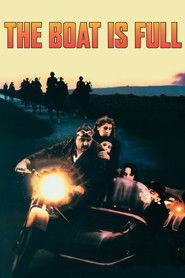
star 6During World War II, Switzerland severely limited refugees: "Our boat is full." A train from Germany halts briefly in an isolated corner of Switzerland. Six people jump off seeking asylum: four Jews, a French child, and a German soldier. They seek temporary refuge with a couple who run a village inn. They pose as a family: the deserter as husband, Judith as his wife, an old man from Vienna as her father, his granddaughter and the French lad, whom they beg to keep silent, as their children. Judith's teenage brother poses as a soldier. The fabrication unravels through chance and the local constable's exact investigation. Whom will the Swiss allow to stay? Who gets deported?Oscar Arias: Without a Shot Fired
2017
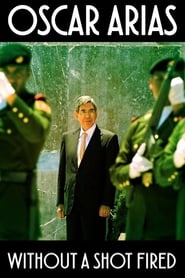
star 6This is the story of a tiny country that made a decision to do something that no other country had ever done -- it decided to abolish its army and declare peace to the world. And this is the story of a young boy who grew up in that country, and how he ended up challenging -- and sometimes even convincing -- the greatest powers in the world to follow Costa Rica's example. "Oscar Arias: Without a Shot Fired" is a Don Quixote-like saga with great historical touchstones -- Ronald Reagan and Mikhail Gorbachev, Cold War politics and Communism, Central American War and Peace. It follows a slight, academic, and most unlikely hero over the course of more than fifty years, as he travels the world in a quest to stop the spread of the weapons of war. In the end, it is a story about the triumph of reason, of the sparrow triumphing over the eagle, and how the impossible dream can sometimes come true.Mute Fire
2019
Mute Fire
2019
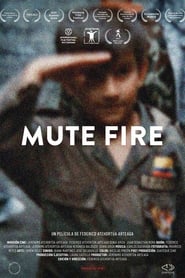
star 6.1On 6 March 1906, four men were executed for the attempted murder of Colombian president Rafael Reyes. The event was photographed, and the photos were later used for a fictionalised film on the failed coup. From then on, cinema in this South American country has been inextricably linked to its violent history. Moving images have been used for historiography, propaganda, disinformation and to instil unity in a nation that refuses to come together. Falsos positivos, murdered youths disguised as guerrillas by the army to simulate military success, are a common element.The Barber of Birmingham: Foot Soldier of the Civil Rights Movement
2011
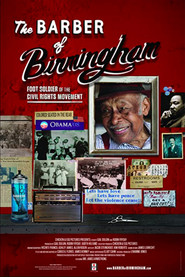
star 5The film features 85-year-old Mr. Armstrong, an African American barber in Birmingham, Alabama, as he experiences the manifestation of an unimaginable dream: the election of the first African American president. This colorful and courageous activist of the Civil Rights era casts his vote, celebrates Obama's victory and proudly unfurls the American flag as he is inducted into the Foot Soldiers Hall of Fame. Mr. Armstrong links the magnitude of the present paradigm shift with challenges he faced in the past: from his sons' integration into an all white school to the Bloody Sunday march for voting rights. The documentary raises questions about democracy and patriotism in the face of adversity, and the vigilance and action required to ensure continued forward movement to end racial injustice.The Image You Missed
2018
The Image You Missed
2018
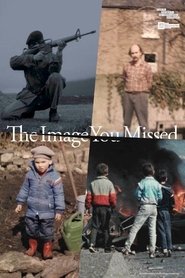
star 5.5An Irish filmmaker grapples with the legacy of his estranged father, the late documentarian Arthur MacCaig, through MacCaig's decades-spanning archive of the conflict in Northern Ireland. Drawing on over 30 years of unique and never-seen-before footage, 'The Image You Missed' is an experimental essay film that weaves together a history of the Northern Irish 'Troubles' with the story of a son's search for his father. In the process, the film creates a candid encounter between two filmmakers born into different political moments, revealing their contrasting experiences of Irish nationalism, the role of images in social struggle, and the competing claims of personal and political responsibility.Congo: White King, Red Rubber, Black Death
2003
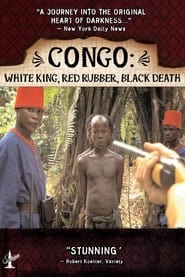
star 7.2This true, astonishing story describes how King Leopold II of Belgium turned Congo into its private colony between 1885 and 1908. Under his control, Congo became a gulag labor camp of shocking brutality. Leopold posed as the protector of Africans fleeing Arab slave-traders but, in reality, he carved out an empire based on terror to harvest rubber.Be My Voice
2021
Be My Voice
2021
star 7.8Journalist and activist Masih Alinejad has 4.5 million followers on Instagram after urging Iranian women to rebel against the forced hijab on social media. Her call to action has grown into one of the largest acts of civil disobedience in today’s Iran. Something that has made the regime desperately tighten its grip to regain control over the people.Part Two: The Mao Years 1949–1976
1994
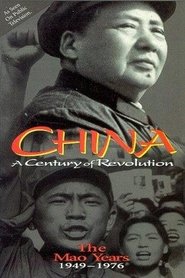
star 7The trilogy continues with The Mao Years, a look at the next period of modern China’s history: Mao Zedong’s rule, from 1949 to his death in 1976. The film begins with the celebrations marking the establishment of the People’s Republic of China, a moment of great hope for millions of Chinese. But the quarter-century of Mao’s rule was as turbulent as the decades which preceded it. Interludes of relative calm and increased prosperity were interrupted repeatedly by violent campaigns, purges, and a famine in which killed more than 30 million people. It culminated in Mao’s colossal and tragic experiment, the Great Proletarian Cultural Revolution. When Mao died in 1976, people were exhausted by the turmoil and longed for stability.Rats in the Ranks
1996
Rats in the Ranks
1996
star 7Every September Sydney's inner-suburban Leichhardt Council re-elects it mayor. Incumbent Larry Hand was popular with the citizenry but they don't vote for mayor - the 12 councillors do - and after three years of Larry, at least four councillors were after his job. When film-makers Bob Connolly and Robin Anderson settled in at Leichhardt Council in early 1994 the knives were already being sharpened. A battle royal was in the making, and so it came to pass. By the end of September Larry had fought the fight of his life, with Connolly and Anderson documenting every bit of it on film. Ambition, courage, envy, hatred, loyalty, betrayal, disaster, triumph... in other words, a classic study in politics.The Poisoner's Handbook
2014
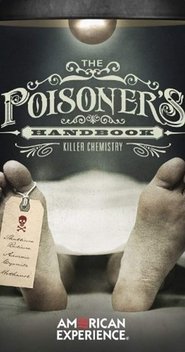
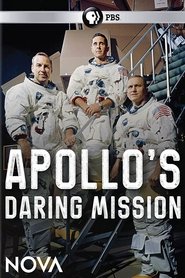
star 7.7In 1918, when New York City hired its first scientifically trained medical examiner Charles Norris. Over the course of a decade and a half, Norris and his extraordinarily driven and talented chief toxicologist, Alexander Gettler, would turn forensic chemistry into a formidable science, sending many a murderer to the electric chair and setting the standards that the rest of the country would ultimately adopt.Apollo's Daring Mission
2018
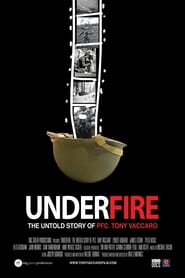
star 5.5Apollo astronauts and engineers tell the inside story of Apollo 8, the first manned mission to the moon. The U.S. space program suffered a bitter setback when Apollo 1 ended in a deadly fire during a pre-launch run-through. In disarray, and threatened by the prospect of a Soviet Union victory in the space race, NASA decided upon a radical and risky change of plan: turn Apollo 8 from an earth-orbit mission into a daring sprint to the moon while relying on untried new technologies. Fifty years after the historic mission, the Apollo 8 astronauts and engineers recount the feats of engineering that paved the way to the moon.Underfire: The Untold Story of Pfc. Tony Vaccaro
2016
star 7.2The remarkable story of WWII infantryman and photographer Tony Vaccaro, who created one of the most comprehensive, haunting and intimate photographic records of the war using a smuggled $47 camera while developing the negatives in his helmet at night.Balangiga: Howling Wilderness
2017
star 91901, Balangiga. Eight-year-old Kulas flees town with his grandfather and their carabao to escape General Smith's Kill & Burn order. He finds a toddler amid a sea of corpses and together, the two boys struggle to survive the American occupation.Top Secret Rosies: The Female 'Computers' of WWII
2010
star 8In 1942, when computers were human and women were underestimated, a group of female mathematicians helped win a war and usher in the modern computer age. Sixty-five years later their story has finally been told.Führer Cult and Megalomania
2011
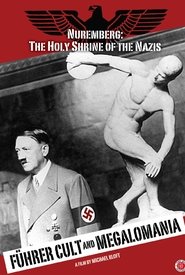
star 6By early in the twentieth century, Nuremberg was regarded as the most anti-Semitic city in Europe. By 1929, Hitler had decided to make Nuremberg the "City of the Party Rallies" and a symbol representing the greatness of the German Empire. Even today, it is possible to see signs in Nuremberg of the megalomaniac proportions that the system was to assume.Rabbit in the Moon
1999
Rabbit in the Moon
1999
star 2Like many Japanese Americans released from WWII internment camps, the young Omori sisters did their best to erase the memories and scars of life under confinement. Fifty years later acclaimed filmmaker Emiko Omori asks her older sister and other detainees to reflect on the personal and political consequences of internment. From the exuberant recollections of a typical teenager, to the simmering rage of citizens forced to sign loyalty oaths, Omori renders a poetic and illuminating picture of a deeply troubling chapter in American history.Paul Goodman Changed My Life
2011
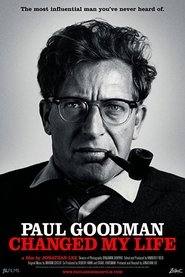
star 1Paul Goodman, whose best-selling 'Growing Up Absurd' made him the philosopher of the New Left in the 1960s, was also a brilliant poet, out queer (and family man) in the 1940s, radical pacifist and visionary. His ideas and stubborn integrity helped many find a moral compass in the '60's -- and can do so again today.Lost Tombs of Notre Dame
2024
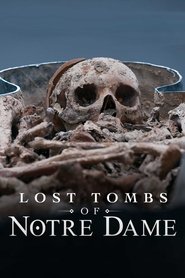
star 7After the Notre Dame fire in 2019, two mysterious coffins were found buried beneath its floor. Where did they come from and who was inside? Follow scientists and historians as they investigate what their stories reveal about this iconic cathedral. From NOVA.The War on Disco
2023
The War on Disco
2023
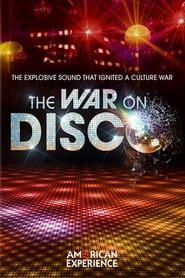
star 6.7The War on Disco explores the culture war that erupted over the spectacular rise of disco music. Originating in underground Black and gay clubs, disco had unseated rock as America’s most popular music by the late 1970s. But many diehard rock fans viewed disco, with its repetitive beat and culture that emphasized pleasure, as shallow and superficial. A story that’s about much more than music, The War on Disco explores how the powerful anti-disco backlash revealed a cultural divide that to some seemed to be driven by racism and homophobia. The hostility came to a head on July 12, 1979, when a riot broke out at “Disco Demolition Night” during a baseball game in Chicago.The Black Kung Fu Experience
2012
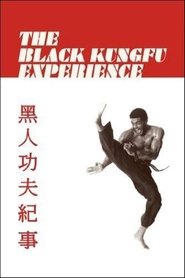
star 4.8This film focuses on how a group of African American pioneers became respected masters in a subculture dominated by Chinese and white men.