Popular History Movies on Kanopy - Page 45
All Services
Free Services
 Netflix
 Amazon Prime Video
 Apple iTunes
 Apple TV Plus
 Disney Plus
 Google Play Movies
 Paramount Plus
 Hulu
Hulu
 HBO Max
 YouTube
 fuboTV
 Peacock
 Peacock Premium
 Amazon Video
 The Roku Channel
 AMC+
AMC on Demand
AMC+
AMC on Demand
 Kocowa
 Hoopla
 The CW
 Vudu
Vudu
 Starz
Starz
 Showtime
 PBS
PBS
 Pantaflix
 FXNow
FXNow
 Tubi TV
 Kanopy
 Comedy Central
 Crunchyroll
 Microsoft Store
 Redbox
 Sun Nxt
 ABC
ABC
 DIRECTV
 Crackle
 Fandor
 Plex
Plex
Netflix
Amazon Prime Video
Apple iTunes
Apple TV Plus
Disney Plus
Google Play Movies
Paramount Plus
Hulu
HBO Max
YouTube
fuboTV
Peacock
Peacock Premium
Amazon Video
The Roku Channel
AMC+
AMC on Demand
Kocowa
Hoopla
The CW
Vudu
Starz
Showtime
PBS
Pantaflix
FXNow
Tubi TV
Kanopy
Comedy Central
Crunchyroll
Microsoft Store
Redbox
Sun Nxt
ABC
DIRECTV
Crackle
Fandor
Plex

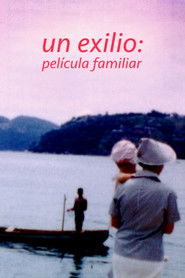
In Exile: A Family Movie
2017
star 5.5The life stories of Juan Francisco's grandparents and parents, who arrived in Mexico in 1939 as refugees at the end of the Spanish Civil War (1936-1939). A family saga, from the beginning of the twentieth century to the present day.Yours in Sisterhood
2018
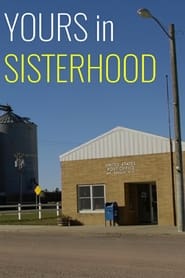
Yours in Sisterhood
2018
star 4.2What might be revealed in the process of inviting strangers to act out and respond to 1970s feminism forty years later? Between 2015 and 2017, hundreds of strangers in communities all over the US were invited to read aloud and respond to letters from the 70s sent to the editor of Ms. Magazine–the first mainstream feminist magazine in the US. The intimate, provocative, and sometimes heartbreaking conversations that emerge from these spontaneous performances make us think critically about the past, present, and future of feminism.An Ecology of Mind
2010
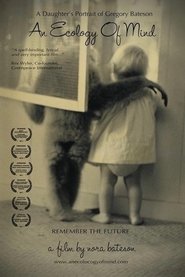
An Ecology of Mind
2010
star 4.6A portrait of Gregory Bateson, celebrated anthropologist, philosopher, author, naturalist, and systems theorist. His story is lovingly told by his youngest daughter, Nora, with footage from Gregory's own films shot in the 1930s with his wife Margaret Mead in Bali and New Guinea, along with photographs, filmed lectures, and interviews.Winning a Continent
1916
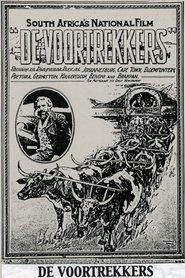
Winning a Continent
1916
star 5This epic film was one of the first South African dramatic film productions. It tells the story of the Boers’ Great Trek at the end of the 1830s, concluding with a hegemonic reconstruction of the 1838 Battle of Blood River, where a few hundred armed Afrikaners defeated several thousand Zulus.Witness to Revolution: The Story of Anna Louise Strong
1984
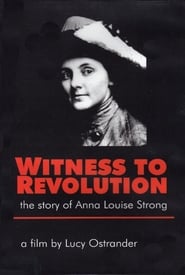
The daughter of a Nebraska minister, Anna Louise Strong earned a Ph.D. in philosophy at the University of Chicago. But it was in the Pacific Northwest, where she witnessed the 1916 Everett massacre and chronicled the 1919 Seattle General Strike, that her political vision took shape. In Moscow she helped found the first English language newspaper, in Spain her many visits resulted in her book, Spain in Arms; and in China she interviewed Mao in a Yan'an cave in 1946. She is buried in Beijing in a special cemetery for martyrs of the revolution.Seven Wonders of the Buddhist World
2011
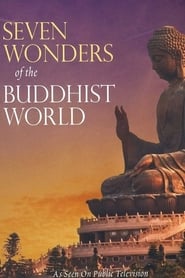
star 6.1In this fascinating documentary, historian Bettany Hughes travels to the seven wonders of the Buddhist world.Her journey begins at the Mahabodhi Temple in India, where Buddhism was born; here Hughes examines the foundations of the belief system - the three jewels.At Nepal's Boudhanath Stupa, she looks deeper into the concept of dharma - the teaching of Buddha, and at the Temple of the Tooth in Sri Lanka, Bettany explores karma, the idea that our intentional acts will be mirrored in the future.At Wat Pho Temple in Thailand, Hughes explores samsara, the endless cycle of birth and death that Buddhists seek to end by achieving enlightenment, before travelling to Angkor Wat in Cambodia to learn more about the practice of meditation.In Hong Kong, Hughes visits the Giant Buddha and looks more closely at Zen, before arriving at the final wonder, the Hsi Lai temple in Los Angeles, to discover more about the ultimate goal for all Buddhists - nirvana.Part Three: Born Under the Red Flag 1976–1997
1997
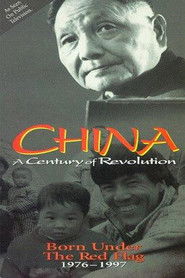
star 6What happened next could never have been anticipated and forms the story line for the final film of the trilogy; Born Under The Red Flag examines China’s remarkable transformation after Mao’s death. In just 15 years, under Deng Xiaoping’s leadership, China raced forward at an astonishing pace to become a never-before-seen hybrid of communism and capitalism. The world’s most populous nation has reinvented itself, changing from a relatively undeveloped and isolated nation into an economic giant and a major international power. For many Chinese, this transformation has brought unprecedented prosperity, but it has also raised troubling questions of national identity and social inequality.An African Election
2011
An African Election
2011
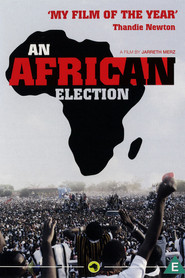
star 7.4Filmmaker Jarreth Merz directs this eye-opening documentary about the 2008 presidential elections in Ghana, chronicling the start-to-finish drama of campaigning in a nation that's long served as a measure of the continent's political stability.Rome: Engineering an Empire
2005
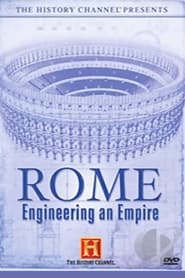
star 8.5Despite their personal short comings, many of the Roman Empires great engineering accomplishments were introduced during the reign of the Caesars. The tradition continued under Vespasian, builder of the Coliseum, Trajan, builder of the Forum, and Hadrian, builder and possibly the designer of the Pantheon. Finally, a decade later Caracalla built a bath complex/recreation center in an effort to secure his own reputation in history.After the Apology
2017
After the Apology
2017
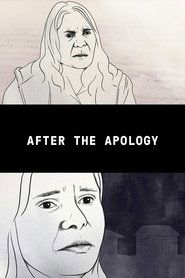
Suellyn thought the Department of Community Services (DOCS) would only remove children in extreme cases, until her own grandchildren were taken in the middle of the night. Hazel decided to take on the DOCS system after her fourth grandchild was taken into state care. Jen Swan expected to continue to care for her grandchildren but DOCS deemed her unsuitable, a shock not just to her but to her sister, Deb, who was, at the time, a DOCS worker. The rate of Indigenous child removal has actually increased since Prime Minister Kevin Rudd delivered the apology to the ‘stolen generations’ in 2008. These four grandmothers find each other and start a national movement to place extended families as a key solution to the rising number of Aboriginal children in out-of-home care. They are not only taking on the system; they are changing it…Robert Shaw: Man of Many Voices
2016
A small-town California boy planned to be a minister like his father, but instead became the greatest conductor of choral music the world has ever known. With no formal musical training, he moved from stunning early success in popular music to legendary interpretations of classical music's great choral masterpieces.Aluku liba
2009
Aluku liba
2009
star 5After years of serving in the army and drifting across the Amazon, Loeti yearns to go back to his land, to find his roots, and be amongst his people, the Aluku, the first Maroons of French Guiana and Suriname. One night, due to a crackdown on illegal gold mining, Loeti is forced to flee the site where he is working. Lost in the Amazon forest, he must use what is left of his childhood knowledge of the forest, to find his way back and combat the many deadly perils that lurk with every step. He is guided by the spirits, the animals, a compass, and his prayers. An intense reunion confronts Loeti with a changing world where old traditions and values are both challenged and influenced by the invading modern world. Loeti must deal with his past and grapple with what remains of the Aluku's ancient African customs by immersing himself in their magical world.The Jewish Journey: America
2015
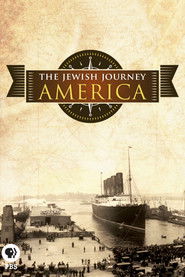
star 1Jewish-American history has been rooted in an ever-changing “Old Country”. Interviews with top scholars in Jewish history, notable Jewish-American writers, and many immigrants themselves detail the varied stories of migration through the last five centuries, with a rarely explored look at the actual journeys to get here.Ida B. Wells: A Passion for Justice
1989
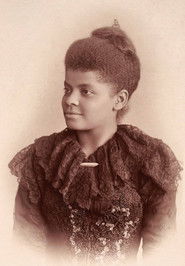
Ida B. Wells: A Passion for Justice documents the dramatic life and turbulent times of the pioneering African American journalist, activist, suffragist and anti-lynching crusader of the post-Reconstruction period. Nobel Prize-winning author Toni Morrison reads selections from Wells' memoirs and other writings in this winner of more than 20 film festival awards.The Man from Coxs River
2014
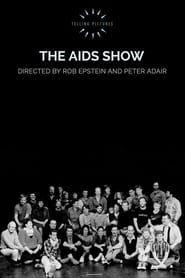
Can a mission to save a mob of brumbies in an inaccessible wilderness bring fiercely independent horseman and feral control National Parks Ranger to see the world through each other's eyes?The AIDS Show
1986
The AIDS Show
1986
star 2.7A recording of a play about the intangible impacts AIDS has on a community. This is a moving, beautifully photographed combination of theater and documentary that captures the incredible excitement of live theater and intensifies the power of the play's message.America's Greatest Threat: Vladimir Putin
2018
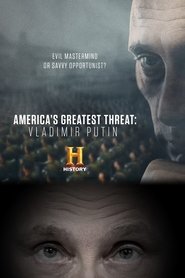
A gripping look at Putin's rise from humble beginnings to brutal dictatorship, and his emergence as one of the gravest threats to America's security.Your Day Is My Night
2014
Your Day Is My Night
2014
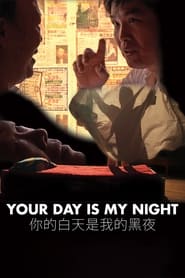
star 5.5Immigrant residents of a “shift-bed” apartment in the heart of New York City’s Chinatown share their stories of personal and political upheaval. As the bed transforms into a stage, the film reveals the collective history of the Chinese in the United States through conversations, autobiographical monologues, and theatrical movement pieces. Shot in the kitchens, bedrooms, wedding halls, cafés, and mahjong parlors of Chinatown, this provocative hybrid documentary addresses issues of privacy, intimacy, and urban life.Howard Zinn: A People's History of the United States
2015
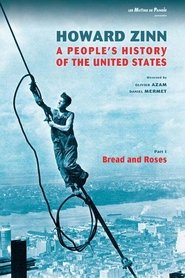
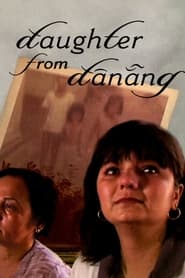
star 6.9Between 1900 and 1920 more than 14 million immigrants arrived in the US, like Howard Zinn's parents. They came fleeing poverty or war, or racism, or religious persecution. They dreamed of a promised land, of wealth, or simply of a better life.Daughter from Danang
2002
Daughter from Danang
2002
star 6.8In 1975, as the Vietnam War was ending, thousands of orphans and Amerasian children were brought to the United States as part of "Operation Babylift." Daughter from Danang tells the dramatic story of one of these children, Heidi Bub (a.k.a. Mai Thi Hiep), and her Vietnamese mother, Mai Thi Kim, separated at the war's end and reunited 22 years later. Heidi, now living in Tennessee - a married woman with kids - had always dreamt of a joyful reunion. When she ventures to Vietnam to meet her mother, she unknowingly embarks on an emotional pilgrimage that spans decades and distance. Unlike most reunion stories that climax with a cliché happy ending, Daughter from Danang is a real-life drama. Journeying from the Vietnam War to Pulaski, Tennessee and back to Vietnam, Daughter from Danang tensely unfolds as cultural differences and the years of separation take their toll in a riveting film about longing and the personal legacy of war.