Top Rated Documentary Movies - Page 343
All Services
Free Services
 Netflix
 Amazon Prime Video
 Apple iTunes
 Apple TV Plus
 Disney Plus
 Google Play Movies
 Paramount Plus
 Hulu
Hulu
 HBO Max
 YouTube
 fuboTV
 Peacock
 Peacock Premium
 Amazon Video
 The Roku Channel
 AMC+
AMC on Demand
AMC+
AMC on Demand
 Kocowa
 Hoopla
 The CW
 Vudu
Vudu
 Starz
Starz
 Showtime
 PBS
PBS
 Pantaflix
 FXNow
FXNow
 Tubi TV
 Kanopy
 Comedy Central
 Crunchyroll
 Microsoft Store
 Redbox
 Sun Nxt
 ABC
ABC
 DIRECTV
 Crackle
 Fandor
 Plex
Plex
Netflix
Amazon Prime Video
Apple iTunes
Apple TV Plus
Disney Plus
Google Play Movies
Paramount Plus
Hulu
HBO Max
YouTube
fuboTV
Peacock
Peacock Premium
Amazon Video
The Roku Channel
AMC+
AMC on Demand
Kocowa
Hoopla
The CW
Vudu
Starz
Showtime
PBS
Pantaflix
FXNow
Tubi TV
Kanopy
Comedy Central
Crunchyroll
Microsoft Store
Redbox
Sun Nxt
ABC
DIRECTV
Crackle
Fandor
Plex

BNSF
2013
The Human Behavior Experiments
2006
star 7.5Most people never have to face the fact that at the right time and right place, they're capable of anything," says John Huston's character, Noah Cross, in the movie Chinatown -- dialogue that seems especially apt watching this engrossing docu collaboration to be simulcast by Sundance Channel and Court TV. Following up on their "First Amendment Project," the cable nets tap filmmaker Alex Gibney (Enron: The Smartest Guys in the Room) to craft this thought-provoking examination of three controversial psychological studies whose chilling results still resonate today.Disrupted
2013
Disrupted
2013
star 6.6The memory and testimony of two characters: Fernando García, known as Pinolito, who was a child actor in the seventies and Doña Lilia Ortega, his mother, an actress. Fernando came out as a transvestite, some years ago, and now calls himself Coral Bonelli. They live together in Garibaldi yearning for their past in the movies, while Coral bravely comes to terms with her gender identity. They both still perform.Stonehenge: Decoded
2008
Stonehenge: Decoded
2008
star 6Stonehenge Decoded presents world renowned archaeologists as they reveal a revolutionary new theory about who built Stonehenge and why.What Now? Remind Me
2014
What Now? Remind Me
2014
star 5.4Joaquim Pinto has been living with HIV and VHC for almost twenty years. “What now? Remind Me” is the notebook of a year of clinical studies with toxic, mind altering drugs as yet unapproved. An open and eclectic reflection on time and memory, on epidemics and globalization, on survival beyond all expectations, on dissent and absolute love. In a to-and-fro between present and past memories, the film is also a tribute to friends departed and those who remain.The Boxing Kangaroo
1896
The Boxing Kangaroo
1896
star 4.5The Boxing Kangaroo is an 1896 British short black-and-white silent documentary film, produced and directed by Birt Acres for exhibition on Robert W. Paul’s peep show Kinetoscopes, featuring a young boy boxing with a kangaroo. The film was considered lost until footage from an 1896 Fairground Programme, originally shown in a portable booth at Hull Fair by Midlands photographer George Williams, donated to the National Fairground Archive was identified as being from this film.Evolution vs. God
2013
Evolution vs. God
2013
star 4.3Many believe that Darwinian evolution is a scientific fact. This movie shows it is unscientific by interviewing evolutionary scientists from UCLA and USC as well as biology majors.When Jews Were Funny
2013
When Jews Were Funny
2013
star 6.5From the 1930's to the 1970's, pretty well every comedian or comic you might see on TV or the movies was Jewish. Jews came to dominate the world of western‐society comedy on radio, stage and screen alike.Why did Jews dominate comedy in this period? And why did that domination end? Were Jews just funnier back then? And if so, did that extend to your average Jew on the street? In this 90 minute documentary acclaimed director Alan Zweig will examine these questions and many others in this exploration of 20th century humour, cultural decay, and a search for a missing heritage.Oil Gush Fire in Bibiheybat
1898
star 5.5The film was filmed in Bibi-Heybat, a suburb of Baku (now the capital of Azerbaijan), during a fire at the Bibi-Heybat oil field. The film was shot on 35mm film by the Lumiere brothers in 1898. On August 2 of the same year, a demonstration of Alexander Michon's program took place, which included the film "Fire at an oil fountain in Bibiheybat".Poor Little Rich Girl
1965
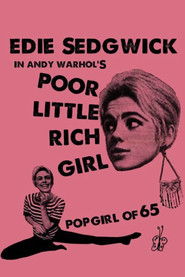
star 6.1A young, jobless woman stays in bed, reads, talks on the phone, smokes cigarettes, makes fresh coffee, and tries on some clothes from a large wardrobe.Color Adjustment
1992
Color Adjustment
1992
star 6.9From Amos 'n' Andy to Nat King Cole, from Roots to The Cosby Show, black people have played many roles on primetime television. Brilliantly weaving clips from classic TV shows with commentary from TV producers, black actors and scholars, Marlon Riggs blends humor, insight, and thoughtful analysis to explore the evolution of black/white relations as reflected by America's favorite addiction.A Soldier's Dream
1995
A Soldier's Dream
1995
star 4.5This small film came out of the material edited for Sokurov's five-hour documentary Spiritual Voices.Desert Runners
2013
Desert Runners
2013
star 7.1An aging Irish businessman, an aspiring Australian actress, a retired American baseball player and a widowed British bodyguard attempt to complete the four most difficult ultra marathon races on Earth-- a goal previously only attempted by professional athletes. The four races bring them to the world's most picturesque and brutal deserts in Chile, China, Egypt and Antarctica, where they will push their bodies, minds and spirits to their limits. Desert Runners chronicles the intense, year-long journey of these dedicated runners and the many obstacles that they face - both expected and unexpected,external and internal - and provides an intimate view into the complex ways human beings deal with heartbreak and triumph.The Letter
2013
The Letter
2013
star 5.9A remote village in the Northwest of Russia. A mental asylum is located in an old wooden house. The place and its inhabitants seem to be untouched by civilization. In this pristine setting, no articulate human voice is heard, and pain is muted. The landscapes and buildings are not so much inhabited as lightly entwined and then passed through by their anonymous residents, like some creeping mist. Phantoms half stuck, half undone in a phantom world—lost persons from a lost society?The Silence of Pelešjan
2011
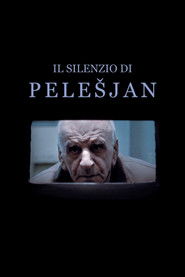
star 5.8A documentary about the Armenian avant-garde filmmaker, Artavazd Pelešjan.Complicated Women
2003
Complicated Women
2003
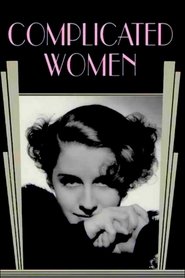
star 6.7Looks at the stereotype-breaking films of the period from 1929, when movies entered the sound era, until 1934 when the Hays Code virtually neutered film content. No longer portrayed as virgins or vamps, the liberated female of the pre-code films had dimensions. Good girls had lovers and babies and held down jobs, while the bad girls were cast in a sympathetic light. And they did it all without apology.Nat Turner: A Troublesome Property
2003
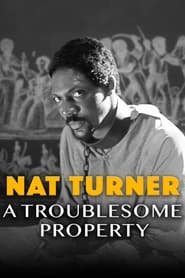
star 6.1In 1831, Nat Turner led a slave rebellion in the United States that resulted in the murder of local slave owners and their families, the eventual execution of 55 rebels and the retribution lynching of more than 200 innocent slaves. Nat Turner: A Troublesome Property examines how the story of Turner’s revolt has been interpreted throughout history and how it continues to raise new questions about the nature of terrorism and other forms of violent resistance to oppression. The film adopts an innovative structure by interspersing documentary footage and interviews with dramatizations of these different versions of Turner’s story. A unique collaboration between MacArthur Genius Award feature director Charles Burnett, acclaimed historian of slavery Kenneth S. Greenberg and Academy Award-nominated documentary producer Frank Christopher, Nat Turner is a compelling look at one of history’s most mysterious figures.The Flute and the Arrow
1957
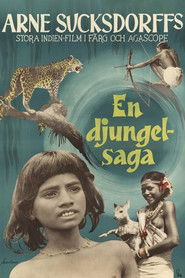
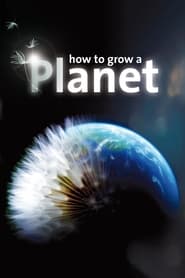
star 6.7Arne Sucksdorff’s ethnographic feature documents the life and rituals of the Muria people in the Bastar jungle of central India, focusing on their traditions, music, and relationship to the natural environment. Presented with Sucksdorff’s lyrical visual style, the film was selected for the 1958 Cannes Film Festival.How to Grow a Planet
2012
How to Grow a Planet
2012
star 8.8Geologist Ian Stewart explain in three stages of natural history the crucial interaction of our very planet's physiology and its unique wildlife. Biological evolution is largely driven bu adaptation to conditions such as climate, soil and irrigation, but biotopes were also shaped by wildlife changing earth's surface and climate significantly, even disregarding human activity.