Top Rated Documentary Movies - Page 430
All Services
Free Services
 Netflix
 Amazon Prime Video
 Apple iTunes
 Apple TV Plus
 Disney Plus
 Google Play Movies
 Paramount Plus
 Hulu
Hulu
 HBO Max
 YouTube
 fuboTV
 Peacock
 Peacock Premium
 Amazon Video
 The Roku Channel
 AMC+
AMC on Demand
AMC+
AMC on Demand
 Kocowa
 Hoopla
 The CW
 Vudu
Vudu
 Starz
Starz
 Showtime
 PBS
PBS
 Pantaflix
 FXNow
FXNow
 Tubi TV
 Kanopy
 Comedy Central
 Crunchyroll
 Microsoft Store
 Redbox
 Sun Nxt
 ABC
ABC
 DIRECTV
 Crackle
 Fandor
 Plex
Plex
Netflix
Amazon Prime Video
Apple iTunes
Apple TV Plus
Disney Plus
Google Play Movies
Paramount Plus
Hulu
HBO Max
YouTube
fuboTV
Peacock
Peacock Premium
Amazon Video
The Roku Channel
AMC+
AMC on Demand
Kocowa
Hoopla
The CW
Vudu
Starz
Showtime
PBS
Pantaflix
FXNow
Tubi TV
Kanopy
Comedy Central
Crunchyroll
Microsoft Store
Redbox
Sun Nxt
ABC
DIRECTV
Crackle
Fandor
Plex

The Big Fix
2011
The Big Fix
2011
star 6.6On April 22, 2010 the Deepwater Horizon offshore drilling rig run by BP sunk into the Gulf of Mexico, creating the worst oil spill in history. Two documentarians set out to find the root cause of it all…The Specialist
1999
The Specialist
1999
star 6.1Composed exclusively of the footage recorded by Leo Hurwitz during the trial of Adolf Eichmann in Jerusalem in 1961, A Specialist is a courtroom drama painting the portait of a zealous bureaucrat who has immense respect for the Law and hierarchy, a police official responsible for the elimination of several million people, a modern criminal.San Clemente
1982
San Clemente
1982
star 6.6This documentary is about the life of a Venetian psychiatric hospital. The relationships between the doctors, the patients and their families are followed.900 Days
2012
900 Days
2012
star 6.1The documentary focuses on the struggles of those who survived the long siege by German forces during World War II (from 8 September 1941 to 27 January 1944). The three million inhabitants of Leningrad (now renamed St Petersburg) suffered extremes of starvation and deprivation.Vienna
1968
The Field of Enchantment
2011
star 6.4A man remembers holidays at his uncle in a little village in the French countryside when he was something like 10. He feels so bored until he finds a pond and starts discovering the life in it.A Letter to Freddy Buache
1983
star 5.9This short film is Godard’s message to the people of Lausanne, specifically journalist and critic Freddy Buache, addressing his reasons why he will not make a film about their town’s 500th anniversary. Rather than cynical or defensive, Godard's bemused narration of the footage of Lausanne is imaginative and even playful, a rumination on cinema's possibilities.Marlene Dietrich: Her Own Song
2002
star 6.4The films, affairs and struggles of the iconic star of The Blue Angel as told by Rosemary Clooney, Roger Corman, Deanna Durbin and many more.Future Shock
1972
Future Shock
1972
star 4.7“Our modern technology has achieved a degree of sophistication beyond our wildest dreams. But this technology has exacted a pretty heavy price. We live in an age of anxiety, a time of stress. And with all our sophistication we are in fact, the victims of our own technological strength. We are the victims of shock … of future shock.” No, this isn’t a quote from a Huffington Post column on the Facebookization of modern communication. Nor is it pulled from an academic treatise on the phenomenologies of post-industrial existence. This statement was made by Orson Welles in the 1972 futurist documentary Future Shock, and, unlike some of the more dated elements of 1970s educational films, Future Shock remains shockingly current in verbalizing the concerns and anxieties that come along with rapid societal and technological change. (Indiana University Libraries Moving Image Archive)FTA
1972
FTA
1972
star 6.1A documentary about a political troupe headed by actors Jane Fonda and Donald Sutherland which traveled to towns near military bases in the US in the early 1970s. The group put on shows called "F.T.A.", which stood for "F**k the Army", and was aimed at convincing soldiers to voice their opposition to the Vietnam War, which was raging at the time. Various singers, actors and other entertainers performed antiwar songs and skits during the show.Unguarded
2011
Unguarded
2011
star 7.1Chris Herren was a "can't miss" basketball superstar until drug addiction eventually destroyed his career. With the support of his wife and family, Herren struggles to conquer his demons and reclaim his life.When Borat Came to Town
2008
star 6.1A look at what happened after Borat: Cultural Learnings of America for Make Benefit Glorious Nation of Kazakhstan was filmed in the Romanian village of Glod. It follows the life of one girl who longs to escape the poverty as foreign lawyers arrive with the promise of suing 20th Century Fox for millions of dollars.De Panzazo
2012
De Panzazo
2012
star 5.1Panzazo! It reflects the reality of education in Mexico and demonstrates that Mexican society panzazo passes in an exclusionary system in which no lessons for life are achieved. We see in this movie moms, dads, principals, teachers, officials, union representatives and opinion leaders to draw a global picture that does not allow indifference. The data, interviews and what the students filmed with handheld cameras give rise to indignation and intelligent to realize the part that touches everyone contribute. The project ran for three years entering the reality of the students and their families, capturing the daily dynamics of schools in such diverse parts of the country such as Ciudad Juarez, the interior of Yucatan, Morelia, the mountains of Chiapas and Guerrero, as well as Naucalpan and Iztapalapa in the metropolitan area of Mexico City. EDIT: To clarify, "de panzazo" means "just squeaking through."Over Your Cities Grass Will Grow
2011
star 6.6The film bears witness to German artist Anselm Kiefer's alchemical creative processes and renders in film, as a cinematic journey, the personal universe he has built at his hill-studio estate in the South of France.Nicky's Family
2011
Nicky's Family
2011
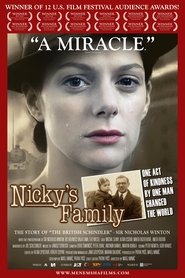
star 8.7Nicky's Family is a gripping documentary from the International Emmy Award winning producers Patrik Pass and Matej Minac about a rescue operation of the “British Schindler” - Sir Nicholas Winton who will celebrate this year 103rd birthday. His story has no parallel in modern history. Dramatic reenactments, some of the archive footage never seen before, rescued "children" together with Mr. Winton himself recount this unique story which even after 70 years continues to inspire people, especially children, to make this world a better place. World personalities His Holiness Dalai Lama and Nobel Prize winner Elie Wiesel also took part. ( - from the film's press kit)Iron Maiden: Behind the Beast
2012
star 7.6A fascinating, high quality “home movie”, produced entirely in-house by Maiden’s own Krew led by Andy Matthews, it reveals how to put on an Iron Maiden tour and what goes on behind the scenes at a show. It describes the extraordinary story of one of the most acclaimed and ambitious touring shows in the world, illustrating the day to day life and complex tasks of the Maiden Killer Krew and the other characters behind the scenes.Time Indefinite
1993
Time Indefinite
1993
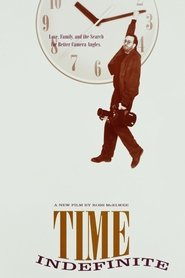
star 6.9After documentarian Ross McElwee gets married, a series of misfortunes follow: his grandmother dies, his wife miscarries, and then his father dies less than a week later. Shaken by the sudden string of deaths, McElwee becomes depressed. After spending time with his friend and former high school poetry teacher, Charlene, he goes to meet his brother, a doctor. In a series of interviews, McElwee contemplates his morbid preoccupation with death and tries to figure out how to shake it off.Point of Order!
1964
Point of Order!
1964
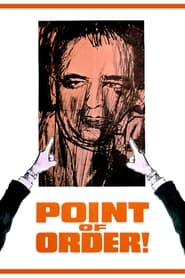
star 6Point of Order is compiled from TV footage of the 1954 Army-McCarthy hearings, in which the Army accused Senator McCarthy of improperly pressuring the Army for special privileges for Private David Schine, formerly of McCarthy's investigative staff. McCarthy accused the Army of holding Schine hostage to keep him from searching for Communists in the Army. These hearings resulted in McCarthy's eventual censure for conduct unbecoming a senator.Eat the Document
1972
Eat the Document
1972
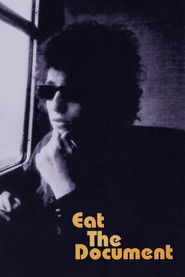
star 6.7Eat the Document is a documentary of Bob Dylan's 1966 tour of the United Kingdom with the Hawks. It was shot under Dylan's direction by D. A. Pennebaker, whose groundbreaking documentary Dont Look Back chronicled Dylan's 1965 British tour. The film was originally commissioned for the ABC television series Stage '66. Though shooting had completed for the film, Dylan's July 1966 motorcycle accident delayed the editing process. Once well enough to work again, Dylan edited the film himself. ABC rejected the film as incomprehensible for a mainstream audience.One Nine Nine Four
2009
One Nine Nine Four
2009
star 6Explore the birth, growth and eventual tipping point of punk rock during the 90s. Narrated by skateboarder Tony Hawk, the film features interviews and footage of various bands and figures in the punk scene.