Top Rated Documentary Movies - Page 476
All Services
Free Services
 Netflix
 Amazon Prime Video
 Apple iTunes
 Apple TV Plus
 Disney Plus
 Google Play Movies
 Paramount Plus
 Hulu
Hulu
 HBO Max
 YouTube
 fuboTV
 Peacock
 Peacock Premium
 Amazon Video
 The Roku Channel
 AMC+
AMC on Demand
AMC+
AMC on Demand
 Kocowa
 Hoopla
 The CW
 Vudu
Vudu
 Starz
Starz
 Showtime
 PBS
PBS
 Pantaflix
 FXNow
FXNow
 Tubi TV
 Kanopy
 Comedy Central
 Crunchyroll
 Microsoft Store
 Redbox
 Sun Nxt
 ABC
ABC
 DIRECTV
 Crackle
 Fandor
 Plex
Plex
Netflix
Amazon Prime Video
Apple iTunes
Apple TV Plus
Disney Plus
Google Play Movies
Paramount Plus
Hulu
HBO Max
YouTube
fuboTV
Peacock
Peacock Premium
Amazon Video
The Roku Channel
AMC+
AMC on Demand
Kocowa
Hoopla
The CW
Vudu
Starz
Showtime
PBS
Pantaflix
FXNow
Tubi TV
Kanopy
Comedy Central
Crunchyroll
Microsoft Store
Redbox
Sun Nxt
ABC
DIRECTV
Crackle
Fandor
Plex

The Body
1970
The Body
1970
star 4A psychedelic documentary of the body electric, with music by Pink Floyd. The film was directed and produced by Roy Battersby. The film's narrators, Frank Finlay and Vanessa Redgrave, provide commentary that combines the knowledge of human biologists and anatomical experts. The film's soundtrack, Music from the Body, was composed by Ron Geesin and Roger Waters.Jan Saudek - Trapped By His Passions No Hope For Rescue
2007
star 4.1Jan Saudek, Czechoslovakia’s most famous living photographer, is the subject of this often-shocking kaleidoscopic biopic by friend and colleague Adolf Zika. With an unblinking eye, Zika chronicles the drama-filled life and work of a controversial artist who, though little-known in the United States, has enjoyed international acclaim throughout his fifty-year careerIn Tahrir Square: 18 Days of Egypt's Unfinished Revolution
2012
star 5.9With footage shot in the center of Egypt's Tahrir Square from the beginning of the battles to the climax of the celebration, audiences experience first-hand the people-powered revolt that brought down a dictator and changed Egypt forever.The Path of the Dragon
1998
star 6.4Produced and directed by Walt Missingham who, in 1983, became the first non-Chinese to practice Kung Fu at the Shaolin Temple, this authoritative and informative programme uses rarely seen archive footage to trace both the history of martial arts and the phenomenal impact Bruce Lee had on this culture. Narrated by Lee's daughter, Shannon Lee Keasler.Belleville Baby
2013
Belleville Baby
2013
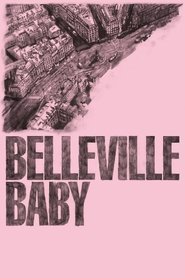
star 6.4A long distance call from a long lost lover makes her reminisce about their common past. She remembers the spring when they met in Paris, the riots, the vespa and the cat named Baby. A film about love, time and things that got lost along the way.Introduction to Arnold Schoenberg’s Accompaniment to a Cinematic Scene
1973
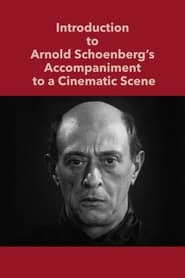
star 5.5This is a small, intense film based on Schoenberg’s opus of the same name with the subtitle “danger, fear, catastrophe”. It deals with emerging fascism and the persecution of Jews, as well as with their historical continuities.Fear and Loathing on the Road to Hollywood
1978
star 6.9Fear and Loathing on the Road to Hollywood, also known as Fear and Loathing in Gonzovision, is a documentary film produced by BBC in 1978 on the subject of Hunter S. Thompson, directed by Nigel Finch. The road trip/film pairs Thompson with Finch's fellow Briton the illustrator Ralph Steadman. The party travel to Hollywood via Death Valley and Barstow from Las Vegas, scene of the pair's 1971 collaboration. It contains interviews with Thompson and Steadman, as well as some short excerpts from some of his work.The History Of Iron Maiden - Part 2: Live After Death
2008
star 8.8Continuation of "The History Of Iron Maiden" documentary series, which began with The History of Iron Maiden – Part 1: The Early Days. Band members, crew, friends and associates talk about the period in the band's career which saw the writing, recording and release of the Powerslave album, the following World Slavery Tour and the recording of the Live After Death album.The Village Church
1947
Water from the Land
1946
Water from the Land
1946
star 6.4Sharply critical film about rural water pollution in the Jutland countryside district of medical officer Jens Jensen. Situations of everyday water use are illustrated by graphic representations of a well and surrounding soil layers. A new well is correctly constructed in the farmyard.Oxhide
2005
Oxhide
2005
star 6Director Liu Jiayin casts her parents and herself as fictionalized members of a Beijing family that has fallen on hard times and ekes out an existence by making bags out of oxhide for sale.The World of 'The Dark Crystal'
1983
star 6.6A documentary which explores the making of Jim Henson and Frank Oz's 1982 fantasy film 'The Dark Crystal', which originally aired on PBS in the United States on January 9, 1983. This one-hour documentary details the technological innovations in the field of animatronics, art design, film making, and Henson's own brand of magic. Requiring 5 years of production, including over two years of pre-production, The Dark Crystal was inspired by the imagination of artist Brian Froud and conceived by scores of talented designers, builders, technicians, and performers. The World of the Dark Crystal shows how Jim Henson's Creature Shop in London and the Muppet Workshop in New York brought Brian Froud's art and Jim Henson's vision to life.180
2011
180
2011
star 4.3The film begins by showing images of the Holocaust, and stating that Hitler sanctioned the killing of 11 million people. This is followed by Comfort interviewing people about Adolf Hitler; their responses indicate a lack of historical knowledge, although he also finds a neo-Nazi who claims to love Hitler. Comfort proposes a hypothetical situation to his interviewees, asking if they would kill Hitler if they had the opportunity at that time in history. He asks more hypotheticals dealing with what his interviewees might do in other circumstances related to the Holocaust. He then switches his topic to make similar comparisons to abortion within the United States and the right to life, personalizing his arguments to make comparisons between the Holocaust and abortion in order to place the interviewees on the spot. The documentary concludes with Comfort stating that over 50 million abortions have occurred to date; he calls this the "American Holocaust".The Fight Against Cancer
1947
star 5.5A Danish PSA urging people to see the doctor before it's too late to cure their cancer.Arrest in Chinatown, San Francisco, Cal.
1897
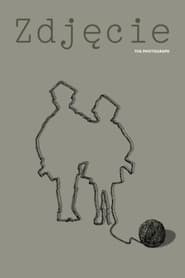
star 3.1The title tells us where we are; the vignette is in two parts, spliced together. On a busy sidewalk, a police officer holds the left arm and a suited man holds the other of a Chinese wearing a loose white shirt and hat - marching the man up the slight incline past the camera.The Photograph
1968
The Photograph
1968
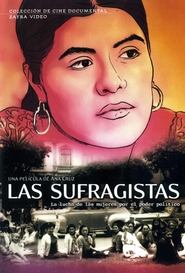
star 6.9After looking at a photograph from the end of World War II of two young boys holding guns, celebrating the liberation of Warsaw, a documentarian for Polish television tries to find the boys and discover how their lives have went.Las sufragistas
2012
Las sufragistas
2012
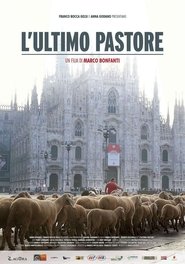
star 5.1Eufrosina Cruz was the first woman that became Congress President in Oaxaca. This is the story about women in politics in Mexico and their fight to reach their right to vote, their right to be in power. A journey that just started.The Last Shepherd
2013
The Last Shepherd
2013
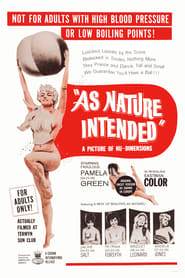
star 9.4A journey through the incredible story of Renato Zucchelli, the last travelling shepherd living in a metropolis, who conquered the city with only his sheep and the power of fantasy.As Nature Intended
1961
As Nature Intended
1961
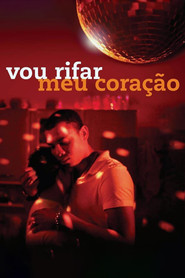
star 4.2Three girls on a tour of the English countryside meet up with two young women who introduce them to the joys of life in a nudist camp.I Will Raffle Off My Heart
2012
star 7.9Vou Rifar Meu Coração is a documentary about the performers and the followers of Brazilian romantic music – also known as brega (kitsch), often called "cheesy" by critics and the wealthy elite. Frequently associated with bad taste and poor quality, the style is admired by the lower working class, or unemployed population, originally from rural origins, banished to the cities in search of work and a better life. Using the music as a catalyst, this documentary shows the sentiments, love, suffering and sexuality of the fans and their idols, creating a scenario that reveals their practices and desires.