Popular Documentary Movies on Kanopy - Page 306
All Services
Free Services
 Netflix
 Amazon Prime Video
 Apple iTunes
 Apple TV Plus
 Disney Plus
 Google Play Movies
 Paramount Plus
 Hulu
Hulu
 HBO Max
 YouTube
 fuboTV
 Peacock
 Peacock Premium
 Amazon Video
 The Roku Channel
 AMC+
AMC on Demand
AMC+
AMC on Demand
 Kocowa
 Hoopla
 The CW
 Vudu
Vudu
 Starz
Starz
 Showtime
 PBS
PBS
 Pantaflix
 FXNow
FXNow
 Tubi TV
 Kanopy
 Comedy Central
 Crunchyroll
 Microsoft Store
 Redbox
 Sun Nxt
 ABC
ABC
 DIRECTV
 Crackle
 Fandor
 Plex
Plex
Netflix
Amazon Prime Video
Apple iTunes
Apple TV Plus
Disney Plus
Google Play Movies
Paramount Plus
Hulu
HBO Max
YouTube
fuboTV
Peacock
Peacock Premium
Amazon Video
The Roku Channel
AMC+
AMC on Demand
Kocowa
Hoopla
The CW
Vudu
Starz
Showtime
PBS
Pantaflix
FXNow
Tubi TV
Kanopy
Comedy Central
Crunchyroll
Microsoft Store
Redbox
Sun Nxt
ABC
DIRECTV
Crackle
Fandor
Plex

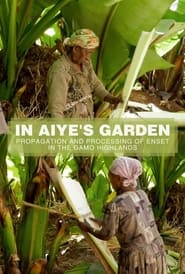
In Aiye's Garden: Propagation And Processing of Enset in the Gamo Highlands
2019
Enset, which is related to the banana plant, is very drought resistant and a good source of carbohydrates (in the stem and underground bulb). Enset has been farmed from time immemorial in the Gamo Highlands of southern Ethiopia, where women are the main cultivators. The film focuses on Aiye, the filmmaker's grandmother, who shares her knowledge about the enset plant, and shows how it is possible to produce good organic food by using simple farming tools and natural fertilizers. We see how she and a young kinswoman cultivate (using animal dung and organic waste to fertilize the plants), propagate (generating suckers from the corm), harvest (digging up the plant) and process (scraping and fermentating) the enset, and finally produce a variety of nutritious dishes.Inagina: The Last House of Iron
1997
Swiss archaeologist Eric Huysecom and cameraman Bernard Augustoni work with 13 master smelters to recreate the building of a traditional furnace for smelting iron in Mali. There has not been any traditional iron smelting in Africa since the 1960's, in part due to the importing of cheaper substitutes. The building of the furnaces and the work involved in the actual production is deeply entwined with ritual, symbolism and gender. This film describes in great detail every aspect of the event, from the selection of the site of the reconstruction - which is the oldest remaining furnace site in the region, last active in 1961 - to the final result.The Healing of Bali
2003
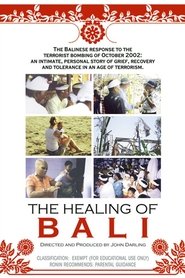
The Healing of Bali
2003
For Australian documentary filmmaker John Darling, the tragic events of 12 October 2002 compelled him to re-establish his links with Bali that spanned some 30 years. John had lived, researched and made films in Bali for 17 years from the 1970s to the 1990s, and THE HEALING OF BALI is his observation of the Balinese response to the bombings and the aftermath. His film presents an intimate insight into traditional and modern Balinese methods of grieving and healing. Among those who tell their own stories in the film are Haji Bambang, one of the heroes of the night of the bombings. Many people died in Haji's arms on the night as he worked tirelessly with a group of friends to save the victims or respectfully cover the dead with white cloth.The Cows of Dolo Ken Paye: Resolving Conflict Among the Kpelle
2015
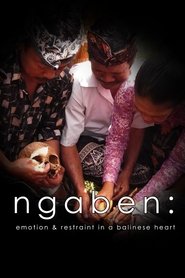
In Fokwele, Liberia, a town in transition to modern ways, conflicts arise because of differing life styles. Many old customs of the Kpelle tribe are still alive, but are complicated by new economic practices and social structures. Cattle divide the town into two classes: the rich cattle owners, and the poorer rice farmers, whose crops areoften marauded by the cattle and who in turn attack the cows. In this film, such an incident is followed through the proceedings of justice in the community.Ngaben: Emotion And Restraint In A Balinese Heart
2012
Ngaben: Emotion and Restraint in a Balinese Heart takes an impressionistic look at the ngaben from the perspective of a mourning son, Nyoman Asub, and reveals the intimacy, sadness, and tenderness at the core of this funerary ritual and the feeling and force that underlie an exquisite cultural tradition. Amidst ample cultural and interpretive understandings of the cremation ceremony, the film purposefully provides a personalistic, impressionistic, and poetic glimpse of the process and the complex emotions involved.Horses of Life and Death
1991
The Pasola, a traditional jousting battle with hundreds of horses and riders, is the Sumbanese New Year celebration, and also a ritual that anticipates the rice harvest. It is staged to welcome the annual swarming of sea worms on the western beaches, since the worms are seen as representing the spirit of the rice crop. The spirit of the fertility of the seas and the land comes from the body of a sacrificed girl, and her return each year is celebrated with a dramatic display of masculine virility, courage, and horsemanship.Fishers of Dar
2001
Fishers of Dar
2001
Samaki wa Dar es Salaam/Fishers of Dar is an ethnographic film about the fishermen and women of downtown Dar es Salaam, Tanzania. It explores the continuity and integrity of traditional fishing practices in new, contemporary settingsThe House-Opening
1980
The House-Opening
1980
When Geraldine Kawanka’s husband died, she and her children left their house at Aurukun on Cape York Peninsula. In earlier times a bark house would have been burnt, but today a ‘house-opening’ ceremony — creatively mingling Aboriginal, Torres Strait and European elements — has evolved to deal with death in the midst of new living patterns. Although sometimes suggesting a party, its underlying purpose is serious. This film records the opening of the house and Geraldine’s feelings about it in her informative and personal commentary.Pony Boys
2022
Pony Boys
2022
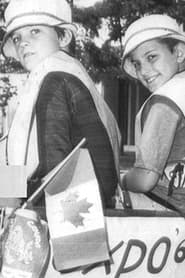
Summer 1967. Two little boys, 9 and 11, drive a pony cart from Needham, Mass. to Montreal on their own—325 miles—to visit the Expo ’67—the World’s Fair.Dani Houses
1974
Dani Houses
1974
The film observes both round and square house construction techniques of the Grand Valley Dani. It shows how the ground is cleared, walls are made from boards, poles lashed together, and roofs being thatched. Though it follows the house-building process from beginning to end, one is left asking the question: What happened after the houses were built?Dani Sweet Potatoes
1974
Dani Sweet Potatoes
1974
A study of the sophisticated process of sweet potato horticulture developed by the Dani. The film follows the Dani sweet potato cycle from clearing off the old brush and weeds from a fallow field to planting, harvesting, cooking, and eating. At that time the Dani had the simplest of tools - long pointed wooden poles used as digging sticks that are hardened in the fire and soaked in water - and they still used their stone-bladed adzes. (By now, most Dani use steel shovels, axes, and bush knives and make stone adzes only for the tourist trade.)Bunong's Birth Practices
2010
On the basis of a social anthropological case study, this film documents the birth practices of the Bunong in Mondulkiri province, located in the northeast of Cambodia. Social, economic, and political changes are transforming the province tremendously and are affecting villagers' beliefs, perceptions and habits regarding pregnancy, delivery and early motherhood. Traditional midwives, pregnant women, mothers and their families give a personal insight into their present decision-making strategies, which are at the crossroads between tradition and modernity.Let the Little Light Shine
2022
star 8When a thriving, top-ranked African American elementary school is threatened to be replaced by a new high school favoring the community’s wealthier residents, parents, students and educators fight for the elementary school’s survival.The Royal Edinburgh Military Tattoo: The Sky's The Limit
2018
star 5The Royal Edinburgh Military Tattoo celebrates 100 years of the RAF with colourful performers joining the event from across the globe.It's A Long Road Back
1981
Made by Oomera (Coral) Edwards on Super 8mm film as a training exercise at the (then) Australian Institute of Aboriginal Studies in Canberra. The film surveys the New South Wales policy of taking Aboriginal children from their families and putting them in institutions run by the Aborigines Welfare Board. From 1883 to 1969, this policy deprived generations of children of their Aboriginal identity. Oomera was one of these children, and she discusses her own struggle to regain her Aboriginality.Running For The Revolution
2020
Cuba’s greatest ever track athlete Alberto Juantorena shares his remarkable personal journey through a cauldron of sport and politics.The Graduates
2012
The Graduates
2012
This Song GAO directed documentary follows the stories of Feng Haitao, Li Yuchun, and Jin Lian after they graduate from the Sichuan Normal University. As they seek employment in one of China's largest cities, Chengdu, the program makes us question the validity of a college diploma and whether wealth is more important than education. Following each graduate from the moment they receive their diplomas, we track their highs and lows as the pressures of the modern world are thrust upon them. As we become more connected with their lives we start to wonder that even with China's growing influence in the world, are there still enough jobs for China's next generation of graduates?Piano Dream
2013
Piano Dream
2013
Yin Hong and her husband were born in the 50's. The Cultural Revolution dramatically impacted their youth; there was no place for any artistic expression. Yet they loved music and they have a gifted son, Lu Nan, who today is 15 year's old. "Piano Dream" is a story about parents investing everything they have for their only child's success. It is a dream journey binding two generations. The film brings attention to a woman's choice and fate, probing the impact of her dream on her son's maturation and their relationship. It shows the son's bitterness to a point where one asks oneself if the mother's dream is not becoming her son's nightmare. Filmed over a period of nearly three years, this documentary keeps faithful to real life, but maintains a poetic feel.Ralph Stanley: An Eye for Wood
2015
star 5.5This documentary profiles a Maine craftsman and his son, who are among the last practitioners of the art of wooden boat building.My Transgender Life: Male or Female?
2016
The documentary covers what it's like to grow up in the wrong gender and eventually transition. The decision to transition from one gender to another is a life changing one not just for the transgender person themselves but also for their family and friends. Here are the Stories of Tien, Pina, James, Sandy-Leo, Kinnon, Evan and Gayle.