New Documentary Movies on Kanopy - Page 284
All Services
Free Services
 Netflix
 Amazon Prime Video
 Apple iTunes
 Apple TV Plus
 Disney Plus
 Google Play Movies
 Paramount Plus
 Hulu
Hulu
 HBO Max
 YouTube
 fuboTV
 Peacock
 Peacock Premium
 Amazon Video
 The Roku Channel
 AMC+
AMC on Demand
AMC+
AMC on Demand
 Kocowa
 Hoopla
 The CW
 Vudu
Vudu
 Starz
Starz
 Showtime
 PBS
PBS
 Pantaflix
 FXNow
FXNow
 Tubi TV
 Kanopy
 Comedy Central
 Crunchyroll
 Microsoft Store
 Redbox
 Sun Nxt
 ABC
ABC
 DIRECTV
 Crackle
 Fandor
 Plex
Plex
Netflix
Amazon Prime Video
Apple iTunes
Apple TV Plus
Disney Plus
Google Play Movies
Paramount Plus
Hulu
HBO Max
YouTube
fuboTV
Peacock
Peacock Premium
Amazon Video
The Roku Channel
AMC+
AMC on Demand
Kocowa
Hoopla
The CW
Vudu
Starz
Showtime
PBS
Pantaflix
FXNow
Tubi TV
Kanopy
Comedy Central
Crunchyroll
Microsoft Store
Redbox
Sun Nxt
ABC
DIRECTV
Crackle
Fandor
Plex

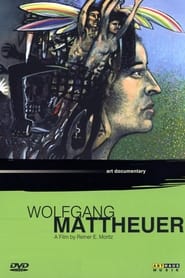
Wolfgang Mattheuer
1991
Wolfgang Mattheuer
1991
Wolfgang Mattheuer, together with Bernhard Heisig and Werner Tübke, is one of the main protagonists of the Leipzig School. With works such as Behind the Seven Mountains (1973) the graphic artist, painter and sculptor is one of the most controversial and yet most celebrated artists of the former GDR. With the use of mythology, literary references, and ambiguous details, he subverted the ideological edicts of the system. This film presents the great works of this reserved, yet perceptive ‘picture maker’. An insightful interview with Mattheuer introduces us to his eclectic visual world and his metaphorical response to contemporary events and the GDR regime.Willi Sitte
1991
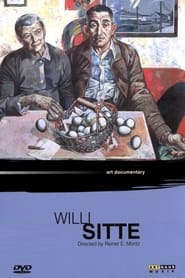
Willi Sitte
1991
Painter and government official – the two sides of Willi Sitte which made him the most important yet most controversial East German artist. Portraying the working class, defying imperialism or revealing intimate togetherness, he became the leading figure of Socialist Realism. His career in the Association of Fine Artists (VBK) and the Central Committee (ZK) of the SED elevated his status to that of ‘Prince of East German Painting’. Reiner Moritz met the controversial, first-rate draughtsman in his studio after the fall of the Berlin Wall. Through his life and work, he traces the story of Sitte’s artistic development in the service of socialist ideology.Werner Tübke
1991
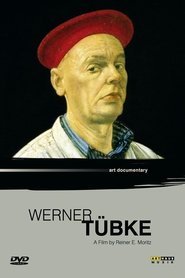
Werner Tübke
1991
Step right up into the world of Werner Tübke! The painter and illustrator from Leipzig created fantastical imagery, replete with virtuosity and a love of storytelling. In the style of the old masters, he transformed the everyday and the political into something that transcends time, and in that way developed his own distinct, anachronistic viewpoint. As a co-founder of the Leipziger Schule, Tübke paved the way for a figurative art, which has earned him international recognition since the 1970s. Reiner E. Moritz met with the GDR’s extravagant prince of painting in his studio and accompanied him at work on his showpiece, the German Peasants' War panorama in Bad Frankenhausen.Bernhard Heisig
1991
Bernhard Heisig
1991
In the mists of war and violence, the Harlequin, trumpet in hand, drifts through ravaged landscape passing a cripple and a marionette: Bernhard Heisig's pictorial worlds shock the viewer by depicting the great dramas of German history. Both a victim and a perpetrator in World War II and in the GDR dictatorship, the artist's search for sense and truth led him to his moving image formulas. Director Reiner E. Moritz converses with the renowned ex-principal of the Leipzig Hochschule für Grafik und Buchkunst (Academy of Visual Arts) about his work, which influenced the development of art for many decades in the rigid GDR system.Light Years
1991
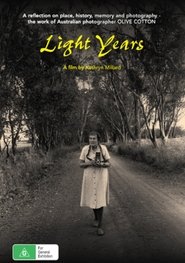
Light Years
1991
A unique record of the life and work of eminent Australian photographer, Olive Cotton.To Hold Our Ground: A Field Report
1991
For thousands of years Ju/'hoansi have lived in the Nyae Nyae region in northeastern Namibia. In the 1950s, most Ju/'hoansi had been exterminated or were dispossessed by white colonists and black farmers, but in Nyae Nyae Ju/'hoansi were still the only permanent inhabitants. Waterless approaches isolated their ancient communal land and protected them from enslavement.Art in an Age of Mass Culture
1991
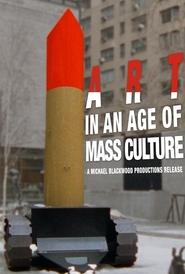
Art in an Age of Mass Culture pulls back the curtain and takes a look at the cultural climate surrounding MoMA's now famed exhibition, "High and Low: High Art and Popular Culture". Opening in the fall of 1990, the show placed a spotlight on the rapid merging of consumerism and the artistic avant-garde. Curated by Kirk Varnedoe and Adam Gopnik and featuring work from artists such as Jeff Koons and Roy Lichtenstein, "High and Low" ignites conversations of mass culture and our society's ever-changing relationship with the arts.Horses of Life and Death
1991
The Pasola, a traditional jousting battle with hundreds of horses and riders, is the Sumbanese New Year celebration, and also a ritual that anticipates the rice harvest. It is staged to welcome the annual swarming of sea worms on the western beaches, since the worms are seen as representing the spirit of the rice crop. The spirit of the fertility of the seas and the land comes from the body of a sacrificed girl, and her return each year is celebrated with a dramatic display of masculine virility, courage, and horsemanship.Releasing the Spirits: A Village Cremation in Bali
1991
Cremation rites are the most elaborate rites of passage performed by Balinese householders. Poor families may wait years before accumulating enough resources to cremate their dead, who are buried in the meantime. In 1978 many more cremations than usual were carried out because of the great purification cermony, Eka Dasa Rudra, held at Bali's main temple, Besakih, in 1979. Religious officials recommended that all Balinese cleanse the island by cremating their dead, as part of the preparations for the great Besakih ceremony. Villagers of limited means pooled their resources to perform group cremations which greatly reduced the cost for each family. This film is about a group of villagers in Central Bali who cooperated to carry out a group cremation.Dear Lisa: A Letter to My Sister
1991
star 8The filmmaker questions her sister, herself and others about the dreams and hopes they had growing up as girls in contrast to the reality they face as women.The Real Rembrandt
1991
The Real Rembrandt
1991
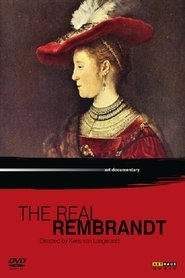
Scientific methods of verifying works of art have drastically reduced the number of paintings attributed to Rembrandt (1606-1669). Many canvases, hitherto believed to be by the hand of the Master, are now thought to be the work of artists who learnt their craft in his studio by copying his style. The film is a fascinating study of modern scientific techniques, a comprehensive art historical view of Rembrandt’s work over the centuries and a reaffirmation of his genius.Butoh: Piercing the Mask
1991
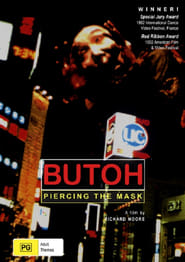
This documentary pierces the mystery and mystique of a dance movement adored by the West and largely ignored by the Japanese. It uses archival and modern footage of leading Butoh performers and interviews Butoh specialists to throw light on the essential Butoh themes of darkness, violence and eroticism to get to the core of the nature of Butoh.Marc and Ann
1991
Marc and Ann
1991
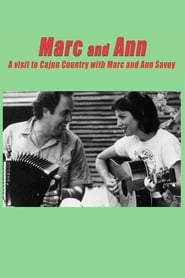
star 4Legendary filmmaker Les Blank's toe-tapping film treats us to a portrait of a musical Louisiana couple committed to celebrating and preserving Cajun culture.Puamana
1991
Puamana
1991
This aloha-filled portrait of Auntie Irmgard Farden Aluli, one of Hawaii's best loved composers, gently focuses on Hawai'ian women's contributions to the family structure, art, music and dance. An intimate glimpse into the real culture of the islands.Something Like a War
1991
Something Like a War
1991
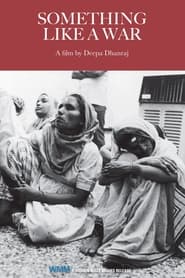
An examination of India’s family planning program from the point of view of the women who are its primary targets. It traces the history of the family planning program and exposes the cynicism, corruption and brutality which characterizes its implementation. As the women themselves discuss their status, sexuality, fertility control and health, it is clear that their perceptions are in conflict with those of the program.Cowboy and Maria in Town
1991
Exploring individual responses to rapid social change, Cowboy and Maria in town follows the parallel lives of its two central characters. Cowboy and Maria have independently landed in Port Moresby, negotiating ways to survive urban life in a city ranked as one of the most dangerous in the world. Cowboy is an ex-raskol (urban bandit) and Maria an inhabitant of a squatter settlement. Unemployed and with a jail record, Cowboy has constructed an electric guitar out of scrap materials and plays on street corners. Maria lives an equally precarious existence, cultivating a seasonal garden in an urban settlement inflamed by frustration and intertribal conflicts. Far from being third world victims, they go about their daily lives with humour and imagination, rising to the challenge of enormous cultural upheaval.Aspen
1991
Aspen
1991
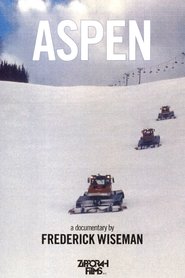
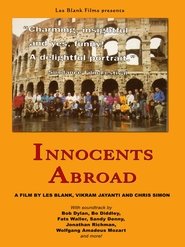
star 6.1A former mining town in Colorado’s Rocky Mountains, Aspen is now better known as a winter playground for wealthy holidaymakers. Against the majestic landscape, visitors relax while locals toil around them.Innocents Abroad
1991
Innocents Abroad
1991
star 8A warmly amusing look at a bus-full of American tourists on a whirlwind tour of Europe. The eclectic soundtrack includes Mozart, Bob Dylan, Sandy Denny, Jonathan Richman, others.Louvre City
1990
Louvre City
1990
star 6.6A voyage into the museum's reserves, and part of the extra work involved to mount the expositions after the renovation of the Louvre in the 1980s, when the glass pyramid was added to the classic buildings. From the preservation rooms through the frame and painting retouches by experts, to the personnel instruction on how to be efficient in protecting the collections, and look nice to the visitors.Jasper Johns: Take an Object
1990
star 1A portrait of the artist at work. The film begins in 1972 with Johns repainting Air Ocean World based on Buckminster Fuller's dymaxion map. Johns work is traced over the next eighteen years. His Untitled, 1973, with its cross-hatching, flagstones, and anatomical parts become recurrent motifs, as Johns begins to imbed skulls and severed arms in them. The paintings become more personal as Johns gradually "drops the reserve" in his recent series, "The Seasons." The film culminates with Johns working on the final state of the etching based on "The Seasons."