New Documentary Movies on Kanopy - Page 286
All Services
Free Services
 Netflix
 Amazon Prime Video
 Apple iTunes
 Apple TV Plus
 Disney Plus
 Google Play Movies
 Paramount Plus
 Hulu
Hulu
 HBO Max
 YouTube
 fuboTV
 Peacock
 Peacock Premium
 Amazon Video
 The Roku Channel
 AMC+
AMC on Demand
AMC+
AMC on Demand
 Kocowa
 Hoopla
 The CW
 Vudu
Vudu
 Starz
Starz
 Showtime
 PBS
PBS
 Pantaflix
 FXNow
FXNow
 Tubi TV
 Kanopy
 Comedy Central
 Crunchyroll
 Microsoft Store
 Redbox
 Sun Nxt
 ABC
ABC
 DIRECTV
 Crackle
 Fandor
 Plex
Plex
Netflix
Amazon Prime Video
Apple iTunes
Apple TV Plus
Disney Plus
Google Play Movies
Paramount Plus
Hulu
HBO Max
YouTube
fuboTV
Peacock
Peacock Premium
Amazon Video
The Roku Channel
AMC+
AMC on Demand
Kocowa
Hoopla
The CW
Vudu
Starz
Showtime
PBS
Pantaflix
FXNow
Tubi TV
Kanopy
Comedy Central
Crunchyroll
Microsoft Store
Redbox
Sun Nxt
ABC
DIRECTV
Crackle
Fandor
Plex

Man without Pigs
1990
Man without Pigs
1990
star 6.4John Waiko is the first Papua New Guinea man to graduate with a PhD and be appointed a professor. He returns to the Binandere clan and his small village of Tabara in the Northern Province of PNG. Once there, he has to organise a celebration for his achievements with his family’s help. Since he has been away for most of his life, he has no recognised wealth in the village (the pigs used for gift giving), nor a network of supporters or knowledge of the preparation and rituals for having such a celebration. He wants the event to happen quickly but that’s not the way it works in Tabara. Man without pigs focuses on the antagonism aroused by the clash between traditional customs and Western values in this remote PNG community.Through the Wire
1990
Through the Wire
1990
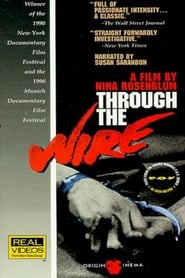
Documentary - A secret political prison unit in the USA? In 1986, a controversial high security unit was opened in an underground chamber of Kentucky's federal prison. Its three female prisoners received sentences of unprecedented length for nonviolent crimes. - Susan Sarandon, Dean IrbyThe Burning Times
1990
The Burning Times
1990
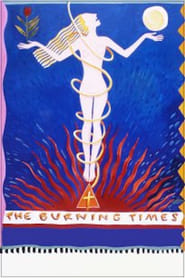
star 6.6This documentary takes an in-depth look at the witch hunts that swept Europe just a few hundred years ago. False accusations and trials led to massive torture and burnings at the stake and ultimately to the destruction of an organic way of life. The film questions whether the widespread violence against women and the neglect of our environment today can be traced back to those times.William Holden: The Golden Boy
1989
It was said of him that in more than 70 films, he never once gave a bad performance.Strand, Under the Dark Cloth
1989
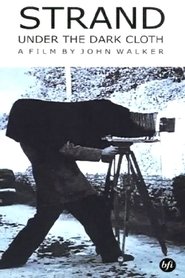
star 6.2This documentary studies the life and artwork of photographer Paul Strand, using his own compelling photography as well as interviews with his friends, acquaintances and third wife. Documentarian John Walker explores the various influences Strand encountered throughout his life that helped him to develop as an artist. His personal life and relationships are examined and shed light on the inner working of this man who achieved great renown while hiding "under the dark cloth."Common Threads: Stories from the Quilt
1989
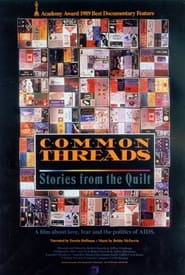
star 6.9On the eve of 1987's Second National March on Washington for Lesbian and Gay Rights, surviving families and friends of people who have died of AIDS prepare panels to be added to a large-scale memorial quilt project. Drawing from the sea of names memorialized, director Robert Epstein focuses on the lives of six people. Alongside the intimate profiles offered, through news footage and interviews, Epstein puts the AIDS crisis in the larger context of social and government response to the disease.Our Children
1989
Our Children
1989
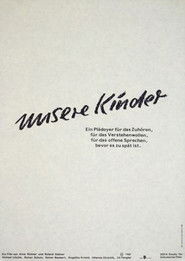
star 10From an official perspective, marginal youth culture did not exist in East Germany. The topic of subcultures was taboo in the GDR, and groups such as goths, skinheads, anti-skins, punks and neo-Nazis were dismissed as social deviations promoted by western countries. Director Roland Steiner had access to such young East Germans in the late 1980s. Over the course of four years, he brought them before the camera in an attempt to understand what drew them to these groups.Forbidden City, U.S.A.
1989
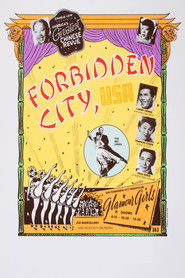
star 6A documentary about Forbidden City, a San Francisco Chinese-American nightclub open from the 1930s to the 1960s.Kamala and Raji
1989
Kamala and Raji
1989
The textures and complexities of everyday life in India unfold in Michael Camerini's richly observed story of two poor women and their efforts to improve their lives.Who's Afraid of the Bogeyman
1989
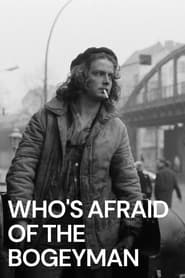
Portrait of a private coal company in East Berlin's Prenzlauer Berg district in 1988/89. The feisty woman boss runs the business with humour and understanding. Her seven male employees respect her. To the outside world, they are all tough guys, but as they describe their jobs and personal situations, above and beyond the hard manual labour, their vulnerability starts to come to light.Thomas Hart Benton
1989
Thomas Hart Benton
1989
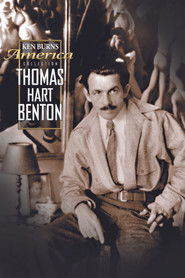
star 7.5Thomas Hart Benton's paintings were energetic and uncompromising. Today his works are in museums, but Benton hung them in saloons for ordinary people to appreciate.Ida B. Wells: A Passion for Justice
1989
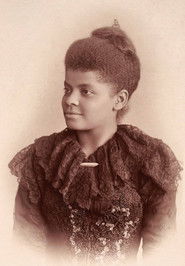
Ida B. Wells: A Passion for Justice documents the dramatic life and turbulent times of the pioneering African American journalist, activist, suffragist and anti-lynching crusader of the post-Reconstruction period. Nobel Prize-winning author Toni Morrison reads selections from Wells' memoirs and other writings in this winner of more than 20 film festival awards.Near Death
1989
Near Death
1989
star 7NEAR DEATH is a film about the Medical Intensive Care Unit at Boston's Beth Israel Hospital. The film is concerned with how people face death. More specifically the film presents the complex interrelationships among patients, families, doctors, nurses, hospital staff and religious advisors as they confront the personal, ethical, medical, psychological, religious and legal issues involved in making decisions about whether or not to give life-sustaining treatment to dying patients.Part One: China in Revolution 1911–1949
1989
star 8The first film, China in Revolution, describes the epic upheaval that began in China with the fall of the last emperor in 1911. Over the next four decades, the Chinese people were caught up in struggles with warlords, foreign invasion and a bitter rivalry between the Chinese Communist Party and the Nationalist Party. The film highlights the two figures who came to shape events, Chang Kai-shek and Mao Zedong. First they worked as allies to unite the country and then they fought a bloody civil war that was won by the Communists in 1949.88.9 Radio Redfern
1989
88.9 Radio Redfern
1989
star 1An observational documentary which looks at Sydney’s first community Aboriginal radio station, 88.9 Radio Redfern. Set against a backdrop of contemporary Aboriginal music, 88.9 Radio Redfern offers a special and rare exploration of the people, attitudes and philosophies behind the lead up to a different type of celebration of Australia’s Bicentennial Year. Throughout 1988, 88.9 Radio Redfern became an important focal point for communication and solidarity within the Aboriginal community. The film reveals how urban blacks are adapting social structures such as the mass media to serve their needs.Charles Manson Superstar
1989
star 5.1For forty years, Charles Manson has survived most of his life in what he calls 'the hallways of the all ways,' the reform schools, jails and prisons that have been his home and tomb. His thought was born in the hole of solitary confinement, apart from time and beyond the grasp of society. In his cell, he created his own world and speaks his own language: he has concluded that there is only the mind. From convincing his followers to move into the desert to train for the apocalypse, to leading a murderous crew through a string of devilish murders, you will see and hear from Manson himself of how he created a preconceived terror based on his philosophy of life. Manson claims that the so-called 'straight' world outside of prison is but an inverted reflection of the underworld in which he has lived. To him, the reality that presidents and law-abiding citizens accept begins in the hermetic alternate universe of criminals, cons and outlaws.High Fidelity: The Adventures of the Guarneri String Quartet
1989
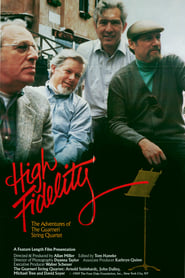
Relationships, rehearsals, performances, hobbies, and family life of the members of the Guarneri String Quartet.Eat the Kimono
1989
Eat the Kimono
1989
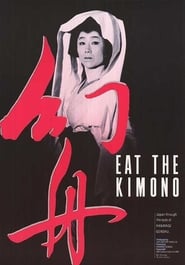
star 5.5EAT THE KIMONO is a brilliant documentary about Hanayagi Genshu, a Japanese feminist and avant-garde dancer and performer, who has spent her life defying her conservative culture's contempt for independence and unconventionality. She denounced Emperor Hirohito as a war criminal, and dismissed death threats made against her by right-wing groups.Battered
1989
Battered
1989
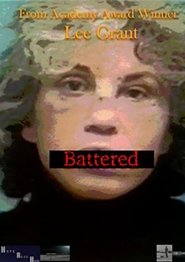
Lee Grant's acclaimed 1989 investigation of domestic violence in American Homes. Battered is the powerful, if harrowing portrait of a life lived in constant fear of the people closest to you. Intimate interviews with the victims and children of the cycle are combined with the eye opening and heart breaking stories of the abusers themselves to take you deeper into every facet of these American lives.Route One/USA
1989
Route One/USA
1989
star 7.3Route One is the first major U.S. highway. 5000 km along the Atlantic coast, from the Canadian border to the tip of Florida. Doc, a physician who spent many years in Africa, returns to the U.S. and decides to reconnect with his home country by walking the legendary Route One.