New Documentary Movies on Kanopy - Page 285
All Services
Free Services
 Netflix
 Amazon Prime Video
 Apple iTunes
 Apple TV Plus
 Disney Plus
 Google Play Movies
 Paramount Plus
 Hulu
Hulu
 HBO Max
 YouTube
 fuboTV
 Peacock
 Peacock Premium
 Amazon Video
 The Roku Channel
 AMC+
AMC on Demand
AMC+
AMC on Demand
 Kocowa
 Hoopla
 The CW
 Vudu
Vudu
 Starz
Starz
 Showtime
 PBS
PBS
 Pantaflix
 FXNow
FXNow
 Tubi TV
 Kanopy
 Comedy Central
 Crunchyroll
 Microsoft Store
 Redbox
 Sun Nxt
 ABC
ABC
 DIRECTV
 Crackle
 Fandor
 Plex
Plex
Netflix
Amazon Prime Video
Apple iTunes
Apple TV Plus
Disney Plus
Google Play Movies
Paramount Plus
Hulu
HBO Max
YouTube
fuboTV
Peacock
Peacock Premium
Amazon Video
The Roku Channel
AMC+
AMC on Demand
Kocowa
Hoopla
The CW
Vudu
Starz
Showtime
PBS
Pantaflix
FXNow
Tubi TV
Kanopy
Comedy Central
Crunchyroll
Microsoft Store
Redbox
Sun Nxt
ABC
DIRECTV
Crackle
Fandor
Plex

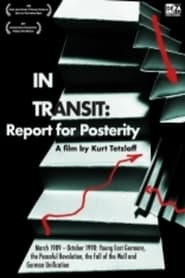
In Transit: Report for Posterity
1990
Revolution and resignation within the changes at the end of the GDR.Snack Bar Special
1990
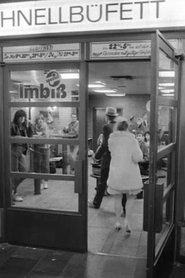
Snack Bar Special
1990
The lower level of Lichtenberg Station in Belin in early October 1989: the beginning of the end for the GDR. In the snack bar, the staff are catering for travellers of every kind while in the background the authorities maintain a flow of triumphal statements, but those months between August and October come to feel like sitting out the death throes. Careful observation of people and their work as the current of history suddenly becomes perceptible.The Wall
1990
The Wall
1990
star 5A documentary about the deconstruction of the Berlin Wall which makes no use of vocal commentary but instead focuses on visual elements. From the Potsdamer Platz to the Brandenburg Gate, the camera captures the historic events from all sides and different angles: on the one hand there are news reporters and tourists from all over the world taking pictures, children selling pieces of the wall to passers-by, and people celebrating New Year's Eve, on the other we see abandoned subway stations and officials with blank looks on their faces.The Salt Mines
1990
The Salt Mines
1990
star 6Explores the lives of Sara, Gigi and Giovanna, three Latino transvestites who for years have lived on the streets of Manhattan supporting their drug addictions through prostitution. They made their temporary home inside broken garbage trucks that the Sanitation Department keeps next to the salt deposits used in the winter to melt the snow. The three friends share the place known as "The Salt Mines".Privilege
1990
Privilege
1990
star 3.8Privilege is an intelligently conceived, boldly anarchic, and wickedly insightful exposition on the culturally ingrained and socially divisive malaise of isms that artificially define and characterize empowerment in contemporary society: ageism, sexism, economic elitism, and racism. Yvonne Rainer conveys texture through the intercutting of archival footage, video, and film - as well as compositional layering through the film-within-a-film structure, elliptical (and self-referential) fusion of past and present, and the filmmaker's idiosyncratic penchant for superimposed typed text.Berkeley in the Sixties
1990
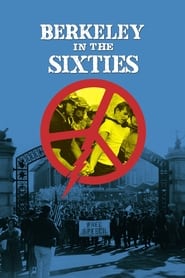
star 5.8A documentary about militant student political activity at the University of California, Berkeley in the 1960s.Vivienne Westwood
1990
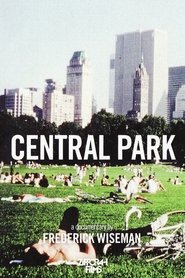
Central Park
1990
Central Park
1990
star 7.4CENTRAL PARK is a film about the famous New York City landmark and the variety of ways in which people make use of it: running, boating, walking, skating, music, theatre, sports, picnics, parades and concerts. The film also illustrates the complex problems the New York City Parks Department deals with in order to maintain and preserve the park and keep it open and accessible to the public.Tongues Untied
1990
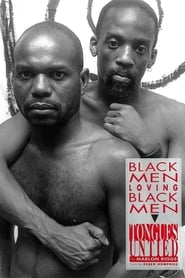
Tongues Untied
1990
star 6.6Marlon Riggs, with assistance from other gay Black men, especially poet Essex Hemphill, celebrates Black men loving Black men as a revolutionary act. The film intercuts footage of Hemphill reciting his poetry, Riggs telling the story of his growing up, scenes of men in social intercourse and dance, and various comic riffs, including a visit to the "Institute of Snap!thology," where men take lessons in how to snap their fingers: the sling snap, the point snap, the diva snap.Arata Isozaki II: International Projects
1990
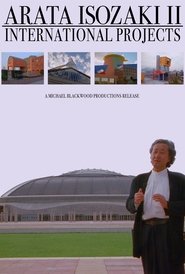
Through a blend of Japanese history and Western influence, Arata Isozaki has built a career around his boldly distinctive architectural style. Constantly challenging the concepts of space, form and tradition, Isozaki’s work dares us to imagine a merging of cultures where artistic movements and methods bind together in riveting new forms. "ARATA ISOZAKI II: INTERNATIONAL PROJECTS" follows the architect to many of his most famous sites including the Barcelona Olympic Sports Palace, Disney’s Team Building in Orlando, New York’s Palladium nightclub, as well as the newly completed Museum of Contemporary Art in Los Angeles.Steve McQueen: Man on the Edge
1990
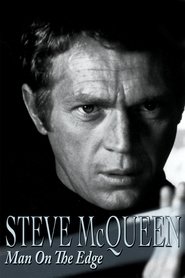
Abandoned by his father, he was a reform school kid with nothing going for him and a giant chip on his shoulder. He joined the Marines but never stayed far from trouble. Then he discovered acting — and the woman who would be with him for most of his meteoric career. He was Steve McQueen, one of Hollywood's highest paid stars — and one of its most difficult, most rebellious and, when he wished, most charming.Maxine Sullivan: Love to Be in Love
1990
A lyrical film portrait of the once famous, and now, largely forgotten jazz vocalist Maxine Sullivan.Home from the Eastern Sea
1990
This documentary covers the story of Chinese-, Japanese-, and Filipino-Americans in Washington state, from their first arrivals, to the discrimination they've faced, to the modern families and communities that thrive today.A Peasant Chronicle in Gruyère
1990
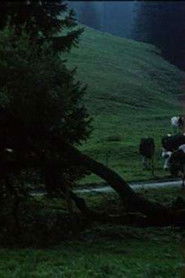
The shooting of this peasant chronicle in the Gruyère region of Switzerland lasted a whole year, from July 1989 to July 1990. A year of work and festivities in the family of Conrad and Louise Bapst, their children and grandchildren who live in La Roche (canton of Fribourg). In summer, part of the family goes with the herd to the upper pastures, and will move six times in the next three months, as the grass for the cows grows in higher and higher places. At the farm below, the rest of the family mows the hay and the after crop, and tends the vegetable garden. Fall and winter bring new chores, along with feast-days, and the sale of cheeses to pay for rented pastures. We see the family participate in a vote for or against the Swiss Army, and at a meeting where mountain farmers discuss whether or not to join the European Union. The film displays the patient and human approach of an almost silent minority of Switzerland.The Song of Harmonics
1990
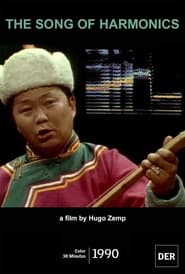
In the practice of overtone singing (called also bi-phonic singing), whose best-known examples can be found in Mongolia and with the Tuva people of Southern Siberia, a single person sings what the audience perceives as two voices at the same time: a low pitch with his vocal cords, and in addition, a high-pitched melody using harmonics (overtones) selected by modifying the volume of the mouth cavity. This documentary is not an ethnography filmed in location. It is partly an illustration of the results of former research, partly the very actual investigation on overtone singing carried out in Paris, in the Ethnomusicology Department of the Musée de l'Homme, during a workshop, during a concert of the Mongolian National Ensemble, and in the medical visualization department of a hospital.Mixed Messages
1990
Mixed Messages
1990
An experimental video collage that incorporates found footage, performance, interviews with young girls, documentary, animation, images from advertising and television, and a dream narrative in a work that examines gender-stereotyping in popular culture, concluding with a post-modern version of the Pandora myth.Butoh: Body on the Edge of Crisis
1990
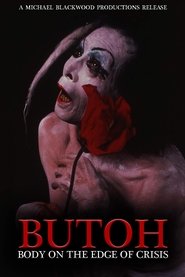
star 8"Butoh: Body on the Edge of Crisis" is a visually striking film portrait shot on location in Japan with the participation of the major Butoh choreographers and their companies. Although Butoh is often viewed as Japan's equivalent of modern dance, in actuality it has little to do with the rational principles of modernism. Butoh is a theater of improvisation which places the personal experiences of the dancer on center-stage. By reestablishing the ancient Japanese connection of dance, music, and masks, and by recalling the Buddhist death dances of rural Japan, Butoh incorporates much traditional theater. At the same time, it is a movement of resistance against the abandonment of traditional culture to a highly organized consumer-oriented society.The Spirit of TV
1990
The Spirit of TV
1990
star 5Beginning with the arrival by canoe of a TV and VCR in their village, The Spirit of TV documents the emotions and thoughts of the Waiãpi as they first encounter their own recorded images and those of others. Viewing news broadcasts and videos of other Brazilian native peoples, the Waiãpi see the power of images to facilitate memory preservation and political awareness. Some people worry, though about the invasive spirits of outsiders that can come through the TV. Another concern is the negative exposure that might result from the Waiãpi broadcasting their own images.The Other Side of the Moon
1990
The Other Side of the Moon features eight Apollo astronauts who intimately share their experience of going to the moon, describing what happened to them while they were there, and how their lives have been shaped by the experience in the 20 years after.Handmaidens and Battleaxes
1990
Throughout history, the perception of nurses has ranged from wise women to witches, sots to ministering angels, handmaidens to battleaxes. The professional role of the nurse has changed dramatically. Originally the nurse held an independent, curative position in healing the sick. Most of this responsibility has since been lost. In its place, a profession has developed which, while demanding altruism and dedication, is locked into a supportive and secondary role to that of the medical profession.