New Documentary Movies on Kanopy - Page 290
All Services
Free Services
 Netflix
 Amazon Prime Video
 Apple iTunes
 Apple TV Plus
 Disney Plus
 Google Play Movies
 Paramount Plus
 Hulu
Hulu
 HBO Max
 YouTube
 fuboTV
 Peacock
 Peacock Premium
 Amazon Video
 The Roku Channel
 AMC+
AMC on Demand
AMC+
AMC on Demand
 Kocowa
 Hoopla
 The CW
 Vudu
Vudu
 Starz
Starz
 Showtime
 PBS
PBS
 Pantaflix
 FXNow
FXNow
 Tubi TV
 Kanopy
 Comedy Central
 Crunchyroll
 Microsoft Store
 Redbox
 Sun Nxt
 ABC
ABC
 DIRECTV
 Crackle
 Fandor
 Plex
Plex
Netflix
Amazon Prime Video
Apple iTunes
Apple TV Plus
Disney Plus
Google Play Movies
Paramount Plus
Hulu
HBO Max
YouTube
fuboTV
Peacock
Peacock Premium
Amazon Video
The Roku Channel
AMC+
AMC on Demand
Kocowa
Hoopla
The CW
Vudu
Starz
Showtime
PBS
Pantaflix
FXNow
Tubi TV
Kanopy
Comedy Central
Crunchyroll
Microsoft Store
Redbox
Sun Nxt
ABC
DIRECTV
Crackle
Fandor
Plex

Friends & Enemies
1987
Friends & Enemies
1987
One thousand power workers went on strike against the South East Queensland Electrical Board (SEQEB)in February 1985 in protest against the introduction of contract worker hire. This documentary details the industrial relations dispute between the ensuing Joh Bjelke Peterson coalition government and the Electrical Trades Union in Queensland, Australia during 1985.Man Oh Man
1987
Man Oh Man
1987
Man Oh Man takes a loving, curious look at the forces which mold young boys into men. Men from all walks of life speak with humor and sadness about what is expected of them. This film explores personal definitions of masculinity, inter-gender communications, self-worth, gender stereotyping, and changing roles. As an honest representation of one filmmaker's glimpse into the male world, it is guaranteed to spark audience interest and stimulate discussion.Robert Venturi and Denise Scott Brown
1987
Driven by their mutual admiration of classical architecture, Robert Venturi and Denise Scott-Brown have worked together to create a space of unique post-Modernist construction. Filmed during the design and realization of the Sainsbury extension to the National Gallery in London, the husband and wife team discuss their past work and the shared principles that led to their precise, historically inspired approach to modern architecture.Harder Than Everest
1987
Harder Than Everest
1987
A high adventure film about Tim Macartney-Snape's incredible expedition to climb Gasherbrum IV - an 8000 metre symmetrical pyramid mountain of rock and ice on the border of Pakistan and China in the Karakoram Range of the western Himalaya. Tim, as part of the US team, was the first in the team to reach the summit, and as he says "the climb was harder than Everest".Ana Mendieta: Fuego de Tierra
1987
star 10This beautiful film is a portrait of the life and work of Cuban-born American artist Ana Mendieta. Mendieta used her own body, the raw materials of nature, and Afro-Cuban religion to express her feminist political consciousness and poetic vision. Interview footage with Mendieta and her own filmed records of her earthworks and performances are incorporated to render a vivid testament to her energy and extraordinary talent after her tragic, untimely death in 1985.A Jumpin' Night in the Garden of Eden
1987
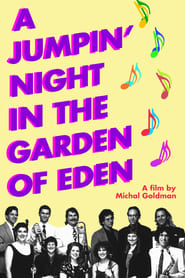
A Jumpin' Night in the Garden of Eden was the first film to document the klezmer revival, tracing the efforts of two founding groups, Kapelye and Boston's Klezmer Conservatory Band, to recover the lost history of klezmer music. For nearly a millennium, this vigorous and soulful music was part of the celebration of Jewish life in Eastern Europe. In the early decades of this century, the music took root in America. Klezmer musicians learned hundreds of tunes by ear and their ears were open to Gypsy, Ukrainian and Greek melodies of the old world, as well as to the new sounds of American jazz. Music born in Eastern Europe lived on in the imaginations of composers for New York's Yiddish theater, men whose tunes entered the mainstream through such unlikely adapters as the Andrew Sisters. Eventually Klezmer went underground as its audience assimilated into mainstream American culture.Sunny and the Dark Horse
1987
The story of an Aboriginal stockman, Sunny Bancroft, and his family at Collum Collum and their growing enthusiasm for "picnic races" on bush tracks in New South Wales.Nelson Mandela: Prisoner to President
1986
This is the story of the life of the pre-eminent figures of the twentieth century, Nelson Mandela, up until his release after 27 years of prison. It takes us from boyhood with roots firmly embedded in the soil of Africa, through his political training with the African National Congress into the years of repression. Deeply involved with all the great anti-apartheid activities – the Defiance Campaign, the Freedom Charter, the Treason Trial, boycotts and strikes – Mandela was finally betrayed and sentenced to life imprisonment.Sharp Edges
1986
Sharp Edges
1986
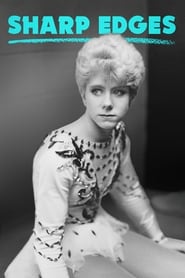
star 6.3Filmmaker Sandra Luckow follows a 15 year old, then unknown, Tonya Harding to her first National Figure Skating competition in 1986.Ethnic Notions
1986
Ethnic Notions
1986
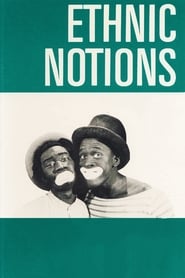
star 7.1This documentary traces the deep-rooted stereotypes which have fueled anti-black prejudice.Multi-Handicapped
1986
Multi-Handicapped
1986
star 6.4This film shows the day to day activities of multi-handicapped and sensory impaired students and their teachers, dormitory parents, and counselors at the Helen Keller School. The primary mission of the school is to meet the total and living needs of deaf and/or blind children, some of whom also have other disabilities. The film presents situations involving personal hygiene, mobility training, concepts of time and money, self help and independent living, dormitory life, recreation, sports, vocational training, and psychological counseling.Adjustment & Work
1986
Adjustment & Work
1986
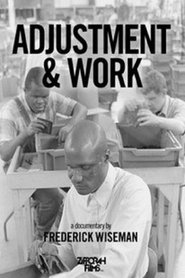
star 6.5Wiseman enumerates the sights and sounds of Talladega, Alabama – the railroad tracks, quiet streets and homes, a few shops downtown – almost as if to list those things most of us might take for granted. Of the four films in this series, Adjustment & Work is the only one that focuses entirely on adults—specifically adults who have recently lost their sight (and hence are adjusting to this change) and those without sight or hearing who are learning skills in order to enter the workforce.Deaf
1986
Deaf
1986
star 8.3The School for the Deaf at the Alabama Institute is organized around a theory of total communication i.e. the use of signs and finger spelling in conjunction with speech, hearing aids, lip reading, gestures and the written word. The film shows sequences dealing with various aspects of this comprehensive training such as teaching students and parents to sign; speech therapy; psychological counseling; regular academic courses; vocational training; disciplinary problems; parents visits; sports and recreational activity; training in living and working independently; and developing skills in home and money management.Blind
1986
Blind
1986
star 6.7BLIND shows the educational programs and daily life of students in kindergarten through the 12th grade at the Alabama School for the Blind. The School is organized around the effort to educate blind and visually impaired students to be in charge of their own lives. Sequences in the film include mobility training, braille instruction and orientation as well as traditional classroom subjects such as English, history, science and music. Other sequences show psychological counseling sessions; vocational training; staff dealing with student disciplinary problems; and the wide variety of recreational and athletic programs.Down and Out in America
1986
star 6.6The recession of the 1980s split the country into the haves and have-nots, from family farmers to factory workers and homeless people forced to live in decrepit welfare hotels. On the verge of losing everything, courageous Americans discover the power of community organizing to fight injustice.Kamikaze Hearts
1986
Kamikaze Hearts
1986
star 5.4Porn stars Sharon Mitchell and Tigr navigate the ups and downs of being in love while working in the sex industry.Kurt Schwitters: The Schwitters Scandal
1986
The Schwitters scandal was pure DADA! While he was alive, Schwitters provoked the art world with his one-man Dada movement Merz, which united painting, sculpture, architecture and literature in fragments. After his death he hit the headlines due to several sensational inheritance lawsuits involving his heirs, a mistress, the Norwegian government, and the Marlborough Gallery - which had gained notoriety in the Rothko scandal. Looking back on Schwitters’ life and work, this film unravels a bizarre story of deceit, intrigue, power and money.Hellfire: A Journey from Hiroshima
1986
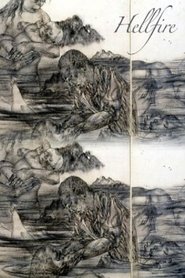
star 5.5Japanese husband and wife muralists Iri and Toshi Maruki are known for their depictions of the destruction of Hiroshima and Nagasaki. Their collaborative relationship is unique: one paints a painfully detailed vision of the victims of the atomic blast; the other conceals the carefully delineated brush strokes with a grey-black ink “wash.” The first artist restates the specifics of the image; the second re-conceals. Through the repetition of this process, the work emerges.A Composer’s Notes: Philip Glass and the Making of an Opera
1986
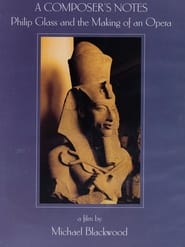
This documentary by Michael Blackwood looks at the development and production of Glass' opera Akhnaten. The film follows two productions by the Württemberg State Theater, Stuttgart, and the Houston Grand Opera.International Sweethearts of Rhythm
1986
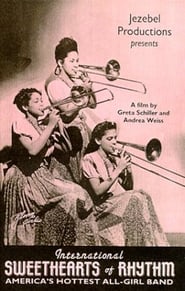
star 5From the Piney Woods School in the Mississippi Delta to the Apollo Theater in Harlem, New York City, this toe-tapping music film tells the story of the swinging, multi-racial all-women jazz band of the 1940s.