New Documentary Movies on Kanopy - Page 292
All Services
Free Services
 Netflix
 Amazon Prime Video
 Apple iTunes
 Apple TV Plus
 Disney Plus
 Google Play Movies
 Paramount Plus
 Hulu
Hulu
 HBO Max
 YouTube
 fuboTV
 Peacock
 Peacock Premium
 Amazon Video
 The Roku Channel
 AMC+
AMC on Demand
AMC+
AMC on Demand
 Kocowa
 Hoopla
 The CW
 Vudu
Vudu
 Starz
Starz
 Showtime
 PBS
PBS
 Pantaflix
 FXNow
FXNow
 Tubi TV
 Kanopy
 Comedy Central
 Crunchyroll
 Microsoft Store
 Redbox
 Sun Nxt
 ABC
ABC
 DIRECTV
 Crackle
 Fandor
 Plex
Plex
Netflix
Amazon Prime Video
Apple iTunes
Apple TV Plus
Disney Plus
Google Play Movies
Paramount Plus
Hulu
HBO Max
YouTube
fuboTV
Peacock
Peacock Premium
Amazon Video
The Roku Channel
AMC+
AMC on Demand
Kocowa
Hoopla
The CW
Vudu
Starz
Showtime
PBS
Pantaflix
FXNow
Tubi TV
Kanopy
Comedy Central
Crunchyroll
Microsoft Store
Redbox
Sun Nxt
ABC
DIRECTV
Crackle
Fandor
Plex

Hungry for Profit
1985
Hungry for Profit
1985
Is our food bought at the price of famine in the developing world? Is agribusiness more interested in producing profits than producing food? This PBS independent documentary investigates U.S. and European agribusiness in the Third World. Filmed on five continents, it takes a close look at agribusiness, which is turning the world's food supply into a global supermarket, buying food at the lowest prices-regardless of small farmers and local populations-and selling it at the highest price and the greatest profit whenever possible.What Sex Am I?
1985
What Sex Am I?
1985
star 4.8A group of transgender individuals are struggling to make their way in every stratum of 1980s America. From finding employment to finding acceptance, the first question the world forces them to ask is always, "What Sex Am I?"Naked Spaces: Living Is Round
1985
star 5Shot with stunning elegance and clarity, NAKED SPACES explores the rhythm and ritual of life in the rural environments of six West African countries (Mauritania, Mali, Burkino Faso, Togo, Benin and Senegal). The nonlinear structure of NAKED SPACES challenges the traditions of ethnographic filmmaking, while sensuous sights and sounds lead the viewer on a poetic journey to the most inaccessible parts of the African continent: the private interaction of people in their living spaces.The Mothers of Plaza de Mayo
1985
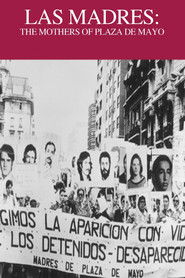
star 6.11985 Argentine documentary film directed by Susana Blaustein Muñoz and Lourdes Portillo about the Mothers of the Plaza de Mayo.Tango
1985
Tango
1985
A brief history of the emergence and artistic innovations of tango in 19th-century Argentina and Europe. The film offers a mosaic of tango melodies, art works, dance performances, historical footage, photographs of Buenos Aires at the turn of the 20th century, and texts by Celedonio Flores and Enrique Santos Discépolo.Terrorists in Retirement
1985
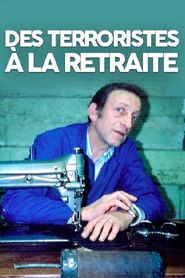
star 8.9Not just another documentary on the French resistance movement, this film focuses on one particular group of underground fighters in France: those from Eastern Europe. Many were Jews and all had fled their native countries before the war broke out. They were among the most staunch and fearless enemies of fascism, as shown here in personal interviews and memoirs of war-time experiences. But the most famous of these immigrants were 23 who were rounded up among several hundred Parisians in 1943, tried for their activities, and executed -- all were immigrants under the leadership of the Armenian poet Manouchian. After their execution, Paris was papered with posters decrying these 23 martyrs as "foreign communists."Arata Isozaki: Early work in Japan
1985
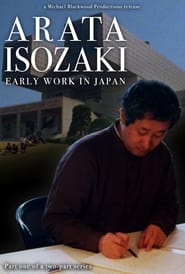
Arata Isozaki: Early Work in Japan takes a detailed look at the architect's pieces, exploring applauded projects such as the EXPO '70 Osaka Festival Plaza, Gunma Prefectural Museum of Modern Art and Kitakyushu Municipal Library. The extraordinary series of architectural breakthroughs made during this time contributed significantly to the evolution of contemporary architecture worldwide, and eventually gained him his first foreign commissionEmpire City
1985
Empire City
1985
star 9A film essay contrasting the modern metropolis with its "golden age" from 1830-1930, with the participation of some of New York's leading political and cultural figures. Made at a time when the city was experiencing unprecedented real estate development on the one hand and unforeseen displacement of population and deterioration on the other. Empire City is the story of two New Yorks. The film explores the precarious coexistence of the service-based midtown Manhattan corporate headquarters with the peripheral New York of undereducated minorities living in increasing alienation.35 Photos
1985
35 Photos
1985
star 8A woman born in 1949, the year the GDR was founded, talks about her life based on 35 images in her family album that each represent one year. This short was to premiere on the occasion of the 35th anniversary of East Germany. Officials rejected it, however, as an ostensibly negative portrait of GDR family life presented by an atypical woman. It was released under a different title a year later.No Sad Songs
1985
No Sad Songs
1985
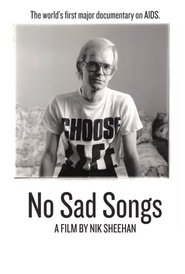
star 2.7Jim Black, a 37-year-old Canadian talks about the AIDS that is killing him. He talks about his life and his friends and how his brother's family has rejected him. Catherine Hunt is a Canadian woman whose brother is dying of AIDS. These personal stories are presented with excerpts from a series of performances by Canadian musicians and performance artists in order to give the viewer a bigger picture of the impact of this disease.Racetrack
1985
Racetrack
1985
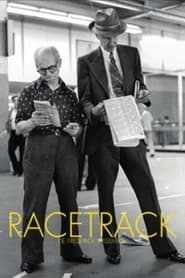
star 6RACETRACK is about the Belmont Race Track, one of the world's leading race tracks for thoroughbred racing. The film highlights the training, maintaining and racing of thoroughbred horses. Everyday occurrences are shown: in the backstretch — the grooming, feeding, shoeing, and caring for horses and the preparation for races; at the practice track the various aspects of training, exercising, and timing the horses; at the paddock — the pre-race presentation of the horses; and in the grandstand — betting and watching the races. The film also has sequences showing the variety of work done by trainers, jockeys, jockey agents, grooms, hot walkers, stable hands, and veterinarians.Memory of the Camps
1985
Memory of the Camps
1985
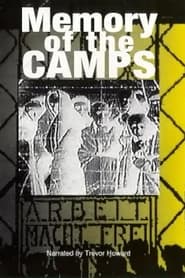
star 2In 1945, Allied troops invaded Germany and liberated Nazi death camps. They found unspeakable horrors which still haunt the world’s conscience. A film was made by British and American film crews who were with the troops liberating the camps. It was directed in part by Alfred Hitchcock and was broadcast for the first time in its entirety on PBS FRONTLINE in 1985.Yeah You Rite!
1985
Yeah You Rite!
1985
star 8This award winning film is a fast paced, humorous look at the colorful way the residents of New Orleans express themselves - why they talk the way they do, where the words come from, and what it means to talk with a New Orleans accent.Something of the Times
1985
star 8Archival photographs help reconstruct the life of white buffalo hunters, and the Aboriginal labour that supported them, in the remote wetlands of the NT in the 1930s. Former hunter Tom Cole visits hunting camps and discusses the trade.Orizzonti di gloria
1985
Orizzonti di gloria
1985
Young band musicians from the Province of Turin face the idea that they won't ever be famous.In the Footsteps of Taytacha
1985
In the Footsteps of Taytacha follows a group of Quechua-speaking musicians and dancers as they leave their remote villages high in the Andes Mountains of Peru and join thousands of other highlanders on the annual religious pilgrimage to the sacred peaks of Qoyllur-Rití. Quollur-Rití, the largest and most important religious ritual in the southern Andes, occurs only five days out of the year and involves walking both day and night in terrain over 4400 meters in altitude.When the Snake Bites the Sun
1985
A compelling account of the return by a group of dispossessed Aboriginal people to their ancient tribal grounds in the Northern outreaches of this continent.Battle of the Guitars
1985
This is one of three short films in the Living Texas Blues series. Battle of the Guitars shows the ranging influence of Aaron "T-Bone" Walker throught the performance of Pete Mayes and Joe Hughes at the Doll House Club in Houston.Deep Ellum Blues
1985
Deep Ellum Blues
1985
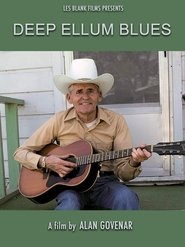
Deep Ellum is a place -- a part of Dallas, Texas. Deep Ellum, along with its legendary music scene built by the likes of Blind Lemon Jefferson, Blind Willie Johnson, Lead Belly, and Bill Neely, all but disappeared with the construction of Central Expressway in the 1950s. This film is one of three short films in the Living Texas Blues series which explores the 1920's and 1930's night life in Dallas through the music of Bill Neely.Texas Style
1985
Texas Style
1985
Texas Style centers on three generations of Westmoreland family fiddlers, bringing you to the Homecoming, Rodeo, Reunion and Fiddling Contest in Gustine, Texas, where there are armadillo races, tobacco-spitting and frog hopping contests, cow chip throwing and young and old comparing their hog calling skills. Inside a canvas tent, some of Texas' most remarkable fiddlers compete to the foot-stomping delight of their audience.