New Documentary Movies on Kanopy - Page 295
All Services
Free Services
 Netflix
 Amazon Prime Video
 Apple iTunes
 Apple TV Plus
 Disney Plus
 Google Play Movies
 Paramount Plus
 Hulu
Hulu
 HBO Max
 YouTube
 fuboTV
 Peacock
 Peacock Premium
 Amazon Video
 The Roku Channel
 AMC+
AMC on Demand
AMC+
AMC on Demand
 Kocowa
 Hoopla
 The CW
 Vudu
Vudu
 Starz
Starz
 Showtime
 PBS
PBS
 Pantaflix
 FXNow
FXNow
 Tubi TV
 Kanopy
 Comedy Central
 Crunchyroll
 Microsoft Store
 Redbox
 Sun Nxt
 ABC
ABC
 DIRECTV
 Crackle
 Fandor
 Plex
Plex
Netflix
Amazon Prime Video
Apple iTunes
Apple TV Plus
Disney Plus
Google Play Movies
Paramount Plus
Hulu
HBO Max
YouTube
fuboTV
Peacock
Peacock Premium
Amazon Video
The Roku Channel
AMC+
AMC on Demand
Kocowa
Hoopla
The CW
Vudu
Starz
Showtime
PBS
Pantaflix
FXNow
Tubi TV
Kanopy
Comedy Central
Crunchyroll
Microsoft Store
Redbox
Sun Nxt
ABC
DIRECTV
Crackle
Fandor
Plex

Making Utu
1983
Making Utu
1983
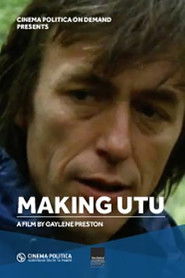
Making of documentary on the set of New Zealand's first epic Utu (1983), working with little money and dealing respectfully with matters of cultural protocol. Merata Mita discusses complex issues of inter-cultural conflict.Box of Treasures
1983
Box of Treasures
1983
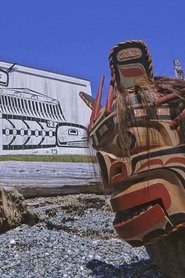
In 1921 the Kwakiut'l people of Alert Bay, British Columbia, held their last secret potlatch. In 1980 at Alert Bay, the U'mista Cultural Centre (U'mista means "something of great value that has come back") opened its doors to receive and house the cultural treasures which were seized decades earlier and only then returned to the people. The center also took up activities such as recording stories told by elders so that some part of the past would always be alive and teaching children about their heritage in order to make them feel connected to their ancestors. This film documents the cultural significance of these events for today's Kwakiut'l people. It is an eloquent testimony to the persistence and complexity of Kwakiut'l society and to the struggle for redefining cultural identity for them.Mammy Water: In Search of the Water Spirits in Nigeria
1983
Mammy Water is a pidgin English name for a local water goddess worshipped by the Ibibio, Ijaw, and Igbo speaking peoples of southeastern Nigeria. The water goddess traditionally gives wealth and children, compensates for hardships, and is sought in times of illness and need, especially by women. Her various cults are led, predominantly, by priestesses.Gogodala: A Cultural Revival?
1983
This film examines the implications of the Australian colonial era for the Gogodala people of the Fly River Delta, Western Papua New Guinea. Excessive missionary zeal, tolerated and encouraged by the government, contributed to the almost total destruction of Gogodala art and culture. More recently, an indirect grant from the Australian government has enabled the people to reconstruct a traditional longhouse, along with a new meaning and function: as a cultural center.Hopi: Songs of the Fourth World
1983
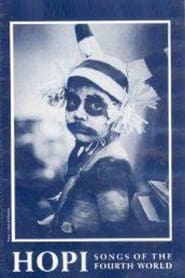
A compelling study of the Hopi that captures their deep spirituality and reveals their integration of art and daily life. Amidst beautiful images of Hopi land and life, a variety of Hopi — a farmer, a religious elder, a grandmother, a painter, a potter, and a weaver — speak about the preservation of the Hopi way. Their philosophy of living in balance and harmony with nature is a model to the Western world of an environmental ethic in action.The Indomitable Teddy Roosevelt
1983
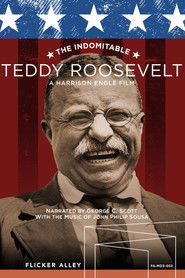
star 5Theodore Roosevelt was America's 26th president and a larger-than-life legend whose incredible story must be seen to be believed. Narrated by George C. Scott, this documentary weaves extremely rare archival footage with meticulous recreations alongside the music of John Philip Sousa in a dynamic panorama of the great events of Teddy Roosevelt in the early years of the 20th century.Water and the Dream of the Engineers
1983
Documentary where rich social history frames a spirited debate on the development of water infrastructure throughout the USA.When You Wore a Tulip and I Wore a Big Red Rose
1983
In the early 1980s, documentary filmmaker Stephen Schaller was instrumental in the rediscovery and restoration of The Lumberjack (1914), the oldest surviving film made in Wisconsin, and produced by a group of itinerant filmmakers who traveled from town to town making "local talent" pictures. Schaller's lovely and sometimes deeply emotional, 63-minute journal/essay film offers a look at the making of the Wausau, Wisconsin classic, including interviews with the one surviving cast member and the relatives of others who appeared in the movie.Bix: Ain't None of Them Play Like Him Yet
1982
Through interviews, archival footage, photos and classic tunes, learn about the remarkable career and troubled life of legendary jazz cornetist Bix Beiderbecke, who influenced countless musicians before alcoholism lead to his premature death. Close friends and associates such as Hoagy Carmichael, Charlie David and Louis Armstrong share their memories of Bix's abilities, playing style and personality.Dark Circle
1982
Sewing Woman
1982
Sewing Woman
1982
star 5.7Sewing Woman chronicles the bittersweet journey of one woman's determination to survive: from an arranged marriage in old China to working class comforts in modern America.First Contact
1982
First Contact
1982
star 6.8First Contact is a 1983 documentary by Bob Connolly and Robin Anderson which recounts the discovery of a flourishing native population in the interior highlands of New Guinea in 1930 in what had been thought to be an uninhabited area. It is based on the book of the same name by the same authors. Inhabitants of the region and surviving members of the Leahy brothers' gold prospecting party recount their astonishment at this unforeseen meeting. The film includes still photographs taken by a member of the expedition and contemporary footage of the island's terrain. It was nominated for an Academy Award for Best Documentary Feature.Poetry in Motion
1982
Poetry in Motion
1982
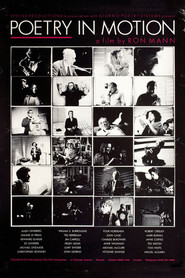
star 7More than 20 contemporary North American poets recite, sing, and perform their work. Early in the film, Charles Bukowski talks about the energy of poets and of a poem. These poets are the children of Walt Whitman and of Charles Olson, incantatory and oratorical, radical, sometimes incorporating contemporary political imagery. Black Mountain poets, the Beats, minimalists like John Cage, the wordless Four Horsemen, Tom Waits, and others capture aspects of poets as troubadours.Miles of Smiles, Years of Struggle
1982
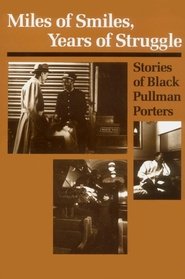
The story of the organizing of the first black trade union - The Brotherhood of Sleeping Car Porters - provides an account of African American working life between the Civil War and World War II. Miles of Smiles chronicles the organizing of the first black trade union - the Brotherhood of Sleeping Car Porters. This inspiring story of the Pullman porters provides one of the few accounts of African American working life between the Civil War and World War II. Describes the harsh discrimination which lay behind the porters' smiling service. Narrator Rosina Tucker, a 100 year old union organizer and porter's widow, describes how after a 12 year struggle led by A. Philip Randolph, the porters won the first contract ever negotiated with black workers. Miles of Smiles both recovers an important chapter in the emergence of black America and reveals a key source of the Civil Rights movement.The French
1982
The French
1982
star 7.1Roland-Garros, 1981: For the very first time, a documentary team is allowed to shoot sequences in the backstage of the French Open of tennis of Roland-Garros. William Klein's camera takes us on the heels of the greatest players of the time: Björn Borg, Jimmy Connors, Ivan Lendl, Chris Evert-Lloyd, John McEnroe, Martina Navratilova, Yannick Noah, Guillermo Vilas... Miles of film. Historical pictures, a thousand and one details, a thousand and one unusual scenes. A declaration of love from a tennis lover.Genocidio
1982
Family Business
1982
Family Business
1982
Howie Snyder is an archetype: a retired Marine colonel in his mid-40s, a prototypical American entrepreneur struggling to make his business go. Howie's Shakey's Pizza franchise in Muncie, Indiana employs his whole family: wife, nine children and Howie himself. He is the representative of the American Dream: the chance to invest long hours and hard work in exchange for financial security for oneself and family.The Campaign
1982
The Campaign
1982
Focusing on a mayoral race in Muncie, Indiana, The Campaign follows closely the personalities, strategies and pressures of an American political contest. In particular, it examines the sharply contrasting styles and backgrounds of the Democratic and Republican candidates.Genocide
1982
Genocide
1982
star 7.4The mass murder of Jewish people by the Nazi regime is chronicled, with a warning that anti-Semitism is on the rise and the events of the Holocaust could happen again. The history of European Jewish culture and events before and during the Holocaust are seen in newsreels, photographs, and animated segments. The words of the victims of the era are read, and footage from the liberation os a concentration camp is shown.