New Documentary Movies on Kanopy - Page 296
All Services
Free Services
 Netflix
 Amazon Prime Video
 Apple iTunes
 Apple TV Plus
 Disney Plus
 Google Play Movies
 Paramount Plus
 Hulu
Hulu
 HBO Max
 YouTube
 fuboTV
 Peacock
 Peacock Premium
 Amazon Video
 The Roku Channel
 AMC+
AMC on Demand
AMC+
AMC on Demand
 Kocowa
 Hoopla
 The CW
 Vudu
Vudu
 Starz
Starz
 Showtime
 PBS
PBS
 Pantaflix
 FXNow
FXNow
 Tubi TV
 Kanopy
 Comedy Central
 Crunchyroll
 Microsoft Store
 Redbox
 Sun Nxt
 ABC
ABC
 DIRECTV
 Crackle
 Fandor
 Plex
Plex
Netflix
Amazon Prime Video
Apple iTunes
Apple TV Plus
Disney Plus
Google Play Movies
Paramount Plus
Hulu
HBO Max
YouTube
fuboTV
Peacock
Peacock Premium
Amazon Video
The Roku Channel
AMC+
AMC on Demand
Kocowa
Hoopla
The CW
Vudu
Starz
Showtime
PBS
Pantaflix
FXNow
Tubi TV
Kanopy
Comedy Central
Crunchyroll
Microsoft Store
Redbox
Sun Nxt
ABC
DIRECTV
Crackle
Fandor
Plex

First Contact
1982
First Contact
1982
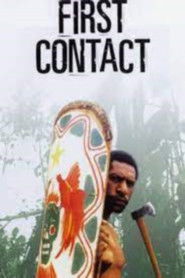
star 6.8First Contact is a 1983 documentary by Bob Connolly and Robin Anderson which recounts the discovery of a flourishing native population in the interior highlands of New Guinea in 1930 in what had been thought to be an uninhabited area. It is based on the book of the same name by the same authors. Inhabitants of the region and surviving members of the Leahy brothers' gold prospecting party recount their astonishment at this unforeseen meeting. The film includes still photographs taken by a member of the expedition and contemporary footage of the island's terrain. It was nominated for an Academy Award for Best Documentary Feature.Poetry in Motion
1982
Poetry in Motion
1982
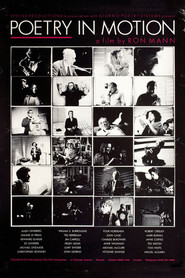
star 7More than 20 contemporary North American poets recite, sing, and perform their work. Early in the film, Charles Bukowski talks about the energy of poets and of a poem. These poets are the children of Walt Whitman and of Charles Olson, incantatory and oratorical, radical, sometimes incorporating contemporary political imagery. Black Mountain poets, the Beats, minimalists like John Cage, the wordless Four Horsemen, Tom Waits, and others capture aspects of poets as troubadours.Miles of Smiles, Years of Struggle
1982
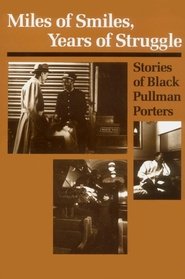
The story of the organizing of the first black trade union - The Brotherhood of Sleeping Car Porters - provides an account of African American working life between the Civil War and World War II. Miles of Smiles chronicles the organizing of the first black trade union - the Brotherhood of Sleeping Car Porters. This inspiring story of the Pullman porters provides one of the few accounts of African American working life between the Civil War and World War II. Describes the harsh discrimination which lay behind the porters' smiling service. Narrator Rosina Tucker, a 100 year old union organizer and porter's widow, describes how after a 12 year struggle led by A. Philip Randolph, the porters won the first contract ever negotiated with black workers. Miles of Smiles both recovers an important chapter in the emergence of black America and reveals a key source of the Civil Rights movement.The French
1982
The French
1982
star 7.1Roland-Garros, 1981: For the very first time, a documentary team is allowed to shoot sequences in the backstage of the French Open of tennis of Roland-Garros. William Klein's camera takes us on the heels of the greatest players of the time: Björn Borg, Jimmy Connors, Ivan Lendl, Chris Evert-Lloyd, John McEnroe, Martina Navratilova, Yannick Noah, Guillermo Vilas... Miles of film. Historical pictures, a thousand and one details, a thousand and one unusual scenes. A declaration of love from a tennis lover.Genocidio
1982
Family Business
1982
Family Business
1982
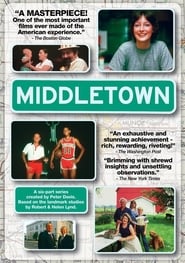
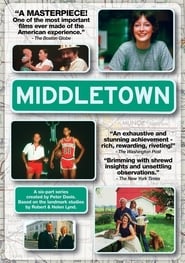
Howie Snyder is an archetype: a retired Marine colonel in his mid-40s, a prototypical American entrepreneur struggling to make his business go. Howie's Shakey's Pizza franchise in Muncie, Indiana employs his whole family: wife, nine children and Howie himself. He is the representative of the American Dream: the chance to invest long hours and hard work in exchange for financial security for oneself and family.The Campaign
1982
The Campaign
1982
Focusing on a mayoral race in Muncie, Indiana, The Campaign follows closely the personalities, strategies and pressures of an American political contest. In particular, it examines the sharply contrasting styles and backgrounds of the Democratic and Republican candidates.Genocide
1982
Genocide
1982
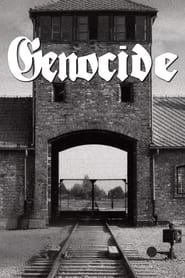
star 7.4The mass murder of Jewish people by the Nazi regime is chronicled, with a warning that anti-Semitism is on the rise and the events of the Holocaust could happen again. The history of European Jewish culture and events before and during the Holocaust are seen in newsreels, photographs, and animated segments. The words of the victims of the era are read, and footage from the liberation os a concentration camp is shown.Two Laws
1982
Two Laws
1982
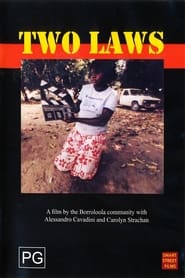
White people don't understand that there are two laws - white people have different laws from Aboriginal people. TWO LAWS is a film about history, law and life in the community of Borroloola in far North Queensland. The films offers viewers a remarkable and different way of seeing and hearing. Like the film, BACKROADS, it is one of the few productions at that time in which Aboriginal people had creative input. The impetus for TWO LAWS came from the community themselves. There was substantial collaboration with the film makers before and during the shooting period. It is one of the most outstanding films to be made during the 1980s. It is an historical analysis of what, nearly forty years later, is an increasingly contemporary question. Two Laws.In Our Water
1982
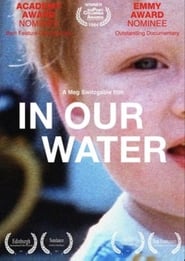
In Our Water
1982
star 7A New Jersey family discovers their drinking water is contaminated with deadly poisons from a nearby landfill.Her Name Came on Arrows - A Kinship Interview with the Baruya of New Guinea
1982
In the eastern highlands of Papua New Guinea, French anthropologist Maurice Godelier invites five of his Baruya friends and informants to his house to discuss Baruya kinship and rules of marriage. As Godelier poses questions, the kinship rules that provide the cohesive fabric of Baruya culture are brought to life. Abstract terms are given practical meanings as Godelier investigates Baruya customs of stealing wives, exchanging sisters for wives, stealing names and exchanging 'food for blood.'To Find the Baruya Story
1982
This multi-faceted film, photographed in both 1969 and in Paris in 1982, illustrates an anthropologist's actual fieldwork methods and personal relationships among the Baruya, and provides an in-depth view of the Baruya's traditional salt-based economic system. The film follows Dr. Godelier as he explores the complexities of food production and the effects of new technologies. He comments: "I have to find and bring together the different pieces of Baruya culture... That's my job, to find the story."The Tree of Knowledge
1982
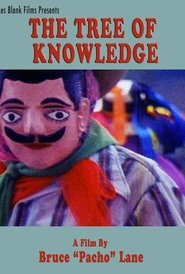
star 6Set in Huehuetla, Puebla, a Totonac Indian community in East Central Mexico, this documentary contrasts two systems of education. The public school system uses patriotic symbols to "integrate" Indian pupils into the national culture while teaching them to reject their own identity.Yell Once a Week
1982
Yell Once a Week
1982
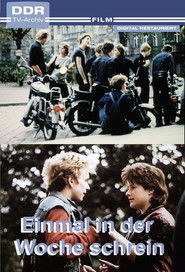
The film’s title is taken from a song, used here as a leitmotif, written by Günter Jordan and the East German rock group Pankow. This sensitive report about rebellious teenagers in Berlin’s “wild East” was banned before its first screening.Roses in December
1982
Roses in December
1982
The film begins with the exhumation of four American women tortured, raped, and murdered by the right-wing government of El Salvador on December 2, 1980. The women — Dorothy Kazel, an Ursuline; Ita Ford and Maura Clarke, Maryknoll mission sisters; and Jean Donovan, a young laywoman from Cleveland — were providing food, shelter, medical care and burial to the poor. They were targeted for assassination by a death squad within the U.S.-supported Salvadoran military as part of a policy of suppressing the poor and “liberation theology.” The award-winning documentary focuses primarily on the life of Jean Donovan through archival news footage, interviews, home movies, and diary readings.Bread and Dripping
1982
Bread and Dripping
1982
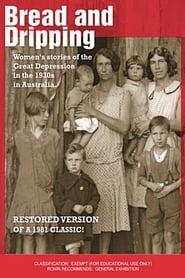
Women's unwritten history is passed down through memories. Shows women talking about their experiences of the Great Depression in Australia. Covers such areas as: aboriginal women; paid and unpaid work; mothering; marriage; women's participation in the political struggles of the 1920's and 30's.Frida Kahlo
1982
Frida Kahlo
1982
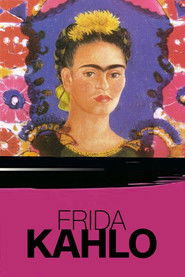
star 1Frida Kahlo: declared a symbol of Mexican national heritage, made into a cult figure by the women's movement, praised by the likes of Picasso and Breton, this film uses images and music to reveal the soul of an icon.Philip Guston: A Life Lived
1982
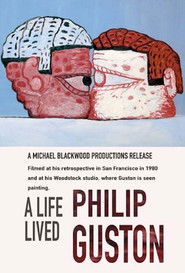
Late in life, the artist looks back over a career that originated in social realism during the '30s, moved to the center of Abstract Expressionism, and culminated in a return to figuration. Filmed at his retrospective in San Francisco in 1980 and at his Woodstock studio, where Guston is seen painting, the artist speaks candidly about his philosophy of painting and the psychological motivation for his work.Fela Kuti: Music Is the Weapon
1982
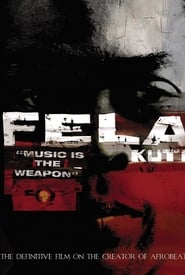
star 6.2Musician Fela Anikulapo Kuti recorded more than 60 albums to promote the magic of Afrobeat but never lost his political voice as an outspoken critic against widespread government corruption in Nigeria. This documentary examines the role that Fela, dubbed "Black President," played in shedding light on atrocities in his homeland and in promoting the ascent of African music worldwide.