New Documentary Movies on Kanopy - Page 301
All Services
Free Services
 Netflix
 Amazon Prime Video
 Apple iTunes
 Apple TV Plus
 Disney Plus
 Google Play Movies
 Paramount Plus
 Hulu
Hulu
 HBO Max
 YouTube
 fuboTV
 Peacock
 Peacock Premium
 Amazon Video
 The Roku Channel
 AMC+
AMC on Demand
AMC+
AMC on Demand
 Kocowa
 Hoopla
 The CW
 Vudu
Vudu
 Starz
Starz
 Showtime
 PBS
PBS
 Pantaflix
 FXNow
FXNow
 Tubi TV
 Kanopy
 Comedy Central
 Crunchyroll
 Microsoft Store
 Redbox
 Sun Nxt
 ABC
ABC
 DIRECTV
 Crackle
 Fandor
 Plex
Plex
Netflix
Amazon Prime Video
Apple iTunes
Apple TV Plus
Disney Plus
Google Play Movies
Paramount Plus
Hulu
HBO Max
YouTube
fuboTV
Peacock
Peacock Premium
Amazon Video
The Roku Channel
AMC+
AMC on Demand
Kocowa
Hoopla
The CW
Vudu
Starz
Showtime
PBS
Pantaflix
FXNow
Tubi TV
Kanopy
Comedy Central
Crunchyroll
Microsoft Store
Redbox
Sun Nxt
ABC
DIRECTV
Crackle
Fandor
Plex

Tongpan
1977
Tongpan
1977
star 7.4Tongpan is a 1977 Thai 16 mm black-and-white docudrama that re-creates a seminar that took place in Northeast Thailand in 1975 to discuss the proposed Pa-Mong Dam on the Mekong. Interwoven are sequences depicting a poor farmer, Tongpan, who had lost his land to another dam some years before, and his struggles to make ends meet.Charleen or How Long Has This Been Going On?
1977
star 8In Charleen, documentarian Ross McElwee looks at the life of a North Carolina poet and teacher who acts as a muse to a motley crew of artists and musicians.Chulas Fronteras
1976
Chulas Fronteras
1976
star 6.6A complex, insightful look at the Chicano experience as mirrored in the lives and music of the most acclaimed Norteño musicians of the Texas-Mexican border, including Flaco Jimenez and Lydia Mendoza. Video includes bonus feature, Del Mero Corazon.Kristina Talking Pictures
1976
star 3.4Kristina, a self-named Hungarian female lion tamer, arrives in New York to become a dance choreographer. Kristina, now a middle-class NYC artist concerned about the environment, has a sailor lover named Raoul. The film, a collage work, an essay film, a fictional narrative and a documentary all rolled into one, is one of the most important independent American feminists films made during the 1970's.Hollywood on Trial
1976
Hollywood on Trial
1976
star 5.5A detailed look at the events leading up to the blacklisting of Hollywood writers and artists. In October 1947 nineteen Hollywood personalities were subpoenaed by the House Committee on Un-American Activities to testify about their knowledge or possible involvement in the American Communist Party. The first ten to be called refused to cooperate, claiming their first amendment rights, were cited for contempt of Congress and sent to prison. They became known as the "Hollywood Ten" and this is their story.People of the Wind
1976
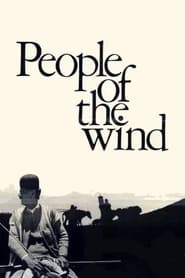
People of the Wind
1976
star 5The Bakhtiari migration is one of the most hazardous tests of human endurance known to mankind. Every year, 500,000 men, women and children — along with one million animals — struggle for eight grueling weeks to scale the massive Zagros Mountains — a range which is as high as the Alps and as broad as Switzerland — to reach their summer pastures.Lost, Lost, Lost
1976
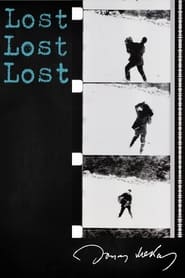
Lost, Lost, Lost
1976
star 7Drawn from footage shot between 1949 and 1963, Jonas Mekas’s autobiographical diary film chronicles his early years in exile, capturing the struggle to build a new life in New York and his gradual discovery of a vibrant artistic community.Welcome to Britain
1976
Welcome to Britain
1976
Captures a moment in 1970s Britain's immigration debate, focusing on new arrivals at Heathrow as they wrestle with immigration law.Meat
1976
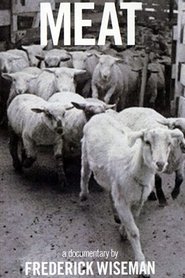
Meat
1976
star 8.2MEAT traces the process through which cattle and sheep become consumer goods. It depicts the processing and transportation of meat products by a highly automated packing plant, illustrating important points and problems in the area of production, transportation, logistics, equipment design, time-motion study, and labor management.Underground
1976
Underground
1976
star 6A documentary about the Weathermen, founded as a militant faction of the Students for a Democratic Society (SDS), who fought to overthrow the U.S. government during the 1960s and 1970s. The film consists of interviews with members of the group after they went underground and footage of the anti-war and civil rights protests of the time. It was directed by Emile de Antonio, Haskell Wexler and Mary Lampson, later subpoenaed by the Federal Bureau of Investigation in an attempt to confiscate the film footage in order to gain information that would help them arrest the Weathermen.Heartworn Highways
1976
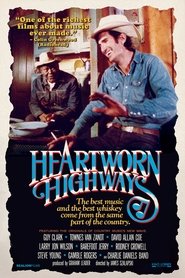
Heartworn Highways
1976
star 7.9The music speaks for itself in this performance documentary that highlights some of the biggest names within the country-folk scene in Texas and Tennessee during the last weeks of 1975 and the first weeks of 1976, eschewing narration and staged interviews.Hollywood's Musical Moods
1976
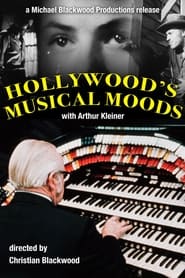
In the silent film era, movies were never really silent. In the background of films that made figures like Charlie Chaplin and Buster Keaton into cultural icons, were the musical giants whose compositions defined the very films that captivated a generation of movie-goers. Arthur Kleiner converses with the still-living legends from that bygone golden age of cinema.Union Maids
1976
Union Maids
1976
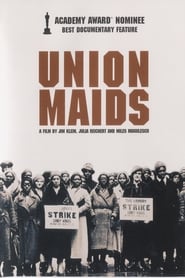
star 6.5Three women labor activists in America tell their stories of organizing in the 1930s.Artpark People
1976
Artpark People
1976
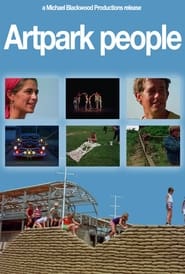
Encouraging visitors to engage and connect with on site artist's, Artpark provides a unique environment for those craving culture away from the whirring city. Located in Lewiston, New York the outdoor venue opens itself to artists, musicians and performers seeking a spot to reflect and create. During the summer seasons Artpark serves as an immersive experience, inviting the public to observe the artists as they work. Artpark People observes the vibrant scene and captures candid interactions between artist and onlookers. With a heavy emphasis on outdoor space and environmental influence, Artpark asserts itself as a cultural and communal haven for creatives.Hydraulics
1976
Hydraulics
1976
A BAFTA award winning documentary on the basic principles and applications of hydrostatics.Altar of Fire
1976
Altar of Fire
1976
This film records a 12 day ritual performed by Mambudiri Brahmins in Kerala, southwest India, in April 1975. This event was possibly the last performance of the Agnicayana, a Vedic ritual of sacrifice dating back 3,000 years and probably the oldest surviving human ritual. Long considered extinct and never witnessed by outsiders, the ceremonies require the participation of seventeen priests, involve libations of Soma juice and oblations of other substances, all preceded by several months of preparation and rehearsals. They include the construction, from a thousand bricks, of a fire altar in the shape of a bird.Pride of Place
1976
Pride of Place
1976
star 6.3In this first project of Kim Longinotto while she was a student at Englands National School of Television and Film she filmed the daily life in a girls boarding school situated in an old isolated castle in Buckinghamshire. Until she was 17, Longinotto lived in this boarding school, finaly she run away from there. In this dark and expressive black and white documentary, Longinotto exposes the repressive school from the students perspective. It seems to be a kind of miniature state with bizzare rules, idigestibel food and absurd punishments. The documentary begins with an graduation ceremony. The director blows her own trumpet, afterwards the film describes the daily routine of schoollife. The film ends up with the students leaving for holidays. As a result of this documentary, the boarding school was closed down one year after the release of the film.Universe
1976
The Amish: A People of Preservation
1975
The Amish continue to intrigue their technology-current neighbors by keeping alive ways and beliefs that many modern Americans regard as irretrievably lost to progress. In this colorful, award-winning documentary, newly revised and augmented, Mennonite historian John L. Ruth takes us sympathetically into the Amish mindset. Appreciative neighbors, a well-known physician, an artist, and respected scholar John A. Hostetler, author of Amish Society, provide insightful commentary on the survival of an alternative to the kind of world we have made. As the Amish increase exponentially in numbers, some migrate toward more open farmland. Those staying in centuries-old communities where the land is too crowded to farm have developed an amazing variety of cottage industries. But all changes are made very carefully, in order not to undermine the spiritual covenant and community.Australia After Dark
1975
Australia After Dark
1975
star 5An exotic world of eroticism, witchcraft, masochism and strange secret places.