New Documentary Movies on Kanopy - Page 302
All Services
Free Services
 Netflix
 Amazon Prime Video
 Apple iTunes
 Apple TV Plus
 Disney Plus
 Google Play Movies
 Paramount Plus
 Hulu
Hulu
 HBO Max
 YouTube
 fuboTV
 Peacock
 Peacock Premium
 Amazon Video
 The Roku Channel
 AMC+
AMC on Demand
AMC+
AMC on Demand
 Kocowa
 Hoopla
 The CW
 Vudu
Vudu
 Starz
Starz
 Showtime
 PBS
PBS
 Pantaflix
 FXNow
FXNow
 Tubi TV
 Kanopy
 Comedy Central
 Crunchyroll
 Microsoft Store
 Redbox
 Sun Nxt
 ABC
ABC
 DIRECTV
 Crackle
 Fandor
 Plex
Plex
Netflix
Amazon Prime Video
Apple iTunes
Apple TV Plus
Disney Plus
Google Play Movies
Paramount Plus
Hulu
HBO Max
YouTube
fuboTV
Peacock
Peacock Premium
Amazon Video
The Roku Channel
AMC+
AMC on Demand
Kocowa
Hoopla
The CW
Vudu
Starz
Showtime
PBS
Pantaflix
FXNow
Tubi TV
Kanopy
Comedy Central
Crunchyroll
Microsoft Store
Redbox
Sun Nxt
ABC
DIRECTV
Crackle
Fandor
Plex

Waiting for Fidel
1975
Waiting for Fidel
1975
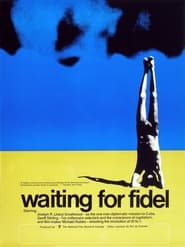
star 5.8This feature-length documentary from 1974 takes viewers inside Fidel Castro's Cuba. A movie-making threesome hope that Fidel himself will star in their film. The unusual crew consists of former Newfoundland premier Joseph Smallwood, radio and TV owner Geoff Stirling and NFB film director Michael Rubbo. What happens while the crew awaits its star shows a good deal of the new Cuba, and also of the three Canadians who chose to film the island. (NFB)Protected: The Truth About Palm Island
1975
Exposé of the ill-treatment of Aboriginal workers by white men. A dramatised documentary about the June 1957 Aboriginal strike on Palm Island reserve, off the north Queensland coast.Eadweard Muybridge, Zoopraxographer
1975
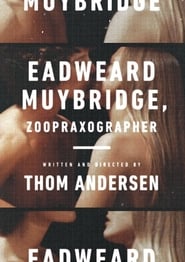
star 7.2Thom Andersen's hour-long documentary adroitly combines biography, history, film theory, and philosophical reflection. Muybridge's photographic studies of animal locomotion in the 1870s were a major forerunner of movies; even more interesting are his subsequent studies of diverse people, photographed against neutral backgrounds.Welfare
1975
Welfare
1975
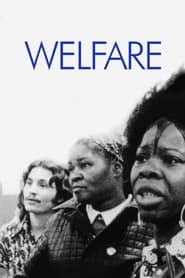
star 7.1WELFARE shows the nature and complexity of the welfare system in sequences illustrating the staggering diversity of problems that constitute welfare: housing, unemployment, divorce, medical and psychiatric problems, abandoned and abused children, and the elderly. These issues are presented in a context where welfare workers as well as clients struggle to cope with and interpret the laws and regulations that govern their work and life.In Search of Dracula
1975
In Search of Dracula
1975
star 7.2A documentary exploring the legends of vampires, using books, paintings and early films on the subject.The White Coup
1975
The White Coup
1975
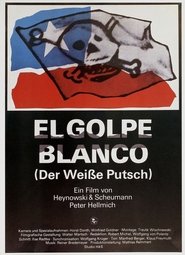
At the parliamentary elections that the Unidad Popular won, there were activities to overthrow Salvador Allende. By a white, supposedly clean coup, the rightwing powers of Chile tried unsuccessfully to gain a two thirds majority in the national congress. Months later, the armed, violent coup took place.Chris and Bernie
1975
Chris and Bernie
1975
star 7The story of two young single mothers who join forces to make a new kind of family unit for themselves and their children.Not to Lose You, My Language
1975
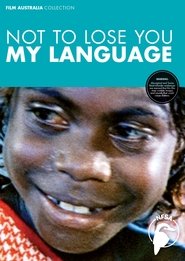
This program looks at a bilingual education program in the Northern Territory, where children are taught in English and Aboriginal languages. As there are many different Aboriginal languages, subjects are taught in a language appropriate to the subject matter. The aim of the program is to help Aboriginal children to see their language and culture as something worthwhile and so nurture their self-confidence and self-respect.Some Aspects of Cape Verdean Culture
1975
"Some Aspects Of Cape Verdean Culture" is a re-discovered and restored documentary shot in 1975 in cape verde at the time of independence by pioneering video artist Anthony D. Ramos. This was some of the earliest video work by ramos, who received a 1975 grant from the Rhode Island Council for the Humanities for travel to Cape Verde and a sony color 1/2" reel to reel video camera . Ramos , a cape verdean american, traveled to the islands of Sao Tiago, Fogo and Sao Vicente , and was the only american camera to capture the historic end of 500 years of Portuguese colonial rule. Over eighty hours of video were shot, and efforts are currently underway to raise funds to restore and transfer the rest of videos in this valuable archive.Wheat Cycle
1975
Wheat Cycle
1975
The people and their labor are bound to the land in the cycle of activities to the sowing to the harvesting of wheat. Without narration or subtitles, the film conveys a sense of unity between the people and the land. Filmed in the Balkh Province, an area inhabited by Tajik and other Central Asian peoples. The town of Aq Kupruk is approximately 320 miles northwest of Kabul. The theme of the film focuses on rural economics. The film and accompaning instructor notes focus on herding, and fishing under diverse environmental conditions. The impact of technological change, human adaptation, and governmental extension of market systems are parallel themes.Claes Oldenburg: The Formative Years
1975
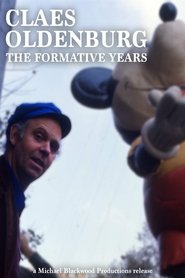
Gathering inspiration from the world around him, Claes Oldenburg has dedicated his career to giving objects life. What many would see only as their mundane, everyday tools Oldenburg sees as an opportunity for art. His famed large scale sculptures stand with such stature and force that the viewer has no choice but to become involved with the piece.Cochengo Miranda
1975
Cochengo Miranda
1975
COCHENGO MIRANDA is a portrait of a farmer and his family living in the Pampas region of Central Argentina. Made by Jorge Preloran, Argentina's best-known documentary filmmaker, the film is an example of his unique genre of ethnobiography, in which the story of an individual reveals larger truths about a culture and way of life.Sister, If You Only Knew
1975
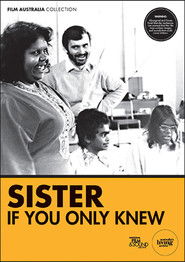
star 7This film explores the pressures experienced by Aboriginal women living in the city, and the effect that these pressures also have on their men and their children. In spite of all life's difficulties, the women seem to survive the urban environment better than the men. Their humour, intelligence and resilience in the face of adversity shines through.Sons of Namatjira
1975
Sons of Namatjira
1975
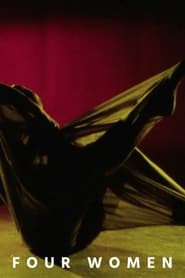
star 9One of Curtis Levy’s finest documentaries, Sons of Namatjira, follows Keith and his wife, Isabel, and other relatives, in their interactions with the wider world including art galleries in town and bus-loads of middle-aged tourists from the big cities. The film highlights communication difficulties between black and white, and in Levy’s terms, becomes “a parable of black-white relations in Australia”.Four Women
1975
Four Women
1975
star 5An imaginatively choreographed dance interpretation of the ballad by Nina Simone explores four common stereotypes of Black women.On the Spring Ice
1975
On the Spring Ice
1975
Walrus as well as whales are hunted by the Eskimos of Gambell on St. Lawrence Island. As the film opens, an old man tells of the dangers of moving ice, how people used to drift on such ice and never return. A cluster of men stand on a snowy rooftop, scanning the sea ice for walrus, when one spots a skin boat in distress far out on the ice. The crew had not come home the night before, and now were drifting toward Siberia. Long ago, there was nothing that could have been done to save them. Today, the men call the Coast Guard. The next day, preparations for another walrus hunt are made. The hunters load the boat and travel fifty miles out to sea, where they spot two walrus sunning themselves on an ice floe. "Don't move," one hunter tells the camera. The walrus are shot, admired, butchered on the ice, and loaded onto the boat. Back in the village, the meat is cut again and hung to dry.The Ax Fight
1975
The Ax Fight
1975
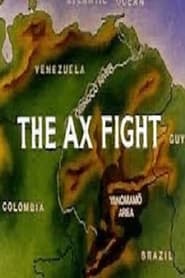
star 5.7The Ax Fight (1975) is an ethnographic film by anthropologist and filmmaker Tim Asch and anthropologist Napoleon Chagnon about a conflict in a Yanomami village called Mishimishimabowei-teri, in southern Venezuela. It is best known as an iconic and idiosyncratic ethnographic film about the Yanomamo and is frequently shown in classroom settings.Primate
1974
Primate
1974
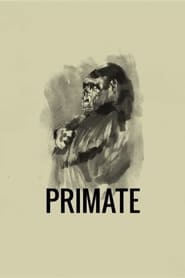
star 6.7Primate sees realist documentarian Frederick Wiseman hone his lens on the inmates of the Yerkes Primate Research Centre. A representative scientist explains the aims and outcomes of the organisation, describing the mating habits and relationships of the animals.Mourning For Mangatopi
1974
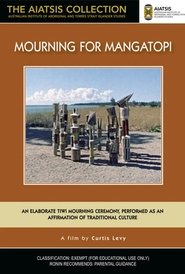
Because of work commitments and the influence of Christian Missions, traditional mourning ceremonies among the Tiwi people of Melville Island were becoming rare at the time of making this film (1974). The full, elaborate ceremony, called the Pukumani ceremony, lasted several days and involved large numbers of people in ritual roles. It was performed here with full awareness that this may be one of the last times such a ceremony would be staged in the traditional way. The ceremony was prepared by the Mangatopi family of Snake Bay after the death of a 35-year old family member killed by his wife. The dead man’s father, Geoffrey Mangatopi, and his family requested this film to be made as a public record of a disappearing tradition. Unique to the Tiwi people of Melville and Bathurst islands, the Pukumani ceremony was not only performed to safe-guard the passage of the dead person into the spirit world, but to re-affirm kinship relationships and traditional Tiwi culture.Rivers of Sand
1974
Rivers of Sand
1974
star 6The people portrayed in this film are called Hamar. They dwell in the thorny scrubland of southwestern Ethiopia, about one hundred miles north of Lake Rudolph, Africa's great inland sea. They are isolated by some distant choice that now limits their movement and defines their condition. At least until recently, it has resulted in their retaining a highly traditional way of life. Hamar women eagerly accept their ritual whipping when boys come of age. Part of that tradition was the open, even flamboyant, observance of male supremacy. In their isolation, they seemed to have refined this not uncommon principle of social organization into a remarkably pure state. Hamar men are masters and their women are slaves. The film tries to disclose the effect on mood and behavior of lives governed by the idea of sexual inequality.