New Documentary Movies on Kanopy - Page 304
All Services
Free Services
 Netflix
 Amazon Prime Video
 Apple iTunes
 Apple TV Plus
 Disney Plus
 Google Play Movies
 Paramount Plus
 Hulu
Hulu
 HBO Max
 YouTube
 fuboTV
 Peacock
 Peacock Premium
 Amazon Video
 The Roku Channel
 AMC+
AMC on Demand
AMC+
AMC on Demand
 Kocowa
 Hoopla
 The CW
 Vudu
Vudu
 Starz
Starz
 Showtime
 PBS
PBS
 Pantaflix
 FXNow
FXNow
 Tubi TV
 Kanopy
 Comedy Central
 Crunchyroll
 Microsoft Store
 Redbox
 Sun Nxt
 ABC
ABC
 DIRECTV
 Crackle
 Fandor
 Plex
Plex
Netflix
Amazon Prime Video
Apple iTunes
Apple TV Plus
Disney Plus
Google Play Movies
Paramount Plus
Hulu
HBO Max
YouTube
fuboTV
Peacock
Peacock Premium
Amazon Video
The Roku Channel
AMC+
AMC on Demand
Kocowa
Hoopla
The CW
Vudu
Starz
Showtime
PBS
Pantaflix
FXNow
Tubi TV
Kanopy
Comedy Central
Crunchyroll
Microsoft Store
Redbox
Sun Nxt
ABC
DIRECTV
Crackle
Fandor
Plex

An Afghan Village
1974
An Afghan Village
1974
A collage of daily life in Aq Kupruk builds from the single voice that calls the townspeople to prayer, the brisk exchange of the baazar, communal labor in the fields, and the uninhibited sports and entertainment of rural Afghans. The theme of the film focuses on rural society. The film and accompaning instructor notes explore concepts of development, modernization, environmental equilibrium, and especially change, identifying change agents, and analyzing barries and stimulants to change.Afghan Women
1974
Afghan Women
1974
The words of the women and the rhythm of their lives in the seclusion of family compounds suggests both the satisfying and the limiting aspects of a woman's role in a rural Afghan community. Filmed in the Balkh Province, an area inhabited by Tajik and other Central Asian peoples. The town of Aq Kupruk is approximately 320 miles northwest of Kabul. The theme of the film focuses on women. The film and accompanying instructor notes examine the economic, political, religious, and educational status of women, their legal and customary rights, and the degree of change in their actual and perceived roles.Afghan Nomads (The Maldar)
1974
At dawn a nomad caravan descends on Aq Kupruk from the foothills of the Hindu Kush. In their camp, and in commerce with the townspeople, the Maldar reveal the mixture of faith and distrust that has kept nomads and sedentary people separate and interdependent over the centuries. The theme of the film focuses on political and religious beliefs. The film and accompanying instructor notes in this series embrace five different and complex units of analysis concerning how political change occurs; individual attitudes, ethnic identity, national loyalties, institutional affiliations, and ideological beliefs.Arab-Israeli Dialogue
1974
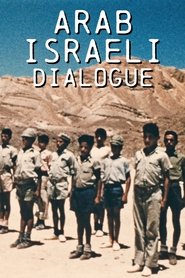
The passionate final documentary from Lionel Rogosin, in which Palestinian poet Rashed Hussein and Israeli writer Amos Kenan seek dialogue toward a possible solution to the never-ending conflict. Never before have both sides discussed a mutual problem so frankly, and so willingly. Rogosin provides an open forum for two formidable intellects to discuss the fates of their nations, and the ever-receding possibility of peace.Cree Hunters of Mistassini
1974
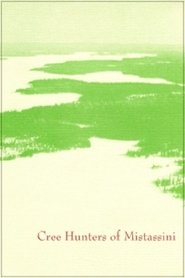
star 7An NFB crew filmed a group of three families, Cree hunters from Mistassini. Since times predating agriculture, this First Nations people have gone to the bush of the James Bay and Ungava Bay area to hunt. We see the building of the winter camp, the hunting and the rhythms of Cree family life.Namatjira the Painter
1974
Traces the life and artistic development of the Aboriginal painter, the late Albert Namatjira. His environment, his introduction to painting, his subsequent success with beautifully original landscapes and his influence on fellow Aborigines are recorded.The Fifth Facade: The Making of the Sydney Opera House
1973
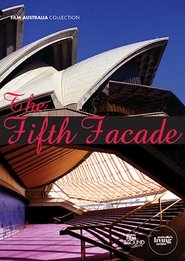
On 20 October 1973, the Sydney Opera House was officially opened by Queen Elizabeth II. From conception to completion, it had taken more than 15 years and over $100 million dollars. In the years since its completion, the Sydney Opera House has become one of the most identifiable of Australia’s icons - ranking with the Sydney Harbour Bridge, Uluru, the koala and kangaroo - and is considered by many to be among the world's great architectural masterpieces.The Bolero
1973
The Bolero
1973
star 6.2The first part of this Academy Award-winning short consists of a behind-the-scenes look at the Los Angeles Philharmonic Orchestra as it prepares to perform Ravel's "Bolero." Individual musicians offer their thoughts as workers set up chairs and music stands; there are also comments by conductor Zubin Mehta and scenes of Mehta and the orchestra rehearsing. The rest of the film features a complete performance of "Bolero" with striking images of the orchestra as the music relentlessly approaches its climax.The Artist's Studio: Jean Dubuffet
1973
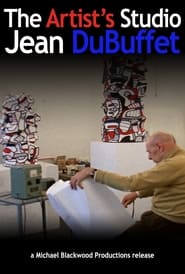
In the fall of 1973 we had an opportunity to visit Jean Dubuffet in his studio while he was at work on a detail for his musical theater piece Coucou Bazar. The production, which Dubuffet saw as an animated painting, featured performers in costumes resembling figures in his paintings and sculptures. The piece had a successful premiere at New York's Guggenheim earlier that year, alongside a retrospective of Dubuffet's previous works, and later would open at the Grand Palais under the auspices of the annual Festival d'Automne. Though Dubuffet once suffered a period of doubt surrounding his art, he returned to the practice with an impersonal and primitive touch, becoming more and more influenced by works that had no connection to mainstream art, for which he coined the term ART BRUT.Juvenile Court
1973
Juvenile Court
1973
star 7JUVENILE COURT shows the complex variety of cases before the Memphis Juvenile Court: foster home placement, drug abuse, armed robbery, child abuse, and sexual offenses. The sequences illustrate such issues as community protection vs. the desire for rehabilitation, the range and the limits of the choices available to the court, the psychology of the offender, and the constitutional and procedural questions involved in administering a juvenile court.Double Headed Eagle: Hitler's Rise to Power 1918-1933
1973
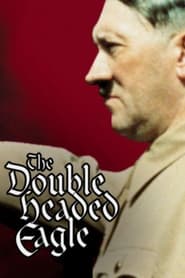
star 8Presents a unique and disturbing look at the rise of the Nazi party. The documentary, directed by Lutz Becker, attempts to remain as objective as possible, serving as a neutral observer of the years 1918 through 1933 in Germany. Via newsreel footage and clips of features from the era, the film offers a kaleidoscopic view of the many elements that fueled the rise of the Socialist Nationalist Party, including post-WWI poverty. Hitler occupies a central place in the documentary.Jasper Johns: Decoy
1973
Jasper Johns: Decoy
1973
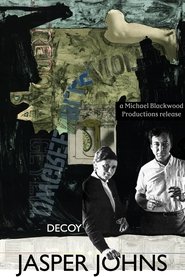
Jasper Johns’s Decoy is rooted inside the notions of reproduction, transformation and memory. Believing that an image gains new meaning each time it is presented, Johns boldly confronts his own past work, most notably Ale Cans (1964), and uses Decoy as a method of metamorphosis. The repetition of certain motifs allows both Johns and his spectators to confront the change an image goes through when approached from a different angle or placed in a new artistic context. As noted in the film, “each time a motif is used and reused additional memories accrue, new layers of meaning, and the image itself begins to acquire its own history.” (Jasper Johns) It is through Johns’s reimagining that the items he features in his work take on new life and grow from object to art, thus redirecting society’s interpretation.Magical Death
1973
Magical Death
1973
An examination of shamanism in the Yanomamo society. Dedehiewa, a shaman of the Mishimishi-mabowei-teri village, summons spirits called hekura to "cure or kill".Isamu Noguchi
1972
The Brickmakers
1972
The Brickmakers
1972
star 6.4This film documents the life of a family of brick makers in the outskirts of Bogotá, using the personal experience of the Castañeda family to expose the exploitation of manual laborers. Marta Rodríguez and Jorge Silva worked on this documentary from 1966 to 1972, establishing a relationship with the family which allows the viewer an intimate look at their hardships.Essene
1972
Essene
1972
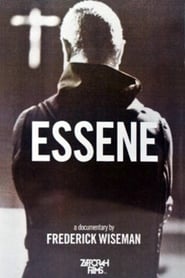
star 7.2Essene is about daily life in a Benedictine monastery and the resolution of conflict between personal needs and the institutional and organizational priorities of the community. In the Order, where the focus of life is the relationship of individual work and worship to the community as a whole, the brethren must cope with the same issues that arise in any community: rules, work, worship, values, love, and play.Nationtime
1972
Nationtime
1972
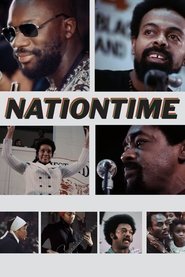
star 8A report on the National Black Political Convention held in Gary, Indiana, in 1972, a historic event that gathered Black voices from across the political spectrum, among them Jesse Jackson, Dick Gregory, Coretta Scott King, Richard Hatcher, Amiri Baraka, Charles Diggs, and H. Carl McCall.Betty Tells Her Story
1972
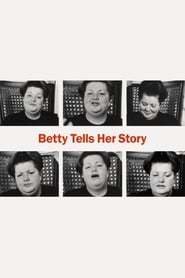
star 8A woman tells the story of how she bought an expensive dress that she never got to wear, and then tells the story again focusing on her feelings about the events she described.Asylum
1972
Asylum
1972
star 5.8A documentary crew lives with the schizophrenic residents of a group home based upon radical psychiatrist R. D. Laing's controversial approach to healing through compassion and freedom.FTA
1972
FTA
1972
star 6.1A documentary about a political troupe headed by actors Jane Fonda and Donald Sutherland which traveled to towns near military bases in the US in the early 1970s. The group put on shows called "F.T.A.", which stood for "F**k the Army", and was aimed at convincing soldiers to voice their opposition to the Vietnam War, which was raging at the time. Various singers, actors and other entertainers performed antiwar songs and skits during the show.