New Documentary Movies on Kanopy - Page 306
All Services
Free Services
 Netflix
 Amazon Prime Video
 Apple iTunes
 Apple TV Plus
 Disney Plus
 Google Play Movies
 Paramount Plus
 Hulu
Hulu
 HBO Max
 YouTube
 fuboTV
 Peacock
 Peacock Premium
 Amazon Video
 The Roku Channel
 AMC+
AMC on Demand
AMC+
AMC on Demand
 Kocowa
 Hoopla
 The CW
 Vudu
Vudu
 Starz
Starz
 Showtime
 PBS
PBS
 Pantaflix
 FXNow
FXNow
 Tubi TV
 Kanopy
 Comedy Central
 Crunchyroll
 Microsoft Store
 Redbox
 Sun Nxt
 ABC
ABC
 DIRECTV
 Crackle
 Fandor
 Plex
Plex
Netflix
Amazon Prime Video
Apple iTunes
Apple TV Plus
Disney Plus
Google Play Movies
Paramount Plus
Hulu
HBO Max
YouTube
fuboTV
Peacock
Peacock Premium
Amazon Video
The Roku Channel
AMC+
AMC on Demand
Kocowa
Hoopla
The CW
Vudu
Starz
Showtime
PBS
Pantaflix
FXNow
Tubi TV
Kanopy
Comedy Central
Crunchyroll
Microsoft Store
Redbox
Sun Nxt
ABC
DIRECTV
Crackle
Fandor
Plex

Bukowski at Bellevue
1970
Bukowski at Bellevue
1970
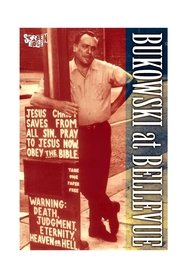
star 7.7In the spring of 1970 Charles Bukowski took his first plane trip for a poetry reading at Bellevue Community College in Washington state. That he was videotaped by two students apparently was later forgotten, but the tapes were recently rediscovered and have been released by Black Sparrow press. "Bukowski at Bellevue" gives us a fascinating glimpse of the man before he had to be concerned with how celebrity and financial security were affecting him. (It is said that this was only his fourth public reading.) This is Bukowski, then about 50, taken straight. No games, no irony, no self-consciousness--just an ordinary-looking guy, maybe hung over, sitting before a small group of students reading his work with gusto, humor and sensitivity. A man who clearly had lived the marginal life he wrote about with passion and at times a lyrical, even mystical beauty.She
1970
She
1970
A consciously modern depiction of working women in East Germany – labourers and managers in a garment factory talk about relationships and family planning, raising children and career qualifications, women’s rights and equality in the socialist (meritocratic) society. In conversations with a doctor, the women also have a chance to voice their personal concerns, as well as their feelings about the birth control pill, a subject that caused a stir at the time.The Feast
1970
The Feast
1970
Yanomamo feasts are ceremonial, social, economic, and political events. They are occasions for men to adorn their bodies with paint and feathers, to display their strength in dance and ritualized aggression; for trading partnerships to be established or affirmed; and for the creation or testing of alliances. In the feast filmed in 1968, the Patanowa-teri had invited the Mahekodo-teri to their village. The two groups had been allies until a few years before this event, when they had fought over the abduction of a woman. They now hoped to renew their broken alliance, which they did successfully. Soon after the filmed feast, the two villages together raided a common enemy. A detailed discussion of this feast, and of the significance of feasting among the Yanomamo, is found in chapter 4 of Chagnon's Yanomamo: The Fierce People. The film's graphic representation of reciprocity and exchange may enrich (and be enriched by) a reading of Marcel Mauss' The Gift.Chariots of the Gods
1970
Chariots of the Gods
1970
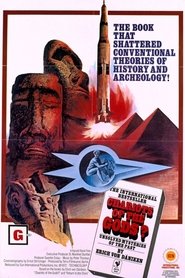
star 6.4Documentary based on the book by Erich von Däniken concerning the ancient mysteries of the world, such as the pyramids of Egypt and Mexico, ancient cave drawings, the monuments of Easter Island, etc., and the fact that these things and modern civilisation could have been influenced by extraterrestrial visitations hundreds (or perhaps thousands) of years ago.Summer in the City
1970
Summer in the City
1970
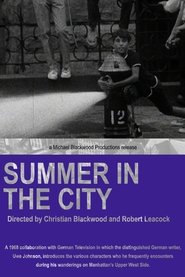
German writer Uwe Johnson lived for several years in the 1960s on Manhattan’s Upper Westside where he got to know his neighborhood very well, observing the goings-on in the streets, cafeterias, and parks. In 1968 German Television agreed to co-produce a film for broadcast featuring interviews with various neighborhood characters.Black Roots
1970
Black Roots
1970
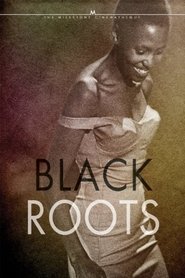
star 7.3Black Roots is the fourth feature-length film produced and directed by American independent filmmaker Lionel Rogosin. The film gathers a number of African American folk and blues musicians in a room, where they share stories and songs about the black experience in America.Hospital
1970
Hospital
1970
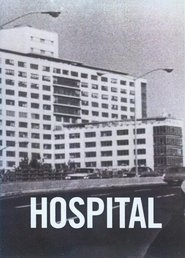
star 6.5Daily activities of the Metropolitan Hospital in New York City, with emphasis on the emergency ward and outpatient clinics. The cases depicted illustrate how medical expertise, availability of resources, organizational considerations and the nature of communication among the staff and patients affect the delivery of health care.Woo Who? May Wilson
1970
Woo Who? May Wilson
1970
A portrait of artist May Wilson, former “wife-mother-housekeeper-cook” and a grandmother who, at age 60 after the break-up of her 40-year marriage, moves to New York City and discovers an independent life of her own for the first time.I Am Somebody
1970
I Am Somebody
1970
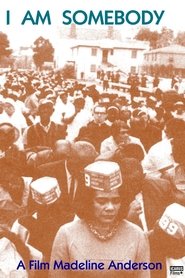
star 6.6Madeline Anderson’s documentary brings viewers to the front lines of the civil rights movement during the 1969 Charleston hospital workers’ strike, when 400 poorly paid Black women went on strike to demand union recognition and a wage increase, only to find themselves in confrontation with the National Guard and the state government. Anderson personally participated in the strike, along with such notable figures as Coretta Scott King, Ralph Abernathy and Andrew Young, all affiliated with Martin Luther King’s Southern Christian Leadership Conference. Anderson’s film shows the courage and resiliency of the strikers and the support they received from the local black community. It is an essential filmed record of this important moment in the history of civil and women’s rights. The film is also notable as arguably the first televised documentary on civil rights directed by a woman of color, solidifying its place in American film history.Jim Dine: London
1970
Jim Dine: London
1970
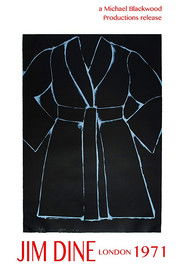
A concentrated look at one of America's early Pop artists, the film was made during Dine's 4-year residency in London. Actively at work in his studio on several large collages, one can clearly see Dine's masterful balance of artistic freedom and control, as he adds and modifies illusionistic images, written words and real life objects to his compositions. The artist talks about his connections to literature and about his frequent collaboration with poets; he also discusses his own poetry, some of which he reads for the camera. The parks and streets of London are the setting for Dine's frank comments about his voluntary exile in that city. On one walk, Dine encounters Gilbert and George as they endlessly repeat "Underneath the Arches" in bronze make-up, their earliest performance piece.David Hockney's Diaries
1970
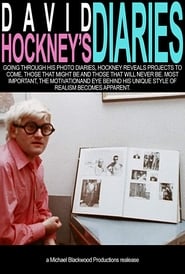
Renowned English painter, David Hockney, takes us on a visual journey as he shares with us his treasured photo diaries. Consisting of polaroids Hockney has been collecting since 1967, the diaries act as both a tribute and an artist's notebook, often times including images the painter used for his large canvas works. A fine example of Hockney's pictorial inspiration are several photographs of castles he took during a boat trip down the Rhine that were later adapted for a suite of etchings to accompany six Grimm's fairy tales. Seeing his projects long before the work begins, Hockney used his camera to slow time and capture images that would go on to boast his unique style of realism. In David Hockney's Diaries the artist is seen at work on a large canvas of his friends Celia and Ossie Clark and their cat Percy, commissioned by the Tate Gallery.Hiroshima Nagasaki August, 1945
1970
star 6This documentary is a compilation of silent black-and-white film footage shot by the Japanese in Hiroshima and Nagasaki shortly after the atomic bomb blasts in early August 1945. English-language voice-over narration has been added, along with a few scenes from American sources. The film shows the destruction and injury caused by the atomic bombs in graphic detail.High School
1969
High School
1969
star 7.3Documentary filmmaker Frederick Wiseman takes us inside Northeast High School as a fly on the wall to observe the teachers and how they interact with the students.Law and Order
1969
Law and Order
1969
star 6.9LAW & ORDER surveys the wide range of work the police are asked to perform: enforcing the law, maintaining order, and providing general social services. The incidents shown illustrate how training, community expectations, socio-economic status of the subject, the threat of violence, and discretion affect police behavior.In the Year of the Pig
1969
star 6.9Both sober and sobering, producer-director Emile de Antonio’s In the Year of the Pig is a powerful and, no doubt for many, controversial documentary about the Vietnam War.Medieval England: The Peasants' Revolt
1969
Dramatically portraying the Peasants' Revolt of 1381, the film reveals the conditions of virtual slavery which persisted throughout the Middle Ages, and the weaknesses of the feudal system; its oppressive tax structure, its cruelty and its social inequalityChristo: Wrapped Coast
1969
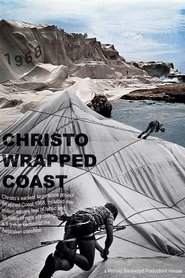
In 1969, Christo and Jeanne-Claude wrapped 2.5 kilometers of coast and cliffs up to 26 metres along the coast of Little Bay, in Southeast Sydney, Australia.Why Man Creates
1968
Why Man Creates
1968
star 6.6A 1968 animation/documentary that criticises the industrial system. Preserved by the Academy Film Archive.The Queen
1968
The Queen
1968
star 6.2In 1967, New York City is host to the Miss All-American Camp Beauty Pageant. This documentary takes a look behind the scenes, transporting the viewer into rehearsals and dressing rooms as the drag queen subculture prepares for this big national beauty contest. Jack/Sabrina is the mistress of ceremonies, and their protégé, Miss Harlow, is in the competition. But, as the pageant approaches, the glamorous contestants veer from camaraderie to tension.Diaries, Notes, and Sketches
1968
star 7.4Also known as Walden, Jonas Mekas’s first diary film is a six-reel chronicle of his life in 1960s New York, interweaving moments with family, friends, lovers, and artistic idols. Blending everyday encounters with portraits of the avant-garde art scene, it forms an epic, personal meditation on community, creativity, and the passage of time.