New Documentary Movies on Kanopy - Page 308
All Services
Free Services
 Netflix
 Amazon Prime Video
 Apple iTunes
 Apple TV Plus
 Disney Plus
 Google Play Movies
 Paramount Plus
 Hulu
Hulu
 HBO Max
 YouTube
 fuboTV
 Peacock
 Peacock Premium
 Amazon Video
 The Roku Channel
 AMC+
AMC on Demand
AMC+
AMC on Demand
 Kocowa
 Hoopla
 The CW
 Vudu
Vudu
 Starz
Starz
 Showtime
 PBS
PBS
 Pantaflix
 FXNow
FXNow
 Tubi TV
 Kanopy
 Comedy Central
 Crunchyroll
 Microsoft Store
 Redbox
 Sun Nxt
 ABC
ABC
 DIRECTV
 Crackle
 Fandor
 Plex
Plex
Netflix
Amazon Prime Video
Apple iTunes
Apple TV Plus
Disney Plus
Google Play Movies
Paramount Plus
Hulu
HBO Max
YouTube
fuboTV
Peacock
Peacock Premium
Amazon Video
The Roku Channel
AMC+
AMC on Demand
Kocowa
Hoopla
The CW
Vudu
Starz
Showtime
PBS
Pantaflix
FXNow
Tubi TV
Kanopy
Comedy Central
Crunchyroll
Microsoft Store
Redbox
Sun Nxt
ABC
DIRECTV
Crackle
Fandor
Plex

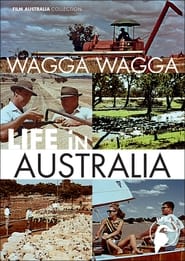
Life in Australia: Wagga Wagga
1966
Made by the Department of Immigration to entice immigrants from Great Britain, this film shows an idyllic picture of life in the New South Wales regional town of Wagga Wagga in the mid 1960s.Chelsea Bridge Boys
1965
Chelsea Bridge Boys
1965
About a group of "Rockers" who belong to a British motorcycle club. Included are interviews with both male and female bikers. The film is largely based on candid interviews where the bikers respond to questions about politics, society, freedom and independence.Immigrants
1965
Primitive London
1965
Primitive London
1965
star 5.2The sensational follow-up to "London in the Raw," "Primitive London" sets out to reflect society's decay through a sideshow spectacle of 1960s London depravity—and manages to outdo its predecessor. Here, we confront mods, rockers and beatniks at the Ace Café, cut some rug with obscure beat band The Zephyrs, smirk at flabby men in the sauna and goggle at sordid wife-swapping parties as we discover a pre-permissive Britain still trying to move on from the post-war depression of the 1950s.The Cincinnati Kid Plays According to Hoyle
1965
A promotional short for The Cincinnati Kid (1965) showcasing the card handling skills of magician and one-time gambler Jay Ose who was hired as technical adviser to instruct the actors on the techniques used by professional poker players.Seven Second Love Affair
1965
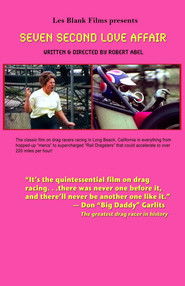
Les Blank's first documentary cinematography job shooting Drag Racers in Long Beach, CA, driving everything from hopped up "Mercs" to Supercharged "Rail Dragsters". These cars could accelerate to over 220 miles/hour in a mile. The film follows the life of Rick "The Iceman" Stewart as he attempts to grab the world's record. Original score by Canned Heat Blues Band.London in the Raw
1964
London in the Raw
1964
star 2.8Influenced by the worldwide success of Italian 'Mondo' movies, British low-budget movie mogul Arnold Louis Miller concocted this exploitation-style documentary. Peering behind the grimy net curtains of London life into seedy bars and clubs, and burrowing beneath the glittering façade of the capital's glamorous cocktail lounges and casinos, "London in the Raw" presents a cynical, sometimes startling, vision of life in 1960s London.Life in Australia: Cairns
1964
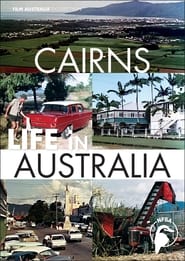
A small city in the tropical north of Queensland, Cairns boasts a life that is leisurely and comfortable. The tempo quickens, however, at cane-cutting time when the sugar is harvested, and in winter when tourists come north to escape the cold. The Life In Australia series portrays Australian cities and rural centres as happy, lively places where good homes, abundant jobs, schools, hospitals and amenities provide the foundation for a relaxed lifestyle where sport, shopping, religion and even art combine to create a homogenous and prosperous society.Life in Australia: Mount Gambier
1964
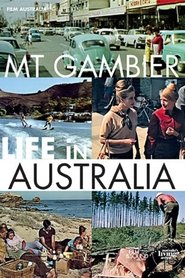
Made by the Department of Immigration to entice immigrants from Great Britain, this film shows an idyllic picture of life in the South Australian regional town of Mount Gambier in the mid 1960s.The Hutterites
1964
The Hutterites
1964
star 7A look at the Hutterites, an Anabaptist religious community similar to the Amish or the Mennonites in rural Alberta.Dead Birds
1963
Dead Birds
1963
star 5.8The film's title is borrowed from a Dani fable that Gardner recounts in voice-over. The Dani people, whom Gardner identifies mysteriously as "a mountain people," believe that there was once a great race between a bird and a snake, which was to determine the lives of human beings. Should men shed their skins and live forever like snakes, or die like birds? The bird won the race, dictating that man must die. The film's plot revolves around two characters, Weyak and Pua. Weyak is a warrior who guards the frontier between the land of his tribe and that of the neighboring tribe. Pua is a young boy whom Gardner depicts as weak and inept.The Lovely Month of May
1963
star 8Candid interviews of ordinary people on the meaning of happiness, an often amorphous and inarticulable notion that evokes more basic and fundamentally egalitarian ideals of self-betterment, prosperity, tolerance, economic opportunity, and freedom.We'll Never Turn Back
1963
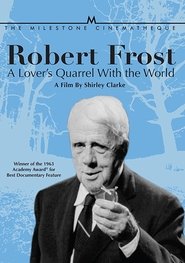
"We'll Never Turn Back" was filmed in Mississippi in 1963 during the dangerous voter registration drives of that era. Amzie Moore, a Mississippi NAACP activist escorted the film maker through rural Mississippi interviewing share croppers and activists in the voter registration campaign. Appearing in the film are Student Non-Violent Coordinating Committee (SNCC) leaders Julian Bond, Bob Moses, Fannie Lou Hamer, Charles McLaurin as well as other local civil rights leaders Curtis Hayes and Hollis Watkins. There are interviews with black farmers and share croppers on their experiences (often bloody) trying to register to vote.Robert Frost: A Lover's Quarrel with the World
1963
star 6.2The acclaimed poet is examined in this film completed just prior to his death at age 88, with his speaking engagements at Amherst and Sarah Lawrence Colleges intercut with studies of his work, as well as with scenes of his life in rural Vermont and personal reminiscences about his career. He is also seen receiving an award from President Kennedy and touring an aircraft carrier. Preserved by the Academy Film Archive in partnership with UCLA Film & Television Archive in 2006.Mediterranean Holiday
1962
star 8A 1962 West German documentary film directed by Hermann Leitner and Rudolf Nussgruber.Look at this City
1962
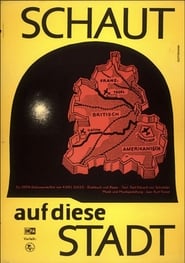
Look at this City
1962
star 5Started in the summer of 1961, even before the Wall was built, the film becomes an explanation after this historical event as to why things can no longer go on as they were before. Unmistakably, as in almost all of Karl Gass' films, the passion with which he treats his subject is unmistakable. If you want to get to know the zeitgeist of the historically significant year 1961, which on both sides knew more the Cold War vocabulary than factual arguments, you can see the Eastern variant in this propaganda film.Buddhism
1962
Buddhism
1962
In this short documentary we learn the back story of the Buddha – the religion he founded and how it is manifested today. Travel through Southeast Asia to India, Burma, Sri Lanka (formerly Ceylon), Thailand, Japan, China and many other countries to discover the history and ideas behind Buddhism.Terminus
1961
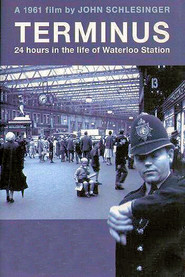
Terminus
1961
star 7.1This fly on the wall-style documentary from 1961 won an Oscar for best documentary, and shows the changing patterns of human emotions during 24 hours in the life of Waterloo Station.Broadway Express
1961
Broadway Express
1961
Shot in 1959, Michael Blackwood’s first film Broadway Express is a portrait of New York City’s diverse population, as captured in the city’s subways during the evening rush hour and late at night. The film is a portrait of the city through the faces of the passengers held captive for the ride.Sit-In
1960
Sit-In
1960
SIT-IN (1960) is filmmaker Robert M. Young’ (Nothing But A aman, The Ballad of Gregorio Cortez) seminal documentary on how the Student Nonviolent Coordinating Committee and Students of Fisk University desegregated the lunch counters in Nashville, TN.