Popular Documentary Movies on Kanopy - Page 284
All Services
Free Services
 Netflix
 Amazon Prime Video
 Apple iTunes
 Apple TV Plus
 Disney Plus
 Google Play Movies
 Paramount Plus
 Hulu
Hulu
 HBO Max
 YouTube
 fuboTV
 Peacock
 Peacock Premium
 Amazon Video
 The Roku Channel
 AMC+
AMC on Demand
AMC+
AMC on Demand
 Kocowa
 Hoopla
 The CW
 Vudu
Vudu
 Starz
Starz
 Showtime
 PBS
PBS
 Pantaflix
 FXNow
FXNow
 Tubi TV
 Kanopy
 Comedy Central
 Crunchyroll
 Microsoft Store
 Redbox
 Sun Nxt
 ABC
ABC
 DIRECTV
 Crackle
 Fandor
 Plex
Plex
Netflix
Amazon Prime Video
Apple iTunes
Apple TV Plus
Disney Plus
Google Play Movies
Paramount Plus
Hulu
HBO Max
YouTube
fuboTV
Peacock
Peacock Premium
Amazon Video
The Roku Channel
AMC+
AMC on Demand
Kocowa
Hoopla
The CW
Vudu
Starz
Showtime
PBS
Pantaflix
FXNow
Tubi TV
Kanopy
Comedy Central
Crunchyroll
Microsoft Store
Redbox
Sun Nxt
ABC
DIRECTV
Crackle
Fandor
Plex

Breaking the Sound Barrier
2020
star 8On October 14, 1947, Captain Chuck Yeager accomplished what many thought was impossible: he broke the sound barrier and in doing so, changed aviation history forever. Behind this remarkable achievement was a dedicated team of rocket scientists and engineers, and one incredible plane, a Bell X-1 named "Glamorous Glennis." This is the story of the plane and the people who dared to travel faster than the speed of sound, pushing flight science forward and proving that no matter the barrier, humanity can find a way to break through.Lube Job
2015
Lube Job
2015
Two veteran journalists uncover the oil and gas industries' role in what could be one of the greatest environmental catastrophes in modern times, an ecological tragedy that threatens to eradicate much of southern Louisiana, including its revered fishing trade and age-old way of life.Yasuni Man
2020
Yasuni Man
2020
star 8.5YASUNI MAN is the award winning documentary feature about a conflict raging deep within the Ecuadorian Amazon. It's a real-life Avatar story. Once under siege by missionaries seeking to civilize them, the Waorani people battle industry operatives and their own government in a fight to survive. Join filmmaker Ryan Patrick Killackey and his Waorani friend Otobo as they embark on an expedition into the most biodiverse forest on Earth. Witness what may be lost as oil companies encroach, human rights violations run rampant, and a forest Eden is destroyed - all for the oil that lies beneath Yasuni.Memory of Forgotten War
2013
Unknown or forgotten by most Americans, the Korean War divided a people with several millenniums of shared history. Memory of Forgotten War conveys the human costs of military conflict through deeply personal accounts of four Korean American survivors whose experiences and memories embrace the full circle of the war: its outbreak and the day-to-day struggle for survival, separation from family members across the DMZ, the aftermath of a devastated Korean peninsula, and immigration to the United States. Each person reunites with relatives in North Korea conveying beyond words the meaning of four decades of family loss. Their stories belie the notion that war ends for civilians when the guns are silenced and foreshadow the futures of countless others displaced by ongoing military conflict today.My Name Is Salt
2013
My Name Is Salt
2013
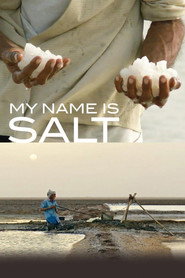
star 6.9Year after year, just after the monsoon season has finished, thousands of families travel to a bleak desert in Gujerat, India, where they will stay for an endless eight months and extract salt from the earth, using the same painstaking, manual techniques as generations before them. Director Farida Pacha spent a season with one of these families, observing the very particular rhythms of their lives.Who Does She Think She Is
2008
star 1"Who Does She Think She Is?," a documentary by Academy Award winning filmmaker Pamela Tanner Boll, features five fierce women who refuse to choose. Through their lives, we explore some of the most problematic intersections of our time: mothering and creativity, partnering and independence, economics and art.The Invisible Patients
2016
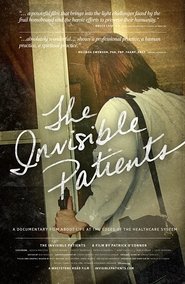
The Invisible Patients tells the story of Jessica Macleod, a nurse practitioner, and four homebound patients she cares for in Evansville, Indiana.Almas Silenciosas
2023
They Say It Can't Be Done
2019
star 6.5A documentary that explores how innovation can solve some of the world’s greatest problems and promote human progress. The film tracks four companies on the cutting edge of technological innovations that could help to protect the seas from pollution, solve hunger, eliminate organ transplant waitlists, and reduce atmospheric carbon emissions. The documentary also explores how, in the fast‐paced world of technological development, well‐intentioned regulations can inadvertently hamper beneficial discoveries.Invitation to Dance
2014
Invitation to Dance
2014
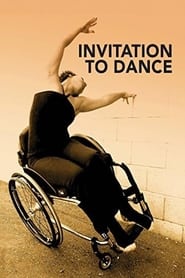
At age 23, Simi Linton was injured while hitchhiking to Washington to protest the war in Vietnam. Suddenly a young disabled college student, she confronted discrimination she couldn't have imagined before. Simi emerges as a resourceful activist, and in time realizes that love, sexuality, and dance can once again be central to her life.Call Me Waya
2025
Call Me Waya
2025
star 6CALL ME WAYA follows a Cuban octogenarian “Outsider” artist’s work and tumultuous life trajectory, inviting friends and family to reflect on the consequences and wonders of his bohemian lifestyle.The Wolf in Australian Art
2015
Documentary about Russian-born Australian painter and sculptor Danila VassilieffVacation Plantation
2025
Vacation Plantation
2025
With unparalleled access to America’s most popular plantation houses, archaeologist Lauren Cudmore goes on a journey to uncover why millions of tourists continue to flock to these sites, while conveniently forgetting their horrific past.Remembering Yayayi
2014
Remembering Yayayi
2014
Remembering Yayayi reflects on a pivotal moment in the history of Pintupi people through a body of archival film. In 1974, filmmaker Ian Dunlop visited Yayayi, a remote community in Central Australia. The Pintupi people had recently moved there to get away from the difficulties of living at the larger permanent government settlement of Papunya. Dunlop had come to Yayayi to follow up on the lives of people he had photographed ten years earlier as they were leaving their Western Desert homeland for the first time. He never made a film with the material he shot there and Yayayi has long since been abandoned.A World Without Water
2006
Every day 3900 children die as a result of insufficient or unclean water supplies. 'A World Without Water' tells of the personal tragedies behind the mounting privatization of water supplies.Postcards from Babylon - Evangelicals in the Shadow of Christian Nationalism
2021
Based on the popular book of the same name, the film begins with author Brian Zahnd some 350 miles into his 500-mile pilgrimage on the Camino de Santiago in Spain. He walks “the Camino” in spiritual pilgrimage as preparation for the mental mayhem of the polarized political climate in America. It’s against the backdrop of the elections that Zahnd exposes how the church in America has succumbed to the seduction of empire and has entangled Christianity with the Red, White, and Blue.Cuban Roots/Bronx Stories
2000
star 10This documentary traces the tangled paths and multifaceted identity of a black Cuban family in the Bronx. The subjects of this film experienced firsthand some of the great historical events of the 20th century – they saw Castro’s arrival in Havana and had their neighborhood bombed in the Bay of Pigs invasion; one son fought in Vietnam and a daughter marched against it. Both working-class and professional, black and Latino, foreign and native, Spanish-speaking and English-speaking, the family is shown in the constant process of negotiating its identity. On their arrival in Miami, the family immediately encountered racial segregation, and as children in a mixed Puerto Rican/African-American neighborhood in the Bronx, they were forced by their playmates to choose their identity: “Are you black or Spanish?” Even the family’s roots in Cuba are complex - the grandfather was the son of Jamaican immigrants to Cuba – and their relation to the Cuban Revolution is ambiguous.Emission Impossible: The Future of Flight
2023
Without an alternative to fossil fuels for the aviation industry, one start-up keenly understands the urgency of reaching global climate goals by disrupting air travel. Sustainability for this company means not staying grounded but innovating the way we fly entirely and convincing policy officials, airlines and suppliers to come aboard. Their proposal? A hydrogen-fuelled, commercially viable plane that will replace ones fuelled by kerosene.Histories of the Holocaust:Buchenwald
2010
Contains 2 programs: Buchenwald 1937-1942 and Buchenwald 1942-1945. Every aspect of life within the fences was a torture where mistreatment by the guards was not only encouraged but was compulsory. Herman Pister's installment as commandant in 1942 only intensified the horrors committed there with experimentation on inmates in ways to kill more conveniently. The atrocities were discovered with its liberation by U.S. forces in 1945 and the desire for revenge took over as camp personnel were hunted down and made to publicly stand trial for war crimes.Daughters of the Sun
2023
Daughters of the Sun
2023
star 6The Yazidi girls were often just teenagers when they were abducted from their villages in the mountains of Kurdistan by fighters of the Islamic State. They were forced to convert to Islam and were sold as sex slaves to terrorists. Now that the survivors have returned to their homeland, the question arises as to whether they will be able to start anew. Theatre-maker Hussein is trying to help them find a new life.