Popular Documentary Movies on Kanopy - Page 283
All Services
Free Services
 Netflix
 Amazon Prime Video
 Apple iTunes
 Apple TV Plus
 Disney Plus
 Google Play Movies
 Paramount Plus
 Hulu
Hulu
 HBO Max
 YouTube
 fuboTV
 Peacock
 Peacock Premium
 Amazon Video
 The Roku Channel
 AMC+
AMC on Demand
AMC+
AMC on Demand
 Kocowa
 Hoopla
 The CW
 Vudu
Vudu
 Starz
Starz
 Showtime
 PBS
PBS
 Pantaflix
 FXNow
FXNow
 Tubi TV
 Kanopy
 Comedy Central
 Crunchyroll
 Microsoft Store
 Redbox
 Sun Nxt
 ABC
ABC
 DIRECTV
 Crackle
 Fandor
 Plex
Plex
Netflix
Amazon Prime Video
Apple iTunes
Apple TV Plus
Disney Plus
Google Play Movies
Paramount Plus
Hulu
HBO Max
YouTube
fuboTV
Peacock
Peacock Premium
Amazon Video
The Roku Channel
AMC+
AMC on Demand
Kocowa
Hoopla
The CW
Vudu
Starz
Showtime
PBS
Pantaflix
FXNow
Tubi TV
Kanopy
Comedy Central
Crunchyroll
Microsoft Store
Redbox
Sun Nxt
ABC
DIRECTV
Crackle
Fandor
Plex

Jazz a la Cuba
1933
Jazz a la Cuba
1933
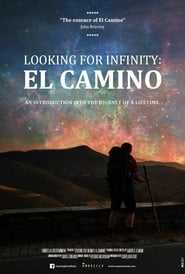
One of the short little films featuring Don Aspiazu of his own orchestra, a good example of the style of Cubano jazz in the 1920's and 1930's, combined with some sporadic, picturesque images of contemporary Cuba.Looking for Infinity: El Camino
2017
The film offers an intimate and fascinating insight into the pilgrim's journey, seeking to probe some of the timeless questions confronting humanity.Exit: Music
2017
Do You Dream in Color?
2017
Do You Dream in Color? in this documentary follows four courageous blind high school students. This coming-of-age story see's the students as they strive to prove that their disability will not hold them back from achieving their dreams.Bogalusa Charm
2017
Bogalusa Charm
2017
A contemporary portrait of a small Louisiana town created at the site of the world’s largest lumber mill. Captured here in its last days after thirty years, Miss Dixie Gallaspy conducts a charm school for girls in order to teach the young women of Bogalusa the social graces and skills that would guide them into “Ladyhood”. Dixie’s week long school, in a town confronted with many challenges (including a legacy of racial conflict and financial dissipation) preserves fragments of a world that may already be lost.The Hungry Tide
2012
The Hungry Tide
2012
Only metres above sea level, the nation of Kiribati is on the front line of climate change. Maria Tiimon, a Kiribati woman living in Sydney, is passionate about her homeland and, despite her shyness, is determined to raise the world's awareness of its predicament.The Family Farm
2014
The Family Farm
2014
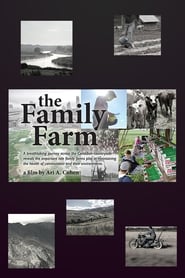
star 6.3The Family Farm explores the farm to table process through the lens of Canadian small farmers and identifies the systematic barriers they face in running a profitable farm. In its journey across the country, the film blends extraordinary shots of the Canadian farm landscape with discussions of the challenges and setbacks small farmers endure, as well as the turning points and breakthroughs that have allowed them to achieve success. As these intimate accounts are shared, traditional images of family farmers are redefined as we grow to see these individuals not only as farmers, but as teachers, botanists, and mechanics who open our eyes to the issues that continue to threaten small farmers as well as the importance of buying local and organic foods.On the Spring Ice
1975
On the Spring Ice
1975
Walrus as well as whales are hunted by the Eskimos of Gambell on St. Lawrence Island. As the film opens, an old man tells of the dangers of moving ice, how people used to drift on such ice and never return. A cluster of men stand on a snowy rooftop, scanning the sea ice for walrus, when one spots a skin boat in distress far out on the ice. The crew had not come home the night before, and now were drifting toward Siberia. Long ago, there was nothing that could have been done to save them. Today, the men call the Coast Guard. The next day, preparations for another walrus hunt are made. The hunters load the boat and travel fifty miles out to sea, where they spot two walrus sunning themselves on an ice floe. "Don't move," one hunter tells the camera. The walrus are shot, admired, butchered on the ice, and loaded onto the boat. Back in the village, the meat is cut again and hung to dry.The Son of the Olive Merchant
2010
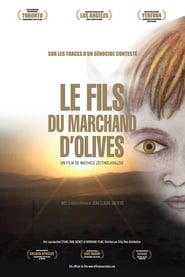
star 7For their honeymoon, Anna and Mathieu went to Turkey. With camera in hand, they traced the footsteps of Garabed, the Armenian grand-father of Mathieu, who escaped the 1915 genocide. In this country where speaking of the Armenian genocide could be dangerous, their name with Turkish intonations serves a purpose to get people talking about their idea of the Turkish involvement during 1915 tragedy. A road trip across the country leads to a sad confirmation - the denial has become institutional.Paraiso For Sale
2011
Paraiso For Sale
2011
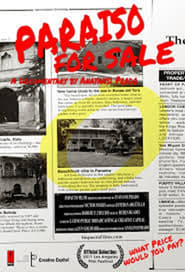
In a case of indigenism verses corporate greed, this compelling documentary chronicles the ongoing battle between the locals of Panama's Bocas del Toro and the commercial developers and migrating Americans who have seized upon the tropical paradise.Moving from Emptiness: The Life and Art of a Zen Dude
2014
Where does creativity come from? Zen calligraphic painter Alok Hsu Kwang-han proposes that it arises from emptiness, from that silent space where the intelligence prior to thought resides. Armed with rice paper, ink, brush and a collection of Zen koans and teachings, Alok opens the door to a world of magical brush strokes and enchanted students. On the verge of his 75th birthday and with a new love in his life, Alok employs his teachings to confront his own personal history. Through his workshops and his art we share a journey of transformation that becomes possible when we are simply 'present, available, playful, and not knowing.' Through Alok we discover that 'in a clear heart, no mountain hides the moon.'I Was a Teenage Feminist
2005
star 1.7Why is it that some young, independent, progressive women in today's society feel uncomfortable identifying with the F-word? Join filmmaker Therese Shechter as she takes a funny, moving and very personal journey into the heart of feminism. Armed with a video camera and an irreverent sense of humor, Shechter talks with feminist superstars, rowdy frat boys, liberated Cosmo girls and Radical Cheerleaders, all in her quest to find out whether feminism can still be a source of personal and political power.Handmaidens and Battleaxes
1990
Throughout history, the perception of nurses has ranged from wise women to witches, sots to ministering angels, handmaidens to battleaxes. The professional role of the nurse has changed dramatically. Originally the nurse held an independent, curative position in healing the sick. Most of this responsibility has since been lost. In its place, a profession has developed which, while demanding altruism and dedication, is locked into a supportive and secondary role to that of the medical profession.Donald Judd: Marfa Texas
1998
An artist and critic, there was a considerable duality to Donald Judd (1928-1994) - he was at once a man of intellectual rigor and a multi-disciplinary conceptualist who deftly moved towards a new minimalism. In 1971, he relocated from New York, to the prairies of Presidio County in Southern Texas, twenty miles from the Mexican border.A Girl and a Gun
2013
A Girl and a Gun
2013
A Girl and A Gun shows the female perspective on an object whose history is deeply bound to men and masculinity. The classic Hollywood portrayals of pistol packin' mamas, tomboy sharp shooters, sexually twisted femme fatales, and high-heeled, cold-blooded assassins are caricatures. In truth, the typical woman who hangs out at rifle ranges and keeps ammo in her purse is the girl-next-door, the single mom, a hard working sister or aunt. Maybe she's a realist or has learned tough lessons from life; either way, she cares about her personal safety and may even find salvation, comfort or something satisfying in possessing a gun. In a word, she is empowered. Breaking through the caricatures, A Girl and a Gun reveals America's diverse and far-ranging female gun community. It depicts how this community is portrayed by the media and targeted by the gun industry; and shows, through personal stories, how guns change women's lives.Militainment, Inc.: Militarism & Pop Culture
2007
star 7.8Militainment, Inc. offers a fascinating, disturbing, and timely glimpse into the militarization of American popular culture, examining how U.S. news coverage has come to resemble Hollywood film, video games, and "reality television" in its glamorization of war. Mobilizing an astonishing range of media examples - from news anchors' idolatry of military machinery to the impact of government propaganda on war reporting - the film asks: How has war taken its place in the culture as an entertainment spectacle? And how does presenting war as entertainment affect the ability of citizens to evaluate the necessity and real human costs of military action?The True Meaning of Pictures: Shelby Lee Adams' Appalachia
2002
star 5.7The meaning of art itself comes into question in this documentary about Shelby Lee Adams' controversial photos of families in Appalachia.Liberia: An Uncivil War
2004
star 7Liberia, a nation burdened by its past. America, a nation with no memory at all." In Liberia, the summer of 2003 was pure insanity. A rebel army attempts to overthrow a government run by an indicted war criminal. Two armies engage in the final battle of a decade long civil war. Hundreds of innocent civilians die from mortar shells launched from afar and thousands more suffer hunger while the soldiers, mostly teenagers, keep the capital city under siege. The nation prays that America, the world's sole superpower, will put an end to the violence. Conceived in Washington in the early 1800s, its constitution written at Harvard, its founding fathers freed slaves who returned to Africa, Liberia is the one country in the world worthy of the title, Made in America. By the year 2000, Liberia, once considered the gem of Africa, was ranked last in the world for quality of life.The ABC of Internal Combustion Engines - The Automobile Engine
1948
The second of the Power Primer series of GM American Industrial Films, this one looking at the automobile engine.Bernhard Heisig
1991
Bernhard Heisig
1991
In the mists of war and violence, the Harlequin, trumpet in hand, drifts through ravaged landscape passing a cripple and a marionette: Bernhard Heisig's pictorial worlds shock the viewer by depicting the great dramas of German history. Both a victim and a perpetrator in World War II and in the GDR dictatorship, the artist's search for sense and truth led him to his moving image formulas. Director Reiner E. Moritz converses with the renowned ex-principal of the Leipzig Hochschule für Grafik und Buchkunst (Academy of Visual Arts) about his work, which influenced the development of art for many decades in the rigid GDR system.