Popular Documentary Movies on Kanopy - Page 305
All Services
Free Services
 Netflix
 Amazon Prime Video
 Apple iTunes
 Apple TV Plus
 Disney Plus
 Google Play Movies
 Paramount Plus
 Hulu
Hulu
 HBO Max
 YouTube
 fuboTV
 Peacock
 Peacock Premium
 Amazon Video
 The Roku Channel
 AMC+
AMC on Demand
AMC+
AMC on Demand
 Kocowa
 Hoopla
 The CW
 Vudu
Vudu
 Starz
Starz
 Showtime
 PBS
PBS
 Pantaflix
 FXNow
FXNow
 Tubi TV
 Kanopy
 Comedy Central
 Crunchyroll
 Microsoft Store
 Redbox
 Sun Nxt
 ABC
ABC
 DIRECTV
 Crackle
 Fandor
 Plex
Plex
Netflix
Amazon Prime Video
Apple iTunes
Apple TV Plus
Disney Plus
Google Play Movies
Paramount Plus
Hulu
HBO Max
YouTube
fuboTV
Peacock
Peacock Premium
Amazon Video
The Roku Channel
AMC+
AMC on Demand
Kocowa
Hoopla
The CW
Vudu
Starz
Showtime
PBS
Pantaflix
FXNow
Tubi TV
Kanopy
Comedy Central
Crunchyroll
Microsoft Store
Redbox
Sun Nxt
ABC
DIRECTV
Crackle
Fandor
Plex

Discovery of Art: Kurt Schwitters
2000
This documentary provides a detailed look at the works of the German artist, now best known for his collages and junk sculpture. Schwitters began painting as an expressionist, but in 1919 he turned to collage, incorporating into his works trash such as train tickets and newspapers, which he exploited for their colour, texture, and surprise value. Includes many of Schwitters' most famous creations filmed during an exhibition of his works at the George Pompidou Museum.Freeland ~ A White Grass Story
2023
star 8The story of a ski community and whitewater community, and the river that binds them together and is the lifeblood of both cultures.Cat Beach
2019
Cat Beach
2019
Teviot Fairservis is the founder of Cat Beach Sanctuary - the coolest animal rescue in Penang, Malaysia where rescued cats receive loving care.Computers v. Crime
2023
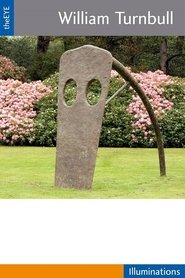
theEYE: William Turnbull
2005
William Turnbull is one of Britain’s most distinguished sculptors and painters. In the late 1940s he studied art in London and then spent time in Paris, and ever since he has rigorously explored a limited number of archetypal forms as well as the fundamentals of art’s languages. Over more than fifty years William Turnbull has returned again and again to the head and the mask, to the standing figure and the horse, as well as to possibilities of pared-down, often monochromatic painting. His simple objects, which draw on both primitive and classical ideas, often combine presence and poetry in unique ways.theEYE: Stuart Brisley
2006
Stuart Brisley is perhaps best-known for his disturbing physical performances which pushed his body to extremes. But his work as an artist over four decades has embraced sculpture and installation, films and fictions, large-scale participatory projects and, most recently, the Web. Illustrated with archive footage and photographs, this profile of the artist explores his understandings of collaboration and community, of politics and the market, of humour and failure. At the centre of his diverse work are the essential qualities of what it means to be human.theEYE: Karl Weschke
2006
theEYE: Karl Weschke
2006
Karl Weschke‘s impressive, complex paintings picture the human figure and the landscape, the everyday and the mythical. His subjects include dogs and drowned bodies, creatures from legends and, increasingly in recent years, the monumental ruins of ancient Egypt. For more than fifty years, he has explored the possibilities of painting and its relevance to an uncertain world. Produced alongside a retrospective at Tate St Ives, with additional paintings from British collections, this film profiles the artist in the Cornwall that has been his home since 1955. Filmed in and around his studio and in the coastal landscape that informs all of his work, Weschke speaks engagingly about his rich, remarkable life and about many of his most significant canvases. Like his work, the painter is serious, intense, spare – and yet also with an appealing streak of mischief.Liberia: A Fragile Peace
2006
A chronicle of the period from the departure of Charles Taylor to the election of Ellen Johnson-Sirleaf, the first African woman head of state, that presents the difficulties of rehabilitating a nation destroyed by war. LIBERIA: A FRAGILE PEACE is a perfect follow-up to Liberia: An Uncivil War, picking up the Liberian saga in October 2003, with the departure of the despotic Charles Taylor, the arrival of interim President Gyude Bryant and the deployment of a U.N. peacekeeping force. More than a historical record, however, this film is an ideal case study in how difficult it is to rebuild a society once it has lapsed into anarchy, a condition afflicting more and more nations around the world. The success or failure of the Liberian experience could have long-lasting impact on peace-keeping missions in the future.Dreams of Chonta
2020
Dreams of Chonta
2020
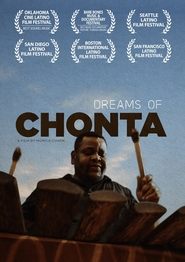
The story of Diego Obregon, an Afro-Colombian musician who came to the United States 16 years ago in search of his dreams. He made the ultimate sacrifice by leaving his family behind and living a solitary life.The Cost of Cotton
2017
The Cost of Cotton
2017
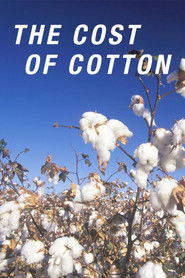
star 8Is cotton really as pure as it seems? After claims of forced labour, pollution, and even slavery, we follow the production chain to find the truth.62 Years and 6500 Miles Between
2005
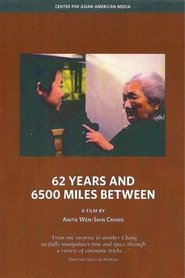
Amidst the political upheavals of a nation and the world, the filmmaker navigates cultural, geographical and linguistic distances in search of wisdom and hope from her 100 year-old Taiwanese activist grandmother (Ama).School Prayer: A Community at War
1999
Lisa Herdahl, a Mississippi mother of six, is forced to sue her public school district in order to have The Bible removed from her childrens' classrooms.Between Father and Son
2022
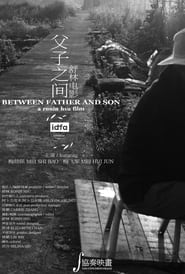
This portrait of a Chinese family centers on the paterfamilias, who at the age of 85 still works his land by hand every day, his wife, who feeds and slaughters the chickens, and one of their sons, who lives in an apartment in the city and spends his days keeping company with his television and a steady flow of alcohol.Girls
2020
Girls
2020
Constant physical and psychological violence, forced abortions, punitive psychiatry, complete lack of privacy, inability to be with a loved one, children taken away – for tens of thousands of women trapped in the stumps of Russia, this is an ordinary life. Capable and recognized incapacitated women, who are quite able to live independently or under the supervision of a social worker, are locked up for life in the barracks of the PSNI, where hundreds of people are kept under one roof, treating them like prisoners of high-security colonies. Those who managed to get out told us their stories.Abraham and Sarah II. Hosting the Gundagundo Pilgrims
2019
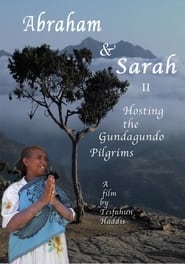
The film is part of the Guardians of Productive Landscapes series and a sequel to 'Abraham and Sarah I: Creators of a productive landscape'. A Tigrean farmer and his wife, who host pilgrims to a festival at the Gundagundo monastery, have gained the biblical names Abraham and Sarah. We see Sarah and other women prepare food and drink for the pilgrims, while Abraham and other men erect a shelter. At dawn dozens of pilgrims descend the steep escarpment, eventually arriving at Gundagundo where celebrations are in full swing. We witness highlights of the festival, and the pilgrims' return to the homestead of Abraham and Sarah. Here they receive food, drink and shelter, and sing the praises of their hosts. At midnight visitors arrive with an old, sick monk. Before the guests depart next morning, a monk thanks and blesses Abraham and Sarah.Dancing Grass: Harvesting Teff in the Tigrean Highlands
2018
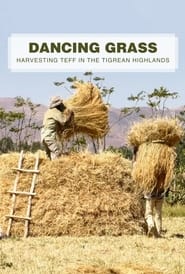
Dancing Grass captures the communal harvesting of teff among Tigreans of Northern Ethiopia. Teff, an ancient indigenous grain, is central to the livelihood of smallholder farmers and may be called the 'cereal core' of Ethiopian national food identity. A local elder provides the commentary for the sequence of events that unfold in the homestead, fields and neighbourhood of the author's eldest brother and family: the cutting of the 'dancing grass'; the drying and stacking; the threshing and winnowing; then the sale of teff in the local market; off with a donkey to the mill; cooking enjera for family and guests; coffee drinking and blessing; and finally the Mesqel fire, an Orthodox Christian celebration at the end of the rainy season.In Aiye's Garden: Propagation And Processing of Enset in the Gamo Highlands
2019
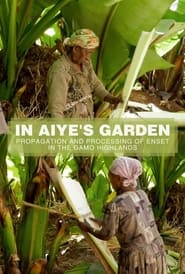
Enset, which is related to the banana plant, is very drought resistant and a good source of carbohydrates (in the stem and underground bulb). Enset has been farmed from time immemorial in the Gamo Highlands of southern Ethiopia, where women are the main cultivators. The film focuses on Aiye, the filmmaker's grandmother, who shares her knowledge about the enset plant, and shows how it is possible to produce good organic food by using simple farming tools and natural fertilizers. We see how she and a young kinswoman cultivate (using animal dung and organic waste to fertilize the plants), propagate (generating suckers from the corm), harvest (digging up the plant) and process (scraping and fermentating) the enset, and finally produce a variety of nutritious dishes.Inagina: The Last House of Iron
1997
Swiss archaeologist Eric Huysecom and cameraman Bernard Augustoni work with 13 master smelters to recreate the building of a traditional furnace for smelting iron in Mali. There has not been any traditional iron smelting in Africa since the 1960's, in part due to the importing of cheaper substitutes. The building of the furnaces and the work involved in the actual production is deeply entwined with ritual, symbolism and gender. This film describes in great detail every aspect of the event, from the selection of the site of the reconstruction - which is the oldest remaining furnace site in the region, last active in 1961 - to the final result.