Popular Documentary Movies on Kanopy - Page 286
All Services
Free Services
 Netflix
 Amazon Prime Video
 Apple iTunes
 Apple TV Plus
 Disney Plus
 Google Play Movies
 Paramount Plus
 Hulu
Hulu
 HBO Max
 YouTube
 fuboTV
 Peacock
 Peacock Premium
 Amazon Video
 The Roku Channel
 AMC+
AMC on Demand
AMC+
AMC on Demand
 Kocowa
 Hoopla
 The CW
 Vudu
Vudu
 Starz
Starz
 Showtime
 PBS
PBS
 Pantaflix
 FXNow
FXNow
 Tubi TV
 Kanopy
 Comedy Central
 Crunchyroll
 Microsoft Store
 Redbox
 Sun Nxt
 ABC
ABC
 DIRECTV
 Crackle
 Fandor
 Plex
Plex
Netflix
Amazon Prime Video
Apple iTunes
Apple TV Plus
Disney Plus
Google Play Movies
Paramount Plus
Hulu
HBO Max
YouTube
fuboTV
Peacock
Peacock Premium
Amazon Video
The Roku Channel
AMC+
AMC on Demand
Kocowa
Hoopla
The CW
Vudu
Starz
Showtime
PBS
Pantaflix
FXNow
Tubi TV
Kanopy
Comedy Central
Crunchyroll
Microsoft Store
Redbox
Sun Nxt
ABC
DIRECTV
Crackle
Fandor
Plex

The Body Won't Close
2021
The Body Won't Close
2021
Our bodies are semi-permeable. All over the world, stories are being told about heroes who magically “close” their bodies, so as to become invincible. This film follows one such story, as it is told in Santo Amaro, Bahia (Brazil). Besouro Mangangà was a capoeira player, a black hero, who had closed his body. No bullets, no knives or daggers could pierce his skin. Bahian men explain how “closing the body” makes sense in their precarious and violent world, and why, in the end, this closure can never be accomplished. Soon the filmmaker realizes that his film is not only about the people in Bahia. He too is struggling with the porosity of his body, endlessly trying to strike a balance between shutting the world out and letting the world in. Competing for the RAI Film Prize and Basil Wright Film Prize.An Afghan Village
1974
An Afghan Village
1974
A collage of daily life in Aq Kupruk builds from the single voice that calls the townspeople to prayer, the brisk exchange of the baazar, communal labor in the fields, and the uninhibited sports and entertainment of rural Afghans. The theme of the film focuses on rural society. The film and accompaning instructor notes explore concepts of development, modernization, environmental equilibrium, and especially change, identifying change agents, and analyzing barries and stimulants to change.This Ain't Normal
2018
This Ain't Normal
2018
A profile of the stories of gang involved youth and young adults in the high impact crime neighborhoods of inner city Boston, the street workers and social workers tasked with helping transform their lives, and the organizations attempting to provide the bridges to opportunity.Secrets and Mysteries of Christopher Columbus
2018
Was Christopher Columbus born in Genoa, Italy? Most definitely not, say an unlikely collection of experts from European royalty, DNA science, university scholars, even Columbus's own living family. This ground breaking documentary follows a trail of proof to show he might have been much more than we know.Investigating The Historical Jesus
2016
This thought provoking documentary follows the historical path of Jesus from birth to his crucifixion. Created by a culturally and religiously diverse cast and crew, this film looks to explore the real locations behind the stories. With a eye for education and an open heart, this often touching journey is one of impact and emotionally stirring.Stories of Change
2008
Stories of Change
2008
Stories of Change is a 2008 documentary film by BRAC Pathways of Women Empowerment. The documentary focuses on the lives of five women aging from 16 to 60, coming from different walks of life, from different professions, religions and regions of Bangladesh.Sementes: Mulheres Pretas no Poder
2020
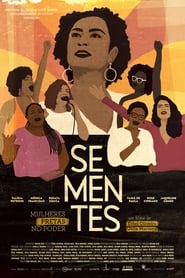
star 5.6In response to Marielle Franco's execution, the 2018 elections turned into the biggest political upheaval led by black women that Brazil has ever seen, with candidacies in all states. In Rio de Janeiro, Mônica Francisco, Rose Cipriano, Renata Souza, Jaqueline de Jesus, Tainá de Paula and Talíria Petrone applied for the positions of state or federal deputy. The documentary accompanied these women in their campaigns, showing that a new way of doing politics in Brazil is possible, transforming mourning into struggle.Yvonne Jacquette: Autumn Expansion
1985
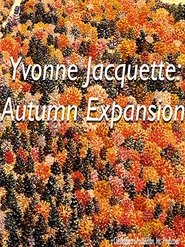
Yvonne Jacquette: Autumn Expansion, filmed in 1981, explores the artist's creative process as she creates a triptych that is approximately 26 feet wide, commissioned by the General Services Administration for the Federal Building and Post Office in Bangor, Maine.Skin Deep: The Battle Over Morgellons
2019
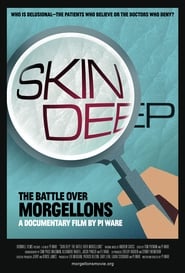
star 9A nurse journeys to discover the truth behind a disease so bizarre, patients who suffer from it are regularly written off as delusional by doctors and loved ones.Jamaica y Tamarindo: Afro Tradition in the Heart of Mexico
2020
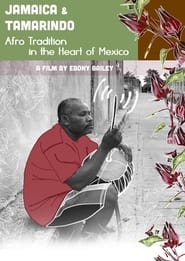
The Jamaica flower and tamarind are iconic ingredients in Mexico, but their history comes from a place much further away. In Jamaica & Tamarindo: Afro Tradition in the Heart of Mexico, we meet five people who explore African heritage in Mexico City, an identity that goes beyond the color of one's skin.The Artist's Studio: Carroll Dunham
2014
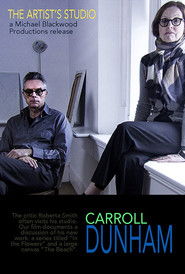
In an effort to work without the distractions of the city, artist Carroll Dunham moved his studio from Manhattan to a small village in Connecticut, not far from where he grew up. Finding himself to be more at peace in the calm, rural setting, Dunham feels the freedom to create wildly bold and visually stimulating work, painting his way through expression and sexuality. Continuously holding a mirror up to society, Dunham aims to examine the ways in which we interpret images and ideas surrounding the physical human form and our contrived notions of appropriate depictions of it through art and media. Dunham's large canvas works are flooded with vivid color and striking imagery that grabs the attention of its audience and encourages a reconsideration of form and gaze. "The Artist's Studio: Carroll Dunham" documents a visit with critic Roberta Smith as she observes his new captivating work: a series entitled "In the Flowers" and a large canvas "The Beach".Stop the Church
1991
Stop the Church
1991
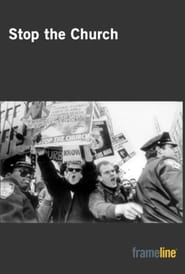
star 5Cinéma Vérité documentary of ACT UP New York's and WHAM!'s December 10, 1989 action at St. Patrick's Cathedral in New York CityAfterimages
2018
Afterimages
2018
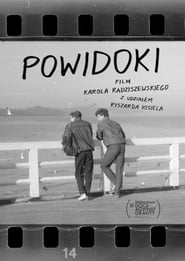
"Afterimages" is a short story about one plate from the archive of Ryszard Kisiel, the creator of "Filo" - one of the first gay zines in Central and Eastern Europe. The evoked negative from the end of the ‘80s is the starting point for both Kisiel's personal history and the portrait of the gay scene of the late PRL.TOTE_Grandfather
2019
TOTE_Grandfather
2019
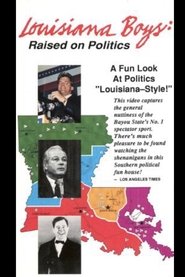
The unexpected encounter between an old man, who is going blind, and his granddaughter, who has a limited memory of her childhood. As the grandfather weaves a traditional hat, the threads of family history are untangled. Between these two silences, it becomes possible to understand the meaning of love in Tzotzil.Louisiana Boys: Raised on Politics
1992
A hilarious, unorthodox look at the colorful, Byzantine political culture of Louisiana, home to Huey and Earl Long, David Duke, and Edwin Edwards, where politics is a long-running spectator sport. Winner of the duPont-Columbia Journalism Award.Terra de Cegos
2005
Terra de Cegos
2005
What characterizes the spaces, differentiating the fields of the cities, the suburbs of the centers is, in large part, the speed of their modification. The circulation experience will have allowed us to compare the looks of foreign artists with the looks of local children, to measure resistance and change capacities.First Leipzig Autumn Salon
2008
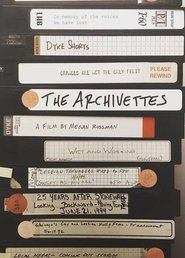
In 1984, the “First Leipzig Autumn Salon” took place – a risk and a caesura for Dammbeck. Bypassing every state institution, six painters, sculptors and filmmakers organised an art exhibition. It was the first and last of its kind. This recapture of public space through art challenged the government’s monopoly on power and triggered similar activities by other artists in the art centres of the GDR. A brave signal to the SED who saw this exhibition as a “counter-revolutionary development”. After that, there were only two options: regress or leave.The Archivettes
2019
The Archivettes
2019
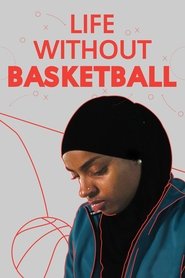
star 8.5This inspiring film profiles the Lesbian Herstory Archives, a non-hierarchical, collectively-run archive that preserves the various expressions of lesbian identity, love, and solidarity. Scrappy and determined, a cross-generational team of women steward the collection from a cramped Manhattan apartment to a building of its own. As memory fades and members depart, the volunteer archivists contemplate the safeguarding and transmission of these invaluable materials — and the stories they document — to future generations.Life Without Basketball
2018
star 9Bilqis Abdul-Qaadir broke records and barriers on her way to become the first Division I athlete to play basketball while wearing hijab. When a controversial ruling ends her chances at playing professionally, she re-examines her faith and identity as a Muslim American.