Popular Documentary Movies on Kanopy - Page 296
All Services
Free Services
 Netflix
 Amazon Prime Video
 Apple iTunes
 Apple TV Plus
 Disney Plus
 Google Play Movies
 Paramount Plus
 Hulu
Hulu
 HBO Max
 YouTube
 fuboTV
 Peacock
 Peacock Premium
 Amazon Video
 The Roku Channel
 AMC+
AMC on Demand
AMC+
AMC on Demand
 Kocowa
 Hoopla
 The CW
 Vudu
Vudu
 Starz
Starz
 Showtime
 PBS
PBS
 Pantaflix
 FXNow
FXNow
 Tubi TV
 Kanopy
 Comedy Central
 Crunchyroll
 Microsoft Store
 Redbox
 Sun Nxt
 ABC
ABC
 DIRECTV
 Crackle
 Fandor
 Plex
Plex
Netflix
Amazon Prime Video
Apple iTunes
Apple TV Plus
Disney Plus
Google Play Movies
Paramount Plus
Hulu
HBO Max
YouTube
fuboTV
Peacock
Peacock Premium
Amazon Video
The Roku Channel
AMC+
AMC on Demand
Kocowa
Hoopla
The CW
Vudu
Starz
Showtime
PBS
Pantaflix
FXNow
Tubi TV
Kanopy
Comedy Central
Crunchyroll
Microsoft Store
Redbox
Sun Nxt
ABC
DIRECTV
Crackle
Fandor
Plex

The Yangtze River's Green Sailors
2012
Descending from a long line of fishermen on the Yangtze River, Liu Gujun had to redefine his professional activity when the construction of the famous Three Gorges Dam began. His father, who has recently passed away, had to stop fishing the river due the growing pollution that the dam has created and asked his son to start cleaning the river. In the Chinese tradition of respect for the elder, Lui Gujon took the last wishes of his father very seriously. As such, he puts all his energy and invests every penny of his personal wealth into the ambitious project of cleaning up the river. For lack of sufficient grants from the government, Liu even contracts heavy loans to build a small flotilla of cleaning boats.The Dope Years: The Story of Latasha Harlins
2020
A personal retelling of the life and death of Latasha Harlins, the forgotten spark igniting the Los Angeles uprising of 1992, popularly known as the LA riots.Terror and Hope: The Science of Resilience
2020
A close examination of the effect of toxic stress on children living in war zones.After Munich
2019
After Munich
2019
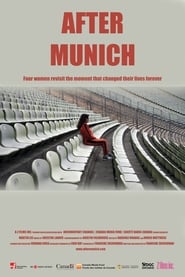
star 10Yesterday the television showed pictures of a peaceful sporting event – today the focus is on an apartment in the Olympic village where terrorists have taken Israeli athletes hostage. A chronicle of the events in Munich in 1972 and their aftermath. After Munich is about the aftermath of the Munich Olympic massacre of eleven Israeli athletes in 1972 and how four women's lives have been changed forever.Nightingale, Not the Only Voice
2000
Nightingale, Not the Only Voice follows the lives of three artists, including the film’s director, on their shared journey through real and psychological oppression to self-discovery. Tang Danhong examines her past—particularly her relationship with her parents—and looks at the painful, formative moments that inform her current psychological state, her life, and her art.TV Family
2015
TV Family
2015
A Texas family reflects on the forgotten television documentary produced about them in 1960, describing how the program both mirrored and distorted the reality of their lives. Combining rare footage with new interviews, TV FAMILY opens a window onto the limitations of television and representations of family in midcentury America.The Art of Listening
2016
The Art of Listening
2016
star 6.8The Art of Listening is a documentary film about the journey music takes to reach a listener’s ear, from the intent of an instrument maker and composer, to the producers and engineers who capture and preserve an artist’s voice. This journey is narrated by intimate conversations with artists, engineers and producers about the philosophy of their work and the intent behind each musical note they create.The Vanity Tables of Douglas Sirk
2015
star 5.6A video essay exploring the frequency and meaning of that particular prop in a wide variety of Sirk movies. Is it a device that traps and keeps women in an artificial world with a limited point of view? Or is it a gateway to the past and the future, and a distorted but nevertheless real vision of the roles that woman are forced to play in society? It's an exploration of the texts and subtexts of commercial films and the subterranean and complicated ways that they affect us and can be read.Something Like a War
1991
Something Like a War
1991
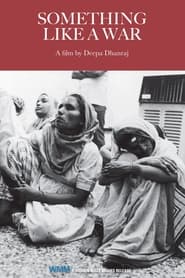
An examination of India’s family planning program from the point of view of the women who are its primary targets. It traces the history of the family planning program and exposes the cynicism, corruption and brutality which characterizes its implementation. As the women themselves discuss their status, sexuality, fertility control and health, it is clear that their perceptions are in conflict with those of the program.Daughters of Dolma
2013
Daughters of Dolma
2013
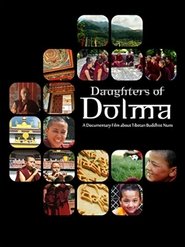
Dolma is the Tibetan name of Tara, a Buddhist female deity, and means 'she who saves'. Dolma is regarded as a Bodhisattva of compassion and action. She is known as the mother of all buddhas. Our team felt that Dolma relates to the message we would like to convey via our movie and used her name in the documentary title. One of the main legends about her origin as a bodhisattva tells a story of a young princess who lived in a different world millions of years ago. Her name is Jnanachandra.The Hidden Art of Islam
2012
Explore the tradition of figurative art at the heart of Islam with host Rageh Omaar. Muslim belief and tradition specifies that there should be no depictions of God or the Prophet Muhammad. In religious contexts, this constraint on what artists can depict extends to human figures and other living creatures as well. These prohibitions have inspired a rich visual culture based on calligraphy, Arabesque floral designs, and geometry, all of which feature strongly in the art and design found throughout Islam, including in mosques and the Koran. With the help of fine art and religion experts, host Rageh Omaar (The Life of Muhammad) traces the effect of these beliefs over the centuries on the art and artists of the Islamic world and considers why depictions of pilgrims taking part in the Hajj pilgrimage have become part of the accepted tradition of Islamic art, including in work exhibited at the British Museum.Wagner's Jews
2013
Wagner's Jews
2013
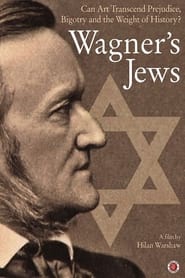
star 9Who were they? What brought them to Wagner, and what brought him to them? These questions are at the heart of Hilan Warshaw's documentary "Wagner's Jews," the first film to focus on Wagner's complex personal relationships with Jews.Sons of Haji Omar
1978
Sons of Haji Omar
1978
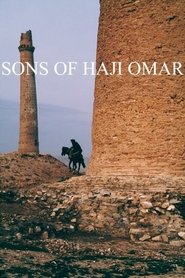
Haji Omar and his three sons belong to the Lakankhel, a Pashtoon tribal group in northeastern Afghanistan. The film focuses on his family: Haji Omar, the patriarch; Anwar, the eldest, his father's favorite, a pastoralist and expert horseman; Jannat Gul, cultivator and ambitious rebel; and Ismail, the youngest, attending school with a view to a job as a government official.H.O.T. Human Organ Traffic
2009
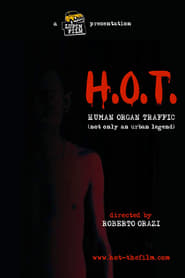
Roberto Orazi turns the camera on the lives of some of those involved in the scourge of the global traffic in human organs: lives united by a momentary hope and separated by that abstract yet insurmountable border called the North-South divide. This shocking documentary exposes the players who claim they know nothing of the crimes they commit.Backyard
1984
Backyard
1984
star 6Documentary film maker Ross McElwee returns to his family home in Charlotte NC. In filming his family, he captures a microcosm of Southern society.Short Cut to Nirvana: Kumbh Mela
2004
Every 12 years over 70 million pilgrims gather at the meeting of India's holiest rivers, the Ganges and the Yamuna, for a spectacular spiritual festival: the Kumbh Mela. This documentary takes a voyage of discovery through this colorful event through the eyes of several Westerners and an ebullient young Hindu monk, Swami Krishnanand. Featuring encounters with some of India's most respected holy men and exclusive footage of His Holiness the Dalai Lama.Out Late
2011
Out Late
2011
star 2.9This feature film looks at five individuals who made a decisive change later in life-to come out as lesbian, gay, or trans gender, after the age of 55. Why did they wait until their 50's, 60's, or 70's to come out? And what was the turning point that caused each of these people finally to openly declare their sexuality? From Canada to Florida, to Kansas, we find out what ultimately led these dynamic individuals to make the liberating choice to pursue fully integrated lives.Rothenburg ob der Tauber
1916
A peek into the Bavarian town of Rothenburg ob der Tauber, a treasure trove of medieval beauty.Surf Film Tour
2024
Surf Film Tour
2024
A curated program featuring some of the best surf films from around the world, showcasing a variety of surfing. Includes: TO BE FRANK, a short exploring the authentic and positive spirit of 73-year-old Frank Paine, a legend in the Hermosa Beach surf scene… CHASING THE UNICORN, a 34-minute film tracing surfing history in post-war Mozambique, centered on the search for a mythical wave known as the African Kirra.