Popular Documentary Movies on Kanopy - Page 298
All Services
Free Services
 Netflix
 Amazon Prime Video
 Apple iTunes
 Apple TV Plus
 Disney Plus
 Google Play Movies
 Paramount Plus
 Hulu
Hulu
 HBO Max
 YouTube
 fuboTV
 Peacock
 Peacock Premium
 Amazon Video
 The Roku Channel
 AMC+
AMC on Demand
AMC+
AMC on Demand
 Kocowa
 Hoopla
 The CW
 Vudu
Vudu
 Starz
Starz
 Showtime
 PBS
PBS
 Pantaflix
 FXNow
FXNow
 Tubi TV
 Kanopy
 Comedy Central
 Crunchyroll
 Microsoft Store
 Redbox
 Sun Nxt
 ABC
ABC
 DIRECTV
 Crackle
 Fandor
 Plex
Plex
Netflix
Amazon Prime Video
Apple iTunes
Apple TV Plus
Disney Plus
Google Play Movies
Paramount Plus
Hulu
HBO Max
YouTube
fuboTV
Peacock
Peacock Premium
Amazon Video
The Roku Channel
AMC+
AMC on Demand
Kocowa
Hoopla
The CW
Vudu
Starz
Showtime
PBS
Pantaflix
FXNow
Tubi TV
Kanopy
Comedy Central
Crunchyroll
Microsoft Store
Redbox
Sun Nxt
ABC
DIRECTV
Crackle
Fandor
Plex

Children's Magical Death
1974
Pretending to be shamans, a group of young boys imitate their fathers, blowing ashes into each other's noses and chanting to the hekura spirits.The Dmitriev Affair
2023
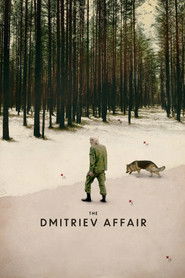
The Dmitriev Affair
2023
Through a thick layer of snow in the forests of Russia, historian Yuri Dmitriev searches for unmarked and lost graves. His singular efforts have uncovered mass burial sites of those who were killed under Stalin’s “Great Terror” of 1937. With no help from official channels, he traces the dead and rescues their memory from the eternal doom of oblivion. Dmitriev’s riveting story is a tale of one man’s fight against the erasure of history by the stateLos que buscamos
2019
Los que buscamos
2019
star 7Enrique was separated from his mother at birth, Ascension was forced to give up her daughter after giving birth. Both are victims of the "stolen babies" plot, a slippery ground for Spanish justice. While they continue with the legal battle, they continue with their searches, living with guilt, rejection and the construction of their own identity.Inside Obama's Presidency
2013
The first four years of Barack Obama's presidency include battles with Republicans over health care, the economy, and the expansion of targeted killings of enemies.My Mother's Village
2001
My Mother's Village
2001
In a documentary that spans two continents and several generations, acclaimed director John Paskievich delves into the experience of exile and its impact on the human spirit. Almost fifty years after his family fled Ukraine for freedom in Canada, the filmmaker visits his parents' homeland. It's a place both familiar and foreign. Drawing on his years growing up in Winnipeg, Paskievich explores how children of refugees and immigrants are caught between two worlds. While they struggle to put down roots in a new country, they must also preserve traditions of a distant land they have never known. Paskievich's journey through Ukraine is interwoven with stories of displacement from other prominent Ukrainian Canadians--authors George Melnyk and Fran Ponomarenko, filmmaker Bohdana Bashuk, director Halya Kuchmij and dancer Lecia Polujan. A rich tapestry of memory and history, My Mother's Village brings to light the humour, anger, joy and complexity of living between borders.Abundance on a Dry Land
2015
In the news, California often grabs the headlines. In this state, the agriculture is suffering from a lack of water and farms are being abandoned at an alarming rate. But some people seem to have found a solution. Here, and in many other dry regions around the world, land restoration is helping water infiltrate into the soil to help increase crop yields.Drokpa: Nomads of Tibet
2016
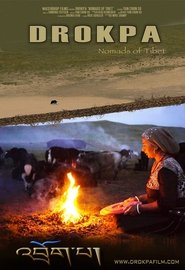
Set in the high plateau of eastern Tibet, DROKPA is an intimate portrait of the lives and struggles of Tibetan nomads whose life is on the cusp of irreversible change as once lush grasslands are rapidly turning into deserts. The grasslands of the Tibetan plateau are home to the source of Asia’s major rivers. Nearly half of humanity depends on this water for survival. Tibetan nomads, known as DROKPA have roamed on this land for thousands of years.Yucatec Maya Deaf Sign
1977
In 1976, Hubert Smith set out with a group of researchers to visually document Yucatec Maya society within the village of Chican. This project resulted in the 4-part series, The Living Maya. During filming, however, it was impossible to ignore the use of sign language in the village. Smith and his team saw a lot of the deaf residents, filmed them often, and went back to have these sign exchanges translated. Now it is time to share a story solely about them.White Balls on Walls
2023
White Balls on Walls
2023
The slogan “Meet the icons of modern art” needs to be scraped off the glass wall of the Stedelijk, Amsterdam’s modern art museum. Because precisely who the icons of modern art are is very much the question. Who gets to decide? And who loses out? In 2019, as director Sarah Vos started shooting her documentary, more than 90 percent of art at the Stedelijk was made by white men. That’s got to change, the museum’s director Rein Wolfs believes. But this is easier said than done—so much becomes clear when Vos follows Wolfs and his team as they strive for greater diversity in the collection, as well as among their staff.Glorious Exit
2007
Glorious Exit
2007
Jarreth Merz, an actor of Swiss and Nigerian origins living in Los Angeles, ends up facing his roots when he is been told that his father is dead. Following the Nigerian tradition, in fact, the eldest son has to take care of the funeral of his father. But who is this unknown father? Why does Jarreth feel a moral obligation towards a family he hardly knows and who has never really been interested in him? Jarreth begins a journey to discover his father through the tales of the people who knew him and a country that doesn’t belong to him even if it is part of his life. Confronting himself with traditions that challenge his beliefs, from Los Angeles to Nigeria Jarreth will face this decisive chapter of his life and the changes that will follow.Bad Hombrewood
2022
Bad Hombrewood
2022
For decades, the film industry has confined minorities to stereotypical characters. Now, filmmakers fight to change the Latinx role in Hollywood.Seguir Siendo
1999
Seguir Siendo
1999
A portrait of the Mbyá-Guarani people living in Misiones, a subtropical province in Northeast Argentina. The people demonstrate everyday life existing on a geographical as well as a cultural border.Sittwe
2017
Sittwe
2017
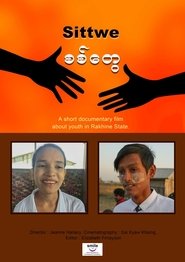
Sittwe is about two teenagers separated by conflict and segregation in Burma's Rakhine state, Phyu Phyu Than, a Rohingya girl and Aung San Myint, a Buddhist boy. Both youth saw their homes burned down during communal violence in 2012. Phyu Phyu Than is confined in an apartheid-style camp and has no chance to go to school or travel to her home just a few miles away. Aung San Myint's family struggles to survive and support his high school studies to fulfill his dream to go to medical school. Interviews filmed over two years with the teenagers reveal their ideas about each other's communities and the hope of reconciliation.Murales
2010
Murales
2010
Broken Vows: Stories of Separation
2020
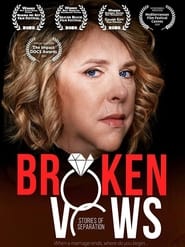
Broken Vows: Stories of Separation is an award winning documentary that was produced over a four year period. Initially starting as a team of one Sunnie McFadden-Curtis built a small but dedicated team of creatives around her.This documentary takes you into the lives of several women, to learn from their personal stories, hear tales from those caught in the crossfire of marriage breakdown and separation, and find solace in the notion that those affected can walk through the darkness and into the light.Le Jour et l'Heure
2021
Le Jour et l'Heure
2021
Running Out of Time
2006
Running Out of Time
2006
In many ways the heart of indigenous India, mineral-rich Jharkhand is and has been at the core of India's industrial development after independence. There, the indigenous Adivasi people have borne the brunt of what is arguably India's most fundamental developmental conflict, which has pushed them to the verge of extinction as an agricultural people.Walking Dancing Belonging
2006
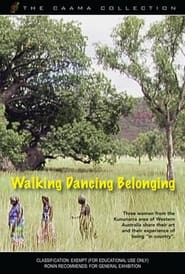
Produced in association with Waringarri Aboriginal Arts at Kununurra in Western Australia, this moving documentary features three women who talk about their paintings as an expression of their relationship to their country. The women share a sense of belonging to their place and express this belonging through dance and song and all of their artistic expressions. On a trip into the bush around Cockatoo Lagoon near Kununurra, they explain the stories of their Dreaming and of their land, and talk of their own experiences growing up as workers on stations in the area. Each artist talks about why they paint - to teach and to share stories about their country with others in the community and wider afield. The film also observes them working on paintings, each giving her personal interpretation of a loved environment and a living culture. The paintings are all very different in style but all express a life-affirming sense of identity intimately linked to their own country.To Hold Our Ground: A Field Report
1991
For thousands of years Ju/'hoansi have lived in the Nyae Nyae region in northeastern Namibia. In the 1950s, most Ju/'hoansi had been exterminated or were dispossessed by white colonists and black farmers, but in Nyae Nyae Ju/'hoansi were still the only permanent inhabitants. Waterless approaches isolated their ancient communal land and protected them from enslavement.Cimarrón Spirit: Afro-Dominican Maroon Culture
2015
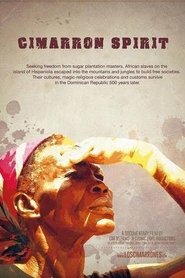
In the Dominican Republic, as early as 1512, African slaves escaped from Spanish plantations and lived with the island’s Taíno Indians or on their own in mountainous jungles in the remote frontier land of Hispaniola. These people who were known as “cimarrones,” meaning “maroons,” created their own independent communities that have survived for centuries and until recently remained isolated from mainstream Dominican society. These resilient and resourceful “outlaws” have long developed their own celebrations, many of which mock a society that enslaved and branded them. Cimarrón Spirit explores carnival traditions such as the ritualistic fire burning of the masks and costumes of “Judas,” “Cocorícamo,” and “Tifúas,” as figures important to the cimarrón culture of Elias Piña.