Popular Documentary Movies on Kanopy - Page 297
All Services
Free Services
 Netflix
 Amazon Prime Video
 Apple iTunes
 Apple TV Plus
 Disney Plus
 Google Play Movies
 Paramount Plus
 Hulu
Hulu
 HBO Max
 YouTube
 fuboTV
 Peacock
 Peacock Premium
 Amazon Video
 The Roku Channel
 AMC+
AMC on Demand
AMC+
AMC on Demand
 Kocowa
 Hoopla
 The CW
 Vudu
Vudu
 Starz
Starz
 Showtime
 PBS
PBS
 Pantaflix
 FXNow
FXNow
 Tubi TV
 Kanopy
 Comedy Central
 Crunchyroll
 Microsoft Store
 Redbox
 Sun Nxt
 ABC
ABC
 DIRECTV
 Crackle
 Fandor
 Plex
Plex
Netflix
Amazon Prime Video
Apple iTunes
Apple TV Plus
Disney Plus
Google Play Movies
Paramount Plus
Hulu
HBO Max
YouTube
fuboTV
Peacock
Peacock Premium
Amazon Video
The Roku Channel
AMC+
AMC on Demand
Kocowa
Hoopla
The CW
Vudu
Starz
Showtime
PBS
Pantaflix
FXNow
Tubi TV
Kanopy
Comedy Central
Crunchyroll
Microsoft Store
Redbox
Sun Nxt
ABC
DIRECTV
Crackle
Fandor
Plex

If Everyone Knew
2022
If Everyone Knew
2022
One in four pregnancies ends in miscarriage, but many women feel ashamed to speak about it. If Everyone Knew documents three women's journeys with baby loss. They tell their personal stories to encourage wider understanding and acceptance.Reclamation: The Story of the Atlanta Child Murders
2006
Artist William Scarbrough investigates the Atlanta Child Murders.Songs of a Sorrowful Man
2009
Charismatic and unconventional, Dukhushyam is a painter, composer, and singer whose nontraditional methods of reinvigorating the traditional art of scroll painting and story singing has had wide effects on the culture of of West Bengal.Understanding
2024
Understanding
2024
Have you ever felt truly understood by someone? What was it like, and how did it feel? Was it real, or did it just seem that way? This film is my exploration of mutual understanding—delving into my own thoughts and engaging with people I met on the streets of St. Petersburg, Tel Aviv, Colombo, and Tashkent.Something of the Times
1985
star 8Archival photographs help reconstruct the life of white buffalo hunters, and the Aboriginal labour that supported them, in the remote wetlands of the NT in the 1930s. Former hunter Tom Cole visits hunting camps and discusses the trade.Women of World War II: The Untold Stories
2025
Meet the American women who built the planes and flew them-- who fought on the war front and broke barriers on the home front. History comes alive with newly-rediscovered interviews and rarely seen archival footage.AI: Tipping Point
2023
AI: Tipping Point
2023
Scientists and Leading Industrial Experts explore the benefits and dangers of artificial intelligence—a rapidly evolving form of technology that seems poised to change the world.Life in Australia: Launceston
1966
A picture of life in the Tasmanian town of Launceston in the mid 1960s.Children in No Man's Land
2008
Children In No-Man's Land is an award-winning documentary that uncovers the current plight of the 100,000 unaccompanied minors entering the United States. The film will give this timely political debate about the U.S.-Mexico border a human face by exploring the stories of Maria de Jesus (13) and her cousin Rene (12) as they attempt to cross the US/Mexico border alone to reunite with their mothers in the Midwest. Focusing on minors crossing through the Sonora Desert area in Nogales, Arizona, this film will explore every detail of these children's journey as well as the journeys of other children we meet on the way as we uncover in an intimate and personal way where they are coming from, what their journeys have been like and how they've gone about it, through to the arrival at their destination their new home, The United States of America.Meteor Strike: Fireball from Space
2013
In early 2013, meteorite bigger than a double decker bus, travelling at 40,000 miles an hour, crashed into planet Earth. This film shows previously unseen footage of what happened. Astrophysicists explain exactly what it was and reveal how likely it is to happen again.Rommel: The Soldier, the Son, and Hitler
2021
A rare insight into the military career and personal life of Germany's most famous Second World War commander, Field Marshal Erwin Rommel. Told from the perspective of his son Manfred, it tells what happens when a career soldier runs afoul of a dictator. Highly decorated and one of Hitler's favourite commanders in the early years of World War II, the 'Desert Fox' was something of an enigma. Never a member of the Nazi party, Rommel detested the blending of politics and war. He would quickly discover that both were always in play in Hitler's Germany. Greg Kinnear narrates.Our Fires Still Burn: The Native American Experience
2013
This documentary contrasts the issues faced by today's Native American people and covers the injustices that their people had faced in the past.Frans Hals of Antwerp
1992
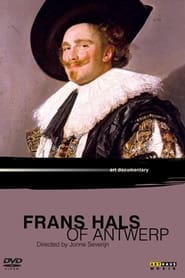
Frans Hals (1582-1666) was a portrait painter with a unique style, admired for its originality and vivacity not only by the Impressionists but also by artists like van Gogh or Picasso. Very little documentation of his life exists today, so this film uses the thorough contemplation of his canvases as the key to his story. Works by the landscape artists and still-life painters of his time help to illustrate the age in which he lived. The film furthermore exemplifies the elaborate conventions of portraiture at the time.Beyond the Dream
2022
Beyond the Dream
2022
Two aspiring teachers create a college readiness program to help students in El Paso, TX achieve their college dreams.Troublemaker
2022
Troublemaker
2022
Alexander Zinoviev gained worldwide fame primarily as a logician, sociologist, writer, author of the genre of sociological novel created by him, who marked new milestones in each of these areas of human culture with his work. Poetry and visual creativity of the thinker complement the image of what is called the Zinoviev phenomenon.There Goes the Neighborhood
2023
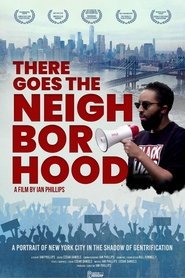
Gentrification and displacement are affecting all big cities throughout the world, but none more egregiously than my hometown of New York City. As a Native New Yorker, I am disturbed to see my beloved hometown become a haven for the wealthy when it was once a city that valued culture and community over money. Before Covid happened, the sky seemed to be the limit for corporate greed and that is when I started making this film. I chose specifically to focus on two lower-class neighborhoods that are in peril- Queens and the Lower East Side. In documenting these neighborhoods under threat, I met local activists whose lives centered around maintaining the ethos of their community.Mission Hill and the Miracle of Boston
1978
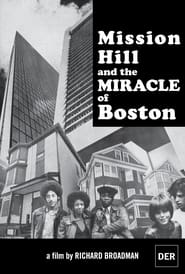
This documentary traces the alteration, through economic and political influences, of the Parker Hill area of Roxbury in Boston. An ethnically mixed family neighborhood, at present largely Irish Catholic, is now the location of a racially tense public housing project (named Mission Hill for a local church) which is occupied mainly by blacks.theEYE: Lisa Milroy
2006
theEYE: Lisa Milroy
2006
Lisa Milroy’s paintings are pleasurable and provocative, clear but complex, immediate and yet richly subtle. In 2001 many of her major works were brought together for an important exhibition at Tate Liverpool; this film, the first about her work, was made alongside that show. Her earliest works are depictions of everyday objects: shoes in serried ranks, collections of lightbulbs and household hardware. Later canvases explore the process of depicting images of people, blank facades of buildings, clichés of photographic landscapes. More recent work is looser and less apparently realist.Landless
2023
Landless
2023
An essay film exploring the relationship between humans and propaganda, spanning from the enslaved individuals of 16th-century Saint-Domingue to the digital 'Sisyphus' role embodied by NPCs (Non-Player Characters) in the popular video game, Assassin's Creed.theEYE: Sandra Blow
2007
theEYE: Sandra Blow
2007
Three spectacular canvases by Sandra Blow were one of the highlights of the 2006 Royal Academy Summer Exhibition. Sadly, this was her last show, as she died in August that year. This film was made in her studio in St. Ives as she was preparing to submit her works, and it captures her remarkable character and her fascinating reflections on a lifetime creating beautiful, rigorous, distinctive and joyous paintings. Sandra Blow spent a formative year as a student in Italy in the late 1940s, and she returned to London to begin a distinguished career dedicated to developing her vigorous abstract art. In addition to paint, she worked with a diverse range of materials, including sacking, plaster and coloured paper collages, and while her work often referred to landscape and to architecture, it was always exploring ideas of pure form and colour, balance and chance, light and movement. theEYE is an excellent introduction to contemporary artists and their work