Popular Documentary Movies on Kanopy - Page 295
All Services
Free Services
 Netflix
 Amazon Prime Video
 Apple iTunes
 Apple TV Plus
 Disney Plus
 Google Play Movies
 Paramount Plus
 Hulu
Hulu
 HBO Max
 YouTube
 fuboTV
 Peacock
 Peacock Premium
 Amazon Video
 The Roku Channel
 AMC+
AMC on Demand
AMC+
AMC on Demand
 Kocowa
 Hoopla
 The CW
 Vudu
Vudu
 Starz
Starz
 Showtime
 PBS
PBS
 Pantaflix
 FXNow
FXNow
 Tubi TV
 Kanopy
 Comedy Central
 Crunchyroll
 Microsoft Store
 Redbox
 Sun Nxt
 ABC
ABC
 DIRECTV
 Crackle
 Fandor
 Plex
Plex
Netflix
Amazon Prime Video
Apple iTunes
Apple TV Plus
Disney Plus
Google Play Movies
Paramount Plus
Hulu
HBO Max
YouTube
fuboTV
Peacock
Peacock Premium
Amazon Video
The Roku Channel
AMC+
AMC on Demand
Kocowa
Hoopla
The CW
Vudu
Starz
Showtime
PBS
Pantaflix
FXNow
Tubi TV
Kanopy
Comedy Central
Crunchyroll
Microsoft Store
Redbox
Sun Nxt
ABC
DIRECTV
Crackle
Fandor
Plex

Holes in My Shoes
2006
Holes in My Shoes
2006
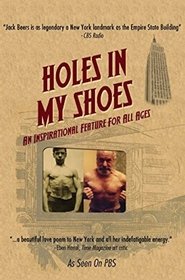
star 6.394-year-old New Yorker, Jack Beers, has broken the age barrier full force. He can do what most young men can, and his diverse lifetime achievements would take many to accomplish. The film begins with Mayor Bloomberg acknowledging Jack, we see Jack's name on the marquee of Radio City Music Hall, and at 94 he rips a telephone book into 4 pieces with his hands. Jack was raised in poverty in Manhattan, was a strongman, built Radio City Music Hall, at The Manhattan Project he invented something that shortened WW2, erected the Empire State Building spire, was a professional dog trainer, was a film actor in 200+ films, beat terminal illnesses, and today rides 5 miles on a stationary bike. He's "goin' for 100!"Praying With Lior
2008
Praying With Lior
2008
Praying with Lior asks whether someone with Down syndrome can be a spiritual genius. Many believe Lior is close to God -- at least that's what his family and community believe -- though he's also a burden, a best friend, an inspiration and an embarrassment, depending on who is asked and when. As this documentary moves to its climax, Lior must pass through the gateway to manhood - his Bar Mitzvah.Great American Eclipse
2024
Explore the spectacular cosmic phenomenon of a total solar eclipse. In April 2024, the Moon’s shadow is sweeping from Texas to Maine, as the U.S. witnesses its last total solar eclipse until 2044. This extraordinary astronomical event is plunging locations in the path of totality into darkness for more than four minutes – nearly twice as long as the last American eclipse in 2017. Learn how to watch an eclipse safely and follow scientists as they work to unlock secrets of our Sun – from why its atmosphere is hundreds of times hotter than its surface, to what causes solar storms and how we might one day predict them.Afghan Nomads (The Maldar)
1974
At dawn a nomad caravan descends on Aq Kupruk from the foothills of the Hindu Kush. In their camp, and in commerce with the townspeople, the Maldar reveal the mixture of faith and distrust that has kept nomads and sedentary people separate and interdependent over the centuries. The theme of the film focuses on political and religious beliefs. The film and accompanying instructor notes in this series embrace five different and complex units of analysis concerning how political change occurs; individual attitudes, ethnic identity, national loyalties, institutional affiliations, and ideological beliefs.Passing Through My Mother-in-law's Village
1997
The East-West Highway was soon to be built in central Taiwan. It would pass through the village of Liu Ts'o, and many homes and rice paddies would be destroyed. The filmmaker, Hu Tai-Li, went back to her mother-in-law's village Liu Ts'o, where she did anthropological research from 1976-78, to preserve some images of life at that moment - forever.China Remix
2015
China Remix
2015
The city of Guangzhou is home to China's largest community of African immigrants. Despite facing prejudice and the risk of deportation, three African hip-hop artists strive to change perceptions and achieve a better life in their new land of opportunity. This short documentary explores China's burgeoning African entertainment industry through the lives of three African hip-hop artists who are trying to find success in the face of challenging labor and immigration laws in China's southeastern city of Guangzhou. The film follows the entertainers as they prepare for their shows, perform, and live their daily lives with their Chinese and African family members and friends.One Taxi Ride
2019
One Taxi Ride
2019
star 0.5Erick's life changed forever when he got into a taxi. The driver and two accomplices sexually assaulted him. The then 17-year-old never went to the police, never saw a doctor and never told his family or friends. After feeling broken for 10 years, he goes on a journey to reclaim his life - changing the world around him along the way.Un vrai faussaire
2016
Whose Is This Song?
2003
Whose Is This Song?
2003
star 6.1Adela Peeva explores the national origin of a song common amongst a set of countries, and finds that the answer is not as simple as one might think.No Sweat
2010
No Sweat
2010
An all-American tale about an all-American garment: The T-shirt, NO SWEAT takes a wild ride into the bowels of Los Angeles garment industry. Mostly undocumented workers at American Apparel and SweatX are offered better wages, benefits, even a shot at worker-ownership. But what's really behind the label? Dark, dingy factories. Workers hunched elbow-to-elbow over machines. Nike. Guess. Kathy Lee Gifford. We are all too familiar with sweatshops, operating both in the U.S. and overseas. But does what's behind the label of what you wear always have to be linked to worker exploitation?Shop 'Til You Drop: The Crisis of Consumerism
2010
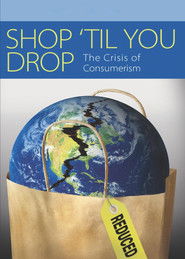
Are we too materialistic? Are we wantonly destroying the planet with our pettiness? Where is the source of all that energy and endless consumer desires? The document calls for a direct confrontation with these questions. Focusing on the long-term deteriorating ecological and mental realm of American consumerist culture and all the chaotic materialism, he reaches beneath the surface of the commercial world to show that the consequence of growth is impoverishment - the slow and steady depletion of natural resources and basic human values. It shows the connection between the limits of consumerism and our own well-being, and encourages people to develop a critical view of the current economic situation.The Nature Makers
2020
The Nature Makers
2020
In a world increasingly dominated by humans, three teams of wildlife conservationists go to unnatural lengths to try to save threatened species and habitat in the American heartland.Mary Ainsworth: Attachment and the Growth of Love
2005
Mary Ainsworth's "Strange Situation" is now basic to understandings of infant-parent interactions and, thus, later emotional development. Working in close collaboration with the British psychiatrist John Bowlby, Ainsworth gave us new understandings of the huge impact very early emotional experiences have on personality development across the life span.The Motorcycle Illustrated
2021
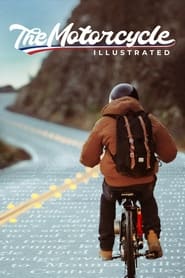
star 8Cutler Gray pays tribute to his Great Grandfather Buck DuSell and other famous riders of the early 1900's by recreating their Endurance Runs, about 150 miles per day - on a Motorized Bicycle.The Life of Jo Menell: Americans, Mongrels, & Funky Junkies
2019
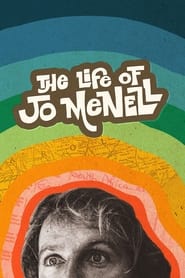
South African filmmaker Jo Menell is most well-known for the cult feminist classic, Dick (1989), which featured 1000 penises accompanied by an audio commentary from women. The nature of that film, however, belies a rich career in film and journalism that spans the Vietnam War, the Allende government in Chile, the emergence of gay rights in San Francisco, a 1981 Bob Marley documentary, an Oscar nominated film about Nelson Mandela (1997), and the Street Talk television series, as well as close relationships with key figures from the 20th Century. Born into a life of privilege, Menell had progressive political inclinations and soon left apartheid South Africa for Britain where he was schooled in the ways and connections of the British ruling class. The film chronicles his amazingly rich and varied life using archival footage alongside a series of interviews conducted with Menell while his portrait was being painted by Cape Town artist Beezy Bailey.The Real Cost
2021
The Real Cost
2021
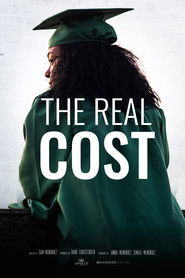
star 31.8 trillion dollars in student loan debt is what’s separating more than 40 million Americans to achieve their goals in life. This crisis is only getting bigger and more dangerous.Firestorm '77 The True Story of the Honda Canyon Fire
2022
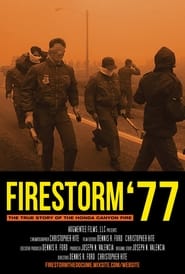
Military commanders, fearful of the Base’s cold war secrets being compromised, attempted to control the protocols and procedures of the civilian fire fighters called upon to battle the1977 Honda Canyon Fire on Vandenberg Air Force Base. They intead offered up their own untrained personnel to fight a conflagration that, for all intents and purposes, should have never been fought and couldn’t be beaten.Bitter Roots
2010
Bitter Roots
2010
BITTER ROOTS: THE ENDS OF A KALAHARI MYTH is set in Nyae-Nyae, a region of Namibia located in southern Africa's Kalahari desert, traditional home of the Ju/'hoansi. It updates the ethnographic film record begun in the 1950s by John Marshall, whose films documented 50 years of change, and who together with Claire Ritchie, established a grass-roots development foundation, which Adrian Strong (the filmmaker) joined in the late 1980s. Through archival footage and discussions with community members, this film sensitively examines the problems (lions, elephants, conservationists) currently facing the Ju/'hoansi and challenges the myth that they are culturally unable to farm. The film investigates the perpetuation of this myth by showing how tourists and filmmakers still demand to see how people used to live rather than they way they live now, and how the Ju/'hoansi cope with such expectations, while steadfastly continuing to farm against all the odds.Into the Dark
2020
Into the Dark
2020
Battling subzero temperatures and 40-foot seas, a team of scientists embark on a perilous winter expedition into the darkest regions of the Arctic. Their mission: to understand how trace amounts of light may be radically altering the mysterious world of the polar night. What they discover has implications for the global climate and the future of the Arctic.From Hell to Hollywood
2021
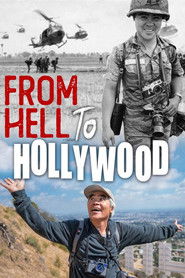
In this biographical portrait, Nick Ut, the Associated Press photographer finally tells his own story.