Popular Documentary Movies on Kanopy - Page 301
All Services
Free Services
 Netflix
 Amazon Prime Video
 Apple iTunes
 Apple TV Plus
 Disney Plus
 Google Play Movies
 Paramount Plus
 Hulu
Hulu
 HBO Max
 YouTube
 fuboTV
 Peacock
 Peacock Premium
 Amazon Video
 The Roku Channel
 AMC+
AMC on Demand
AMC+
AMC on Demand
 Kocowa
 Hoopla
 The CW
 Vudu
Vudu
 Starz
Starz
 Showtime
 PBS
PBS
 Pantaflix
 FXNow
FXNow
 Tubi TV
 Kanopy
 Comedy Central
 Crunchyroll
 Microsoft Store
 Redbox
 Sun Nxt
 ABC
ABC
 DIRECTV
 Crackle
 Fandor
 Plex
Plex
Netflix
Amazon Prime Video
Apple iTunes
Apple TV Plus
Disney Plus
Google Play Movies
Paramount Plus
Hulu
HBO Max
YouTube
fuboTV
Peacock
Peacock Premium
Amazon Video
The Roku Channel
AMC+
AMC on Demand
Kocowa
Hoopla
The CW
Vudu
Starz
Showtime
PBS
Pantaflix
FXNow
Tubi TV
Kanopy
Comedy Central
Crunchyroll
Microsoft Store
Redbox
Sun Nxt
ABC
DIRECTV
Crackle
Fandor
Plex

A Chinese Farm Wife
1974
A Chinese Farm Wife
1974
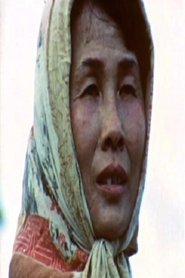
A Chinese Farm Wife gives us a peek into the life of Mrs. Li, a Taiwanese woman whose husband is a salaried factory worker. Along with the help of her eldest daughter and her neighbors, Mrs. Li runs their 3-acre farm, cultivating crops of tobacco and rice. She also supervises the children's education and manages the household, and is a full participant in community activities.Affected: The Story of US
2020
star 6Affected tells the story of a small business owner that lost over 90% of his revenue after Covid-19 hit America. With frustration, he decided to embark on a journey to document the lives of all the others that have been impacted by Covid.Albert Einstein: Still a Revolutionary
2020
star 6Using a wealth of rarely-seen archival footage, correspondence, and new and illuminating interviews, Julia Newman makes the case that Albert Einstein's example of social and political activism is as important today as are his brilliant, groundbreaking theories.Finding Our Way
1989
Finding Our Way
1989
The men in FINDING OUR WAY range in age from twenty-seven to seventy-one and come from a variety of backgrounds: a writer, an insurance agent, a clergyman, and the owner of a dry cleaning store. They are heterosexual, gay, and bisexual. FINDING OUR WAY is a first step toward creating new role models and moving beyond the stereotypes surrounding male sexuality. The program helps men feel less afraid of closeness with other men and encourages both men and women to talk more openly about their sexuality.Growing Up Poor in America
2020
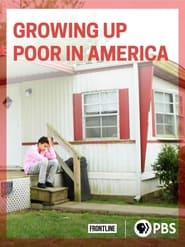
Their families were already struggling to make ends meet. Then came the coronavirus. Director Jezza Neumann, who made 2012’s Poor Kids, once again delves into how poverty impacts children. With the 2020 election approaching, Growing Up Poor in America follows three children and their families in the battleground state of Ohio as the COVID-19 pandemic amplifies their struggle to stay afloat. As the country also reckons with issues of race and racism, the children share their worries and hopes about their futures.Waila! Making the People Happy
2009
Waila, the contemporary dance music of southern Arizona's tribal communities, is often called "chicken scratch." Played at tribal functions, this fun, lively music offers relief from the hardships of reservation life. Waila! Making the People Happy explores the history of the music and looks at the Joaquin's, a family of musicians, and their journey from a remote tribal village to performing at Carnegie Hall.Lights of Baltimore
2020
Lights of Baltimore
2020
“Lights of Baltimore” tells the story of the war of images surrounding Baltimore in the aftermath of Freddie Gray’s death at the hands of the police in 2015 — images produced by factions fighting for the heart of one of America’s greatest and most troubled cities.Breach of Trust
2020
Breach of Trust
2020
In 2018 it came to light that Dr. George Tyndall, the gynecologist at the University of Southern California's student health center, had been engaging in sexual assault for decades. With hundreds of accusations, how had he escaped punishment? A story of abuse and institutional enablement told from the point of view of the women advocating for change.Rock the Boat
2012
Rock the Boat
2012
In the artificial landscape that is Los Angeles, where even palm trees are imported, nothing epitomizes man's short-sighted efforts to reshape the face of the earth more than the LA River: modified beyond recognition, its flow tapped before it even reached the surface, the river was used, abused and essentially forgotten. But when an unassuming boater insists on seeing it as a river again, a local controversy takes on national dimensions, and the once-derided eyesore turns into a source of hope for the City of Dreams. 'Rock the Boat' is a fun, high-energy and, ultimately, moving film that tells this every-man's adventure and looks at the price nature has to pay for our urban lifestyle.Deep Ellum Blues
1985
Deep Ellum Blues
1985
Deep Ellum is a place -- a part of Dallas, Texas. Deep Ellum, along with its legendary music scene built by the likes of Blind Lemon Jefferson, Blind Willie Johnson, Lead Belly, and Bill Neely, all but disappeared with the construction of Central Expressway in the 1950s. This film is one of three short films in the Living Texas Blues series which explores the 1920's and 1930's night life in Dallas through the music of Bill Neely.Between the Lines: Asian American Women's Poetry
2001
This documentary offers rare interviews with over 15 major Asian-Pacific American women poets. Organized in interwoven sections such as Immigration, Language, Family, Memory, and Spirituality, it is a sophisticated merging of Asian-American history and identity with the questions of performance, voice, and image.In Their Shoes: Unheard Stories of Reentry and Recovery
2019
Meet the men whose lives intersect in a prison reentry and addiction recovery creative writing program. Learn, from their own words, what lead them to commit their crimes, and witness the complexity of their ongoing stories on the outside.International Sweethearts of Rhythm
1986
star 5From the Piney Woods School in the Mississippi Delta to the Apollo Theater in Harlem, New York City, this toe-tapping music film tells the story of the swinging, multi-racial all-women jazz band of the 1940s.Lee Ufan: Marking Infinity
2012
star 8"Marking Infinity", Lee Ufan's recent retrospective exhibition at the Guggenheim charts the artist's creation of a visual, conceptual, and theoretical language that has radically expanded the possibilities for sculpture and painting over the past forty years. Deeply versed in modern philosophy, Lee is also an influential writer and is recognized as the key theorist of Mono-ha, an anti-formalist, materials-based art movement that developed in Tokyo in the late 1960s. Active internationally over the last four decades, Lee is acclaimed for an innovative body of Post-Minimalist work that promotes process and the experiential engagement of viewer and site.Riders of the Purple Sage: The Making of a Western Opera
2020
Follow a classically trained composer as he adapts a dime novel masterpiece into a grand opera. In 1912, Zane Grey's Riders of the Purple Sage flew off bookshelves around the world and today is considered iconic. A century later, Craig Bohmler and a team of musicians, singers, and painters translate cowboy culture and the beauty of the west into the realm of Puccini and Verdi.They Ain’t Ready For Me
2020
star 10They Ain't Ready For Me is the story of Tamar Manasseh, the black rabbinical student who leads the fight against gun violence on the south side of Chicago. Tamar's identity and personality combine to make her a force to be reckoned with.Nisei Soldier: Standard Bearer for an Exiled People
1984
Nisei Soldier focuses on the heroism of American men of Japanese ancestry who fought bravely during World War II, despite the intense moral dilemmas they faced. Leaving their families imprisoned in "relocation centers", many young Nisei (second generation American-born Japanese) proved their loyalty in WWII by enlisting in the all-Japanese American 442nd Infantry Regiment which fought in Europe. Because of the Regiment's incredible bravery in battle, liberation of French towns, and high casualty rate, it became the most decorated unit in U.S. military history. The film asks: What sustained these young men forced to battle on two fronts at once -- against fascism abroad and intense prejudice at home? More than a war story, Nisei Soldier is a tale about personal honor, family loyalty and love of country -- and what it means to be an American.Councilwoman
2019
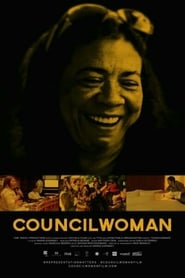
Councilwoman
2019
Carmen Castillo, a Dominican hotel housekeeper in downtown Providence, Rhode Island, has won an election to the City Council. Now she must manage her day job cleaning hotel rooms, while advocating for low-income workers as a rookie politician.WORLD'S MOST DANGEROUS PAPER ROUTE
2018
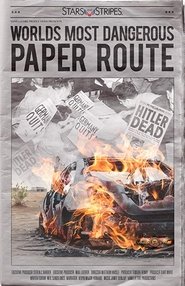
The story of the unsung heroes who deliver the 'Stars And Stripes' military newspaper to soldiers in Afghanistan. Part of the film shows the paper delivery to Camp Lightning after 90 minutes on a Chinook helicopter, two miles up a mountain, and further travel on Humvees.