Popular Documentary Movies on Kanopy - Page 303
All Services
Free Services
 Netflix
 Amazon Prime Video
 Apple iTunes
 Apple TV Plus
 Disney Plus
 Google Play Movies
 Paramount Plus
 Hulu
Hulu
 HBO Max
 YouTube
 fuboTV
 Peacock
 Peacock Premium
 Amazon Video
 The Roku Channel
 AMC+
AMC on Demand
AMC+
AMC on Demand
 Kocowa
 Hoopla
 The CW
 Vudu
Vudu
 Starz
Starz
 Showtime
 PBS
PBS
 Pantaflix
 FXNow
FXNow
 Tubi TV
 Kanopy
 Comedy Central
 Crunchyroll
 Microsoft Store
 Redbox
 Sun Nxt
 ABC
ABC
 DIRECTV
 Crackle
 Fandor
 Plex
Plex
Netflix
Amazon Prime Video
Apple iTunes
Apple TV Plus
Disney Plus
Google Play Movies
Paramount Plus
Hulu
HBO Max
YouTube
fuboTV
Peacock
Peacock Premium
Amazon Video
The Roku Channel
AMC+
AMC on Demand
Kocowa
Hoopla
The CW
Vudu
Starz
Showtime
PBS
Pantaflix
FXNow
Tubi TV
Kanopy
Comedy Central
Crunchyroll
Microsoft Store
Redbox
Sun Nxt
ABC
DIRECTV
Crackle
Fandor
Plex

Wilhemina's War
2016
Wilhemina's War
2016
A Southern grandmother struggles to help her loved ones survive the scourge of HIV - but she may be unable to save the one she loves the most.Marie's Dictionary
2015
Marie's Dictionary
2015
This short documentary tells the story of Marie Wilcox, the last fluent speaker of the Wukchumni language and the dictionary she created in an effort to keep her language alive.From Baghdad to Brooklyn
2015
At the height of the war in Iraq, thousands of Iraqis were fleeing the country each day. Among them was Mohamed, a 23-year-old from Baghdad, whose strikingly Western appearance and manner resulted in threats to his life. Forced into exile in Syria, Mohamed crosses path with Jennifer, a freelance video journalist from Brooklyn, New York, who begins to document his life as a refugee. Drawn into the fantasy world he invents to escape his harsh reality, Jennifer forms a unique friendship with Mohamed, embarking on a series of adventures around the city of Damascus.In the Matter of Cha Jung Hee
2010
star 6Her passport said she was Cha Jung Hee. She knew she was not. So began a 40-year deception for a Korean adoptee who came to the United States in 1966. Told to keep her true identity secret from her new American family, the 8-year-old girl quickly forgot she had ever been anyone else. But why had her identity been switched? And who was the real Cha Jung Hee? In the Matter of Cha Jung Hee is the search to find the answers, as acclaimed filmmaker Deann Borshay Liem ("First Person Plural," POV 2000) returns to her native Korea to find her "double," the mysterious girl whose place she took in America. A co-production of ITVS in association with the Center for Asian American Media and American Documentary/POV.Gough Whitlam: In His Own Words
2002
To commemorate the life and time of Australia's twenty-first prime minister, Gough Whitlam, SBS will pay tribute by airing his final ever TV interview. In this documentary, at 86 years of age, Gough shares his revelatory views on 50 years of public life in an in-depth conversation with John Faulkner. Looks at Whitlam's early parliamentary life and his role in the 1960s and the 1970s as Labor's Deputy Leader and then Leader, taking the ALP to power after a record 23 years of Liberal government.Eating Alaska
2008
Eating Alaska
2008
A vegetarian moves to Alaska, marries a fisher-hunter and sets off on a quest for the 'right' thing to eat. From Alaska Native teens in a home economics class to women hunting, it is a wry look at what's on your plate and where it comes from.FDR: Years of Crisis
1994
FDR: Years of Crisis
1994
star 3.8Franklin D. Roosevelt's life and political career are examined in this biography. Using rare historical footage and images, it delves into his early days as he entered politics, his battle with polio, his presidency, up to his death in 1945.Eagles of Mercy
2014
Eagles of Mercy
2014
D-Day: American medics Robert Wright and Kenneth Moore from the 101st Airborne (Screaming Eagles) set up an aid station inside a small 12th-Century church in Normandy, France. Over 36 hours, Wright and Moore help anyone brought into the church, even German soldiers. Seven decades later, the blood of the injured remains on the pews as a reminder of the compassion, courage and humanity shown there.SoleJourney
2008
SoleJourney
2008
SoleJourney shows how dedicated and courageous individuals, following in the footsteps of Gandhi and Martin Luther King, Jr., use non-violent resistance and acts of civil disobedience to confront anti-gay rhetoric as well as religious and political oppression. This powerful, inspiring documentary exposes James Dobson's Focus on the Family, a well-funded, politically powerful organization that assaults the civil rights of lesbian, gay, bisexual and transgender people and their families. Interweaving stories of courage and commitment and interviews with movement leaders such as Mel White of Soulforce, Judy Shepard of the Matthew Shepard Foundation, and actor and activist Chad Allen, SoleJourney shows how a small group of individuals take action against a colossal adversary - including a six-day, 65 mile march from the Colorado State Capitol in Denver to the Focus on the Family's headquarters in Colorado Springs.Light from the East
2005
Light from the East
2005
A troupe of American actors travels to the former Soviet Ukraine to participate in the first cultural exchange theatre project in history and find themselves trapped at the epicenter of a political revolution.Hommage to La Sarraz
1981
Hommage to La Sarraz
1981
Dammbeck relocates the Leipzig-based artists' circle known as Herbstsalon to La Sarraz Palace in Switzerland, which in 1929 was the venue of the legendary congress held by important protagonists of new, independent cinema as a forum to discuss issues such as elitist thinking, the taste of the masses, and the difference between art and life. One participant was the avant-garde filmmaker Walter Ruttman, who had already begun to produce abstract films for advertising purposes at a time when his co-pioneers Viking Eggeling and Hans Richter were still preoccupied with painting. All the same, Ruttman placed his talent at the disposal of Nazi propagandists during the Third Reich. Dammbeck reflects upon the durability of the notion we term avant garde by vacillating it between the extremes of Modernism and anti-modernism. Hommage à La Sarraz was at the core of the film footage deployed in Dammbeck's 'Hercules Media Collage' of 1984/85.Thing with No Name
2008
Thing with No Name
2008
THING WITH NO NAME, a feature-length documentary, provides an unprecedented, intimate glimpse into the traditional life of a rapidly changing culture. Set in Okhahlamba, South Africa, a stunning, mountainous Zulu area, and UNESCO World Heritage Site, the story follows Danisile and Ntombeleni, two women with full-blown AIDS, as they attempt to access recently introduced antiretroviral (ARV) treatment through the public sector.Gold Star Children
2011
Gold Star Children
2011
A cross-generational story of how the gold star children of Vietnam are mentoring the gold star children from the wars in Iraq and Afghanistan. It is a one hour film of resilience, hope and the power of sharing.Capoeira: Fly Away Beetle
2011
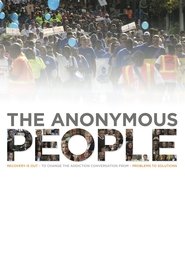
The stories of three world renowned masters and a young man who redeems his life reveal the virtues and violence of Capoeira, as well as its surprising origins.The Anonymous People
2013
The Anonymous People
2013
star 3.5An independent feature documentary about the over 23 million Americans living in long-term recovery from alcohol and other drug addictions.I Can Be President: A Kid's-Eye View
2011
star 6What do our future leaders think? Find out in this enlightening documentary that brings kids' ideas about the presidency to life via animation. Sweet and charming, yet with observations as sharp as tacks, these elementary-school youngsters opine on such issues as: the rules about becoming president; whether they could handle the job, now or in the future; and more.Say My Name
2009
Say My Name
2009
Debut documentary featuring a series of portraits of women in hip-hop. Say My Name offers a unique and inspiring view into the though world of hip-hop in which the portrayed women make music, search for their own voice and survive. With Erykah Badu, Estelle, Monie Love, MC Lyte, Jean Grae and many many more.Equality U
2010
Equality U
2010
star 6.3EQUALITY U is a feature-length documentary following 34 young activists on the Soulforce Equality Ride. At some stops they're welcomed with open arms, at others they're arrested for trespassing or for simply attempting to open up a dialog. At every stop though, they're connecting with young people who've often never met an openly gay, lesbian, bisexual or transgender person who is comfortable with who they are. Written by Dave O'BrienThe Matter of Angels & Demons
2009
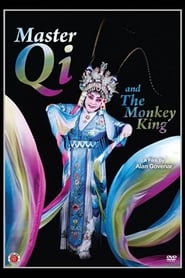
star 8This probing analysis of the popular Dan Brown novel Angels and Demons explores the many contentious issues raised by the book - like the politics of the Catholic church, and the perceived conflict between science and religion.Master Qi and the Monkey King
2010
Master Qi and the Monkey King explores the life and work of the preeminent master of Chinese Opera living in the United States. Qi Shu Fang was a household name in China due to her feature role in one of the Cultural Revolution Opera films, and traveled the world to show off her mastery of the art form. The film explores the reasons why Ms. Qi, her husband and a whole troupe of Chinese Opera performers have moved to the United States to transplant their art form to a foreign culture.